Syngenta Turf Innovation – TREFINTI Nematicide/ Fungicide
Maintaining healthy turf is the goal of every turf professional. Throughout the year turf stands are subjected to a wide variety of challenges both on the surface and sub-surface, requiring at times adjustments and late changes to anticipated programs. Depending on the location, climate, and soil type of the managed turf, these challenges can quickly impact the surface visually or gradually become a concern below the surface. In any case, whether it is related to weeds, insects, or pathogens, accurate diagnosis of the cause is critical.
In a sub-surface situation, one of the threats impacting healthy and resilient turf stands can be parasitic nematodes: microscopic roundworms that feed on the roots of turfgrass plants. These pests can cause significant damage, leading to thinning turf, yellowing, wilting, and even plant death in severe infestations. Parasitic nematodes are a widespread problem, found in soils across the globe with around 15% of nematodes described as parasitic. Some of the most common and destructive species that affect turf and crop systems globally include root-knot nematodes, lance nematodes and sting nematodes. These nematodes feed by puncturing and extracting nutrients from the plant cells, causing physical damage, and disrupting the plant's ability to take up water and nutrients.
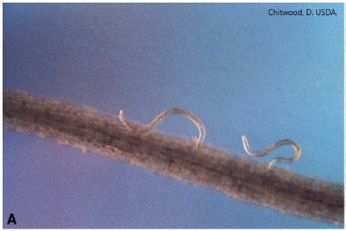
Managing nematode infestations can be a challenging task due to their microscopic size, ability to survive in various soil conditions, mobility and difficulty in detecting their presence until significant damage has already occurred. The standard practice for identifying nematode populations involves sampling suspected areas and submitting these samples to an accredited laboratory for a population count.
Formal identification through sample submission is a useful initial step when devising a management program. However, counts that are also provided should be treated as a guide only. Plant parasitic nematodes can be separated into two groups: ectoparasitic and endoparasitic. Ectoparasitic nematodes do not normally enter the root and feed from outside the root surface whilst endoparasitic nematodes enter the root and feed from within. Both types of nematodes can exhibit either migratory behavior, allowing free movement within the soil or plant, or sedentary behavior, meaning they remain stationary once on or within a root.
Symptoms of turf nematode damage can be twofold, both on the surface and subsurface. On the surface, turf will appear thinned, with chlorosis evident and declining growth. Patches will appear irregular, can wilt and not respond to fertility or other inputs. Subsurface, the root system will be affected. Roots will be thin, shallow, darkened and may show presence of galls. Affected root tips cease growing and display symptoms of both nutrient and moisture deficiency with wilt occurring. As the turf root system is weakened it becomes easier for other pathogens (such as Pythium) to infect the plant along with other concerns.


TREFINTI® Turf nematicide introduces a new active to the industry and continues Syngenta’s innovation in developing new chemistry molecules specific for a wide range of challenges. TREFINTI® is a N3 turf nematicide consisting of 450 g/L cyclobutrifluram in an unscheduled (S0) formulation. TREFINTI® exhibits contact activity to both ectoparasitic and endoparasitic nematodes and once in the plant, moves acropetally (upwardly mobile). TREFINTI® also provides excellent flexibility in nematode management with its UV profile, meaning it can be applied during the day and watered in later in the evening. With an extensive list of plant parasitic nematodes managed, TREFINTI® offers flexibility and rotation ability in an integrated nematode management program.


TREFINTI® (cyclobutrifluram), represents a breakthrough in turf protection through its exceptional biokinetic properties and robust systemicity. The molecule demonstrates rapid uptake and efficient translocation through both xylem and phloem vessels, enabling comprehensive protection of the entire turf plant, from roots to crown and leaf tissue. This dual-directional movement ensures uniform distribution throughout the grass tissues, creating a protective barrier against both plant-parasitic nematodes and soilborn turf diseases that commonly affect turf quality. The molecule's unique chemical structure facilitates its stability in turf tissues while maintaining consistent biological activity, resulting in long-lasting protection of the root system. This advanced systemicity allows TREFINTI® to effectively shield developing roots and new growth, providing reliable control of target pests and diseases throughout the turf's growing season, ultimately promoting healthier, more resilient turfgrass.
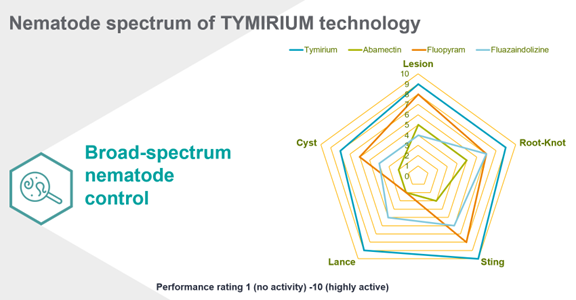
Effective nematode management often requires an integrated approach, combining multiple strategies tailored to the specific conditions and severity of the infestation. Regular monitoring and early detection are crucial to prevent severe damage and implementing control measures in a timely manner. By understanding the challenges posed by parasitic nematodes and employing appropriate management strategies, turf professionals can maintain healthy, resilient turf stands and minimize the impact of these microscopic pests.
Watch to learn more about TREFINTI® Nematicide/Fungicide

Playing this video requires a marketing consent.
Click anywhere on the video to renew your consents.