Climate shift favours microdochium flare up

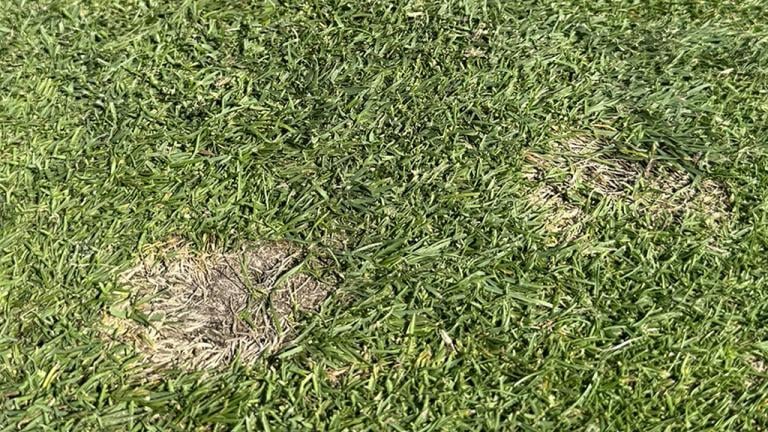
Changing climatic conditions are increasingly favourable to microdochium pathogen. Warmer temperatures into late autumn, and typically through the whole winter, are conducive to faster disease development, warns Syngenta Technical Manager, Pete May. Combined with longer periods of leaf wetness and heavy dew, it’s the perfect scenario for disease development.
Furthermore, most UK golf courses now experience at least 10% fewer days or hours below 2⁰C, compared to a decade ago. Crucially that’s the temperature considered to stop disease and provide a respite from development. As days with temperatures below 2⁰C decline, so the relentless pressure increases.
Risks have been further exacerbated this season on turf that has been excessively stressed by prolonged drought and high temperatures, particularly in the south and eastern counties. Reduced plant reserves reduce the ability to fight disease infection.
Where disease does break out in early winter, short days and low light levels limit recovery and any resulting scars can remain for months.
Adopting an integrated approach of cultural practices and fungicide intervention where required puts the focus firmly on preventing initial outbreaks of disease.
Development trials results with the new Syngenta fungicide, Vertenzo, showed that in high-risk situations, designed to maximise the disease pressure, well-timed preventative applications provided 92% microdochium control. That compared to an 87% reduction in scarring with applications at the first signs of disease and 80% reduction in damage when applied after disease had already broken out.
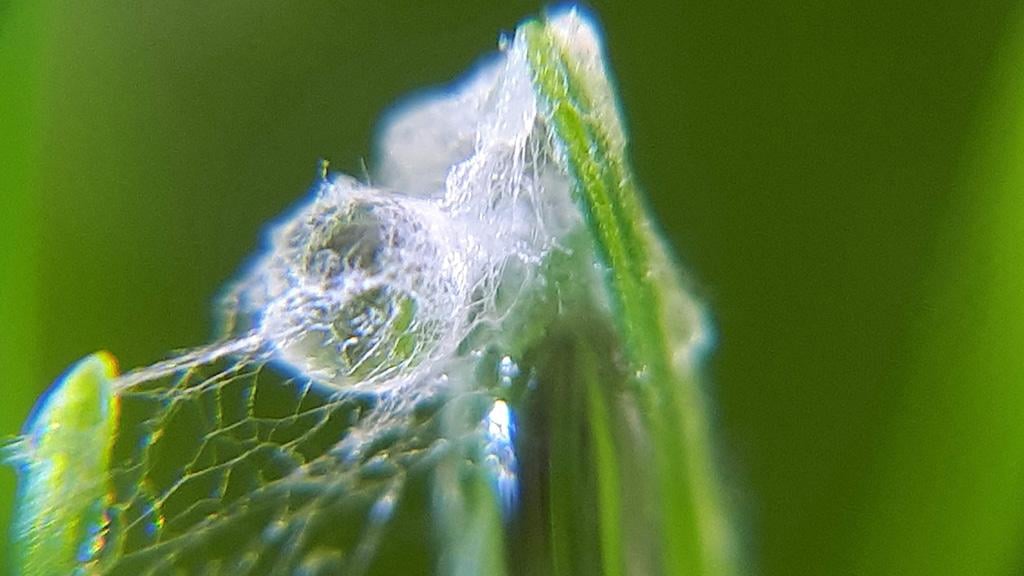
Key to the application timing is understanding exactly when pressure will be at its highest. The microdochium model, built into the Syngenta Turf Advisor App, uses temperature and rainfall forecast data to predict conditions conducive to disease, and help guide decision making.
The aim throughout is to keep turf clean of disease in the high-pressure periods, so that plants can cope during lower pressure periods. Fungicides also have an essential role to help infected surfaces recover from outbreaks - and will protect uninfected plants in the surface from attack to stop the spread.
Results of new STRI research in Yorkshire have shown that while cultural practices have a hugely important part in reducing risks, when disease pressure threatens to overwhelm the plant’s natural ability to withstand disease or grow away from infection, the well-timed fungicide applications are essential to give protection.
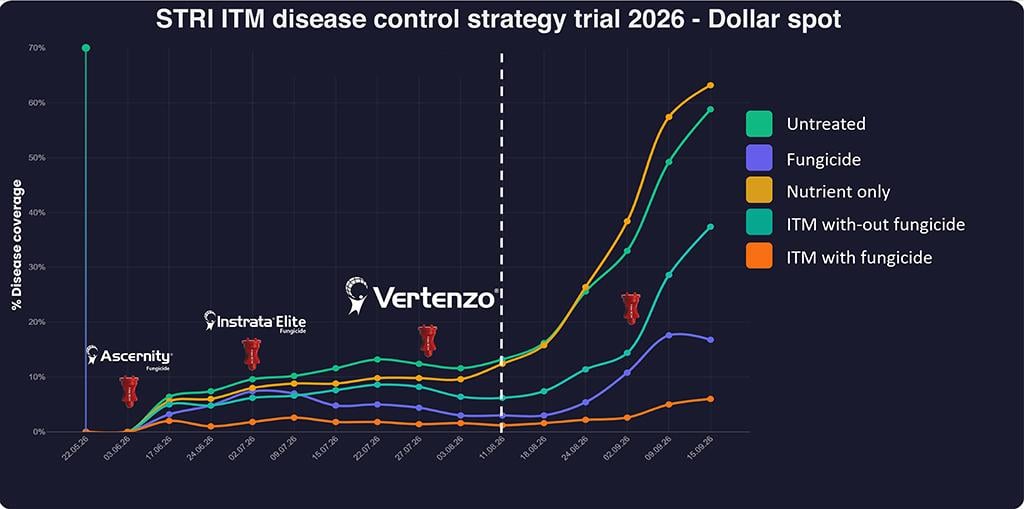
Furthermore, preventing disease establishing serves to reduce further risk and avoids more intensive fire fighting actions to tackle outbreaks. Using this well-timed proactive approach in STRI trials has been proven to require fewer applications over the course of the microdochium season, compared to treatment at signs of disease or the historic approach of routine prophylactic treatments.
While turf is continuing to grow, systemic fungicides, such as the new Vertenzo or Ascernity are the products of choice to get protection into the leaf. When the turf is cut, the protection continues to move around and be replenished. Both fungicides are also proven highly effective against dollar spot, which can often still be kicking around later in the autumn and early winter, in conjunction with microdochium.
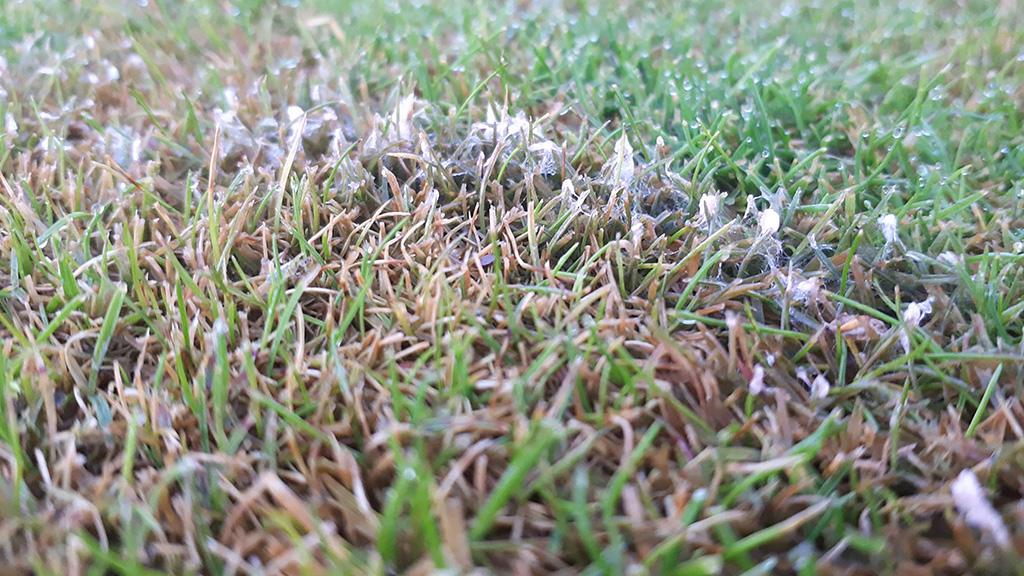
Where pressure builds further into the autumn, Instrata Elite is then well positioned as both systemic and contact to work on the leaf and within the plant. And that leaves the only truly contact fungicide, Medallion, for protection through the slower growing periods of the season.
With the top-tier of the control strategy planned, all other integrated cultural controls will be best placed to reduce disease pressure and minimise both the frequency and severity of microdochium.
Since moisture is essential for the pathogen to develop, keeping leaves dry will immediately reduce the population build-up and pressure. Mechanical dew removal is routine for most courses, with mowing also seen as a useful dew removal technique, although may be limited in winter, with rolling also associated with leaf drying. Timing of mechanical moisture removal first thing in the morning can, however, allow dew to reform under certain conditions – to be watched for. A dew suppressant spray treatment can prove useful moving water off the leaf with prolonged results.
Improving airflow across greens to wick away moisture, as well as cutting back trees to reduce shade when the sun is on a low arch in winter, are important actions to do now, or plan for the future.
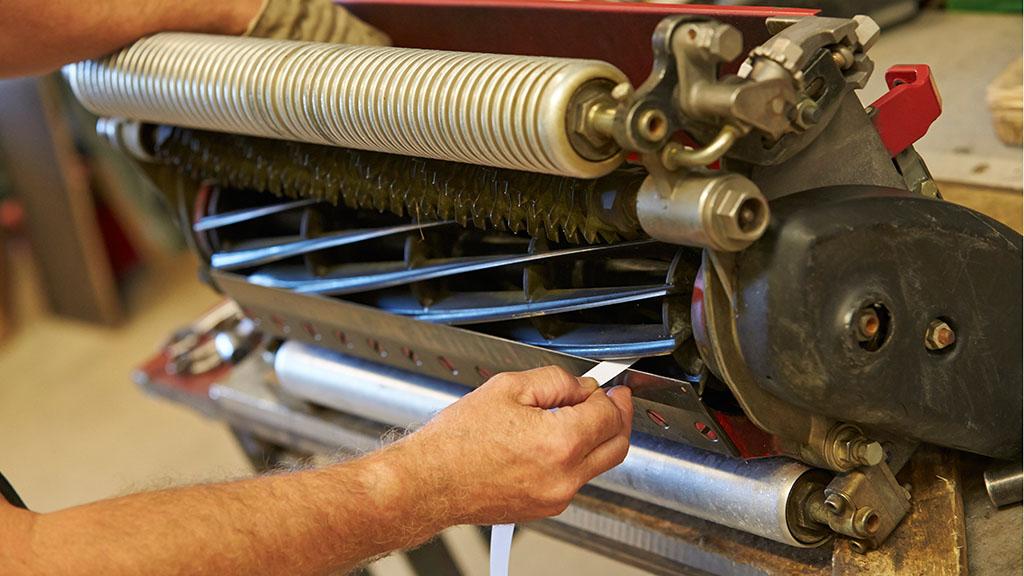
On the topic of mowing to remove moisture, it’s worth noting that damage to the leaf tip by cutting creates the easiest entry point for disease pathogen hyphae when spores germinate on the surface. Sharp blades that slice the leaf cleanly are far more effective, compared to the tear of a blunt knife. One of the challenges in autumn being that worm casts and sand top dressing can quickly take the edge off mower blades.
Even though turf growth is slowing over the autumn, extending a Primo Maxx II PGR programme, albeit at lower rates and longer intervals, can help to minimise mowing effects by enabling more rolling with less damage, as well as creating a more turgid leaf that is cleaner to cut.
Aeration damage and heavy top-dressing during conditions of high disease pressure will also increase the risk of infection. Since maintenance is too often governed by the club calendar and operations in a high-pressure time may be unavoidable, it may be necessary to review fungicide application timing to cover this period of increased risk.
As we move into autumn, fertiliser programmes will also typically be cut back to low or zero levels. This season there is potential conflict where there may be greater residual nutrients that had not been released in the very dry conditions in un-irrigated areas, along with possible demand to provide nutrition for surface recovery overseeding where surface cover has been lost in the heat.
Using as many cultural controls as practical will reduce the disease pressure and the susceptibility of a specific course’s surfaces to infection. Local knowledge of your course and the likelihood of outbreaks is essential to interpret risk warnings and make informed decisions for optimum fungicide timing and consistently manage microdochium to stay ahead of outbreaks this season.