Recovery support to stop disease development

Turf weakened by intense heat and drought this summer will require extra help and nurturing to recover. Along with greater levels of protection at a time when disease pressure is seriously ramping up. Syngenta Turf Technical Manager, Pete May, offers his insights and advice.
While this season has been extreme, the trend is increasingly the norm. The response to climate shift demands new tools, techniques and, particularly, adaptations to timing to maintain health and surface quality at a key point in the year.

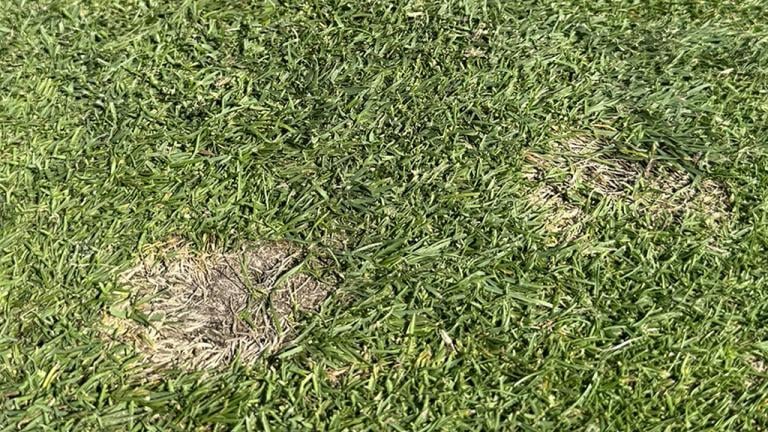
This season in particular, greenkeepers and agronomists are frequently reporting mixed populations of diseases breaking out earlier or persisting longer through the autumn period. It is increasingly common to identify both dollar spot and microdochium occurring on turf surfaces at the same time, sometimes even with anthracnose in the mix too.
The primary focus now for surface recovery and preventing disease outbreaks is making best possible use of any growing periods to build back up carbohydrate reserves and resilience heading through the autumn and into winter.
Over recent years temperatures have often remained sufficient to encourage growth, however day length is shortening, light levels falling rapidly and the diurnal switch, from warm days to cold nights, imposes ever greater stress on plants.
Biostimulant light efficiency
Harnessing more efficient use of the available light is key to supporting autumn recovery. One of the new generation of Syngenta biostimulant products, Vyplenza, has been specifically selected to prime plant activity to utilise light more efficiently.
The technology in Vyplenza has been shown to naturally upregulate plant genetic responses for light utilisation by up to 53%. It’s integration into turf health programmes in spring and autumn could significantly boost photosynthesis efficacy and help with plant recovery.
Among the Integrated Turf Management (ITM) techniques available, simply raising cutting height by even a marginal amount will leave more leaf area for photosynthetic activity. Moving from 2.5mm HOC to 3.5mm is effectively 40% more leaf length.
PGR quality
Combining rolling with mowing in the regime can retain ball roll speed and consistency at the higher cut, especially when used in conjunction with Primo Maxx II growth regulator to enhance leaf physiological structure and chlorophyl concentration that improves photochemical efficiency.
The continuation of growth regulation programmes is also essential at the back-end of the year to limit the tendency for turf to produce weak etiolated growth, and encourage plants to push more energy down into rebuilding root carbohydrate reserves that will be essential over the winter. As conditions cool down variably through the autumn, applying Primo Maxx II at a Growth Degree Day (GDD) interval of 200 is likely help to optimise performance and consistency, compared to routine applications.
It also means getting the nutrition balance right, with sufficient to enable recovery growth, but not too much that risks a flush of weak and disease susceptible leaf.

| 
|
Disease damage through autumn and early winter poses a huge challenge, affecting immediate turf recovery – where leaf loss will further impact on photosynthesis – and spoiling turf surface quality, with limited chance for repair scars until the spring.
That threat is becoming increasingly severe. With the alarming speed of climate shift, across the UK we’re seeing longer periods of warmer conditions more conducive to disease development, along with fewer, if any, periods of prolonged sub 2⁰C temperatures that are crucial to stop disease, particularly microdochium patch.
Disease populations
Mixed disease populations pose a real dilemma for ITM and cultural controls, since one action to make conditions less suitable for one disease, could exacerbate another. Although one thing that almost universally helps, wherever possible, is to keep surfaces drier and improve air flow that will limit the duration of leaf wetness that disease needs to thrive.
Results of new trials undertaken by STRI in Yorkshire this season have demonstrated the role of different parts of a turf health strategy. Over the summer and into early autumn disease levels on untreated turf built consistently from around 6% to cover more than 13% of the surface. Relying on purely cultural ITM practices did supress disease at typically half the untreated level, but still resulted in an unacceptable 9% of surface area during disease outbreaks.
| STRI trials have highlighted the importance of stacking ITM strategies and the role of fungicides in protecting turf surfaces. | |||

| 
| 
| 
|
Untreated | ITM - no fungicide | Fungicide only | ITM + fungicide |
Over the same period, using just fungicide applications alongside the standard turf management significantly reduced disease levels through the trial period and improved end results at just 3% surface affected, compared to 13% in the untreated. The trial also reinforced the importance of preventative applications, with the greatest differences seen once infection had been brought under control.
But by far the most impressive and consistent results were achieved from an ITM approach in conjunction with fungicide treatments. Even under intense disease pressure, the control was significantly better in every assessment and kept below an acceptable 2% of surface for over 90% of the trial period – continuing control at less than 1% of coverage affected.
The fungicide programme included existing Syngenta fungicides at the appropriate timing to the disease threat and growing conditions, along with new development fungicides specifically designed to cope with climate shift disease pressures and multiple threats of dollar spot and microdochium patch.
Proactively targeting disease ahead of infections, but at times when the pressure is increasing, consistently delivers the optimum results for preventing damaging outbreaks and maintaining clean surfaces.
Turf Advisor support
Using predictive tools such as Turf Advisor, to identify periods of weather conditions most favourable to specific diseases, can help support greenkeepers’ decisions on application timing and product choice. Particularly when weather patterns are changing so much with the seasons and pressures for diseases can occur at unexpected times in the calendar.
Furthermore, matching appropriate fungicide selection to the conditions becomes more variable with climate shift. Tracking Growth Potential (GP) in the Turf Advisor can help to give a local guide to products selection most suited to the application.
With warm conditions and continued growth going on longer into the autumn, particularly in the south and west of the country, products such as Ascernity with systemic and contact activity have a stronger role, before a switch to Instrata Elite and finally Medallion TL contact when growth is very slow.
It’s also driving the search and development of new fungicides that bring greater flexibility to counter the threats of climate shift. And that can be built into effective ITM programmes with biostimulants and cultural controls that have proven to prevent disease outbreaks in the most extreme conditions.
| Results of the STRI ITM and fungicide trials will be on the ground for you to see at BTME and for full discussion of new options to offer stronger disease control on all turf surfaces. |