Manage moisture to hit rising leatherjackets

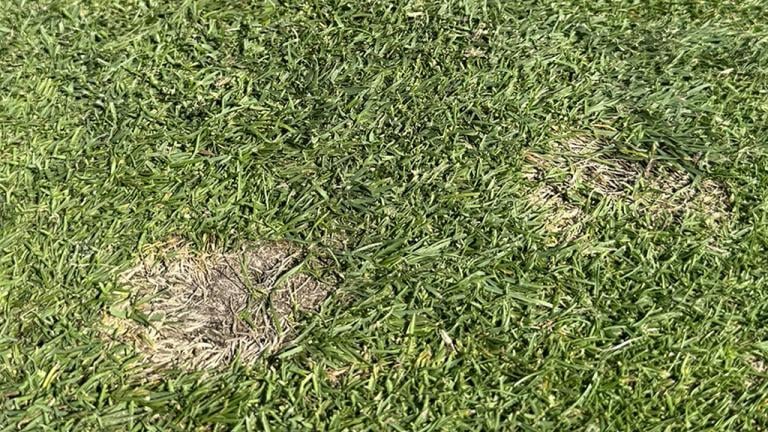
Managing soil moisture during leatherjacket control programmes can help achieve optimum control of damaging larvae populations.

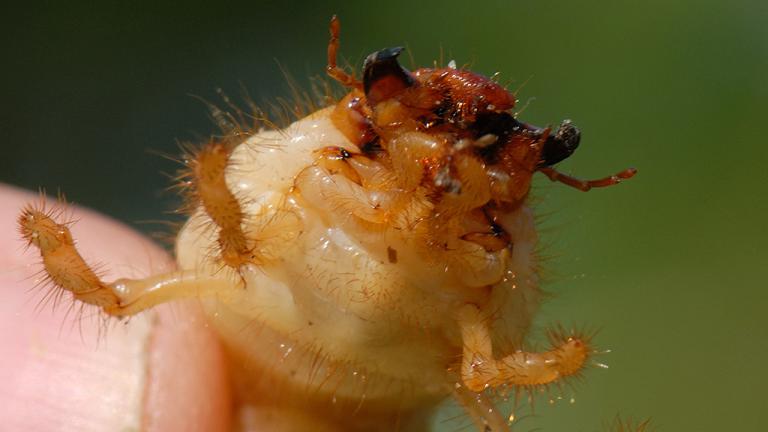
Leatherjacket larvae are most active in moist soils, where they can be effectively targeted for control. But if conditions are too dry, they will move down the soil profile and only return to the surface to feed, writes Syngenta Technical Manager, Sean Loakes.
That could limit the amount of time they come into contact with an Acelepryn insecticide treatment and applied NemaTrident F beneficial nematodes, with potential effect on results.
Research compiling years of data recorded by Syngenta Pest Tracker monitoring of adult crane fly activity - signifying egg laying that will result in leatherjacket larvae – consistently indicates the optimum timing for Acelepryn application on or around the 20th October each year, followed by the NemaTrident F application within the next seven days.
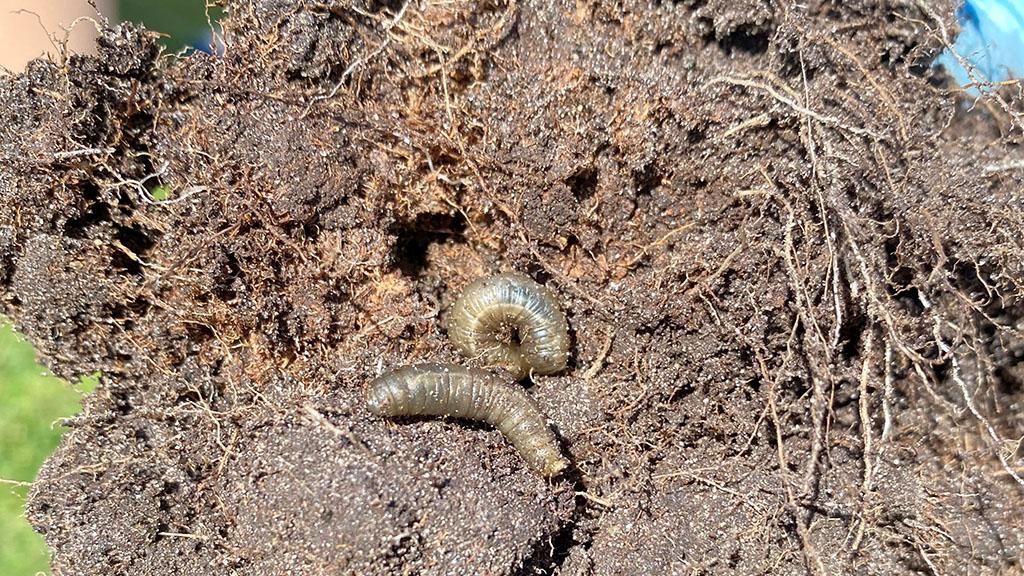
Ideally, soil moisture should be around 20% for Acelepryn application and 30% at the time of a nematode application - then held at 25%+ for a week to 10 days if possible to maximise activity. Wetting agent programmes could provide a valuable aid in maintaining moisture in the target root zone.
The aim is to have the maximum number of leatherjackets active in the upper soil zone when the concentration of Acelepryn is at its greatest and nematode numbers at their highest.
Based on the trials research, the combination Leatherjacket Total Approach Pack strategy enhances the consistency and reliability of leatherjacket control. The inclusion of NemaSpreader with the NemaTrident F application is beneficial to optimise soil moisture that prolongs nematode survival and activity as they move in search of leatherjackets to infect.

Best use practice guidelines for treatments advocate mowing prior to application, to limit retention on the leaf. Spray water volume should ideally be at 1000 l/ha, applied through 08 XC Soil Nozzles, with coarse water droplets helping to move as much product as possible to the soil surface. The larger orifice 08 nozzles are essential to minimise risk of damage to nematodes during application.
The Turf Advisor app can help to provide forecasts of optimum soil temperature and moisture conditions for application.
Sprayer operators should adjust their speed to maintain pressure at 2 – 2.5 bar when applying the 1000 l/ha water volume, typically 3 – 4 km/hr; avoid increasing the operating pressure to spray faster, as that will automatically generate a finer droplet pattern less able to penetrate the turf canopy and leave more spray on the leaf surface.
Application with a forecast of light rain or heavy dew to wet the leaf surface is also preferable, or to irrigate as soon as possible after treatment.
Syngenta research by the STRI has shown that aeration practices can also affect the efficacy of controls. Punching big hollow-tine holes through the surface provides channels for leatherjackets to move up to the surface to feed at night, and return deeper in the profile by day without coming into contact with the treatments. Results showed leatherjacket numbers were controlled two to three times better where no aeration took place, compared to hollow-tine; with a less aggressive slit tine having a limited negative effect.
The implication is that, where practicable with maintenance schedules, major aeration works should be undertaken outside of the leatherjacket control window – especially on areas where larvae control is a priority.
| Optimise your leatherjacket strategy |
|
|
|
|
|
Leatherjackets tend to target the same areas of turf repeatedly. That’s because the conditions in some areas particularly favour their life cycle, and the pests are relatively mobile – so they will often recolonise areas that may have previously been successfully treated.
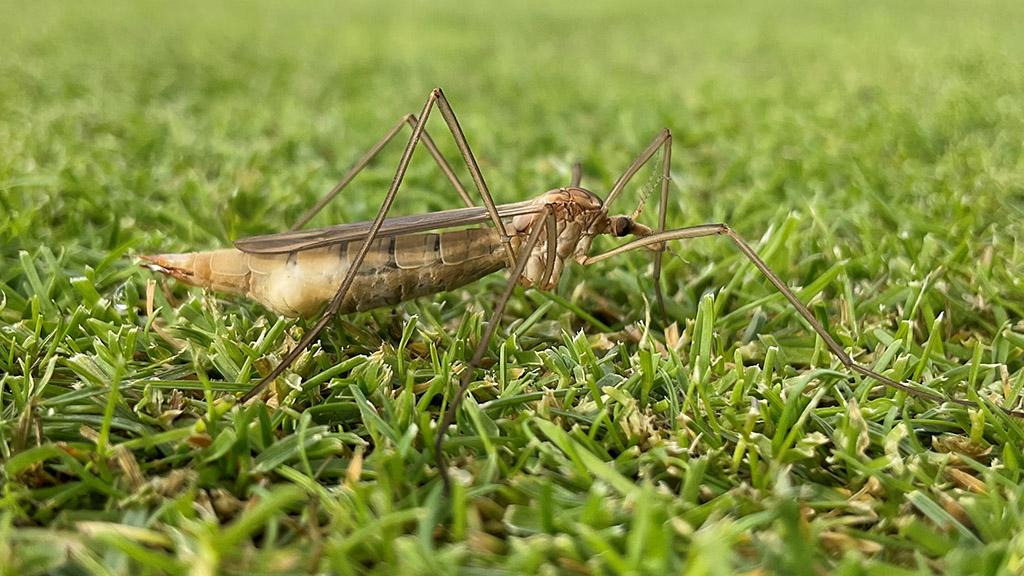
Larvae will readily migrate from areas of longer grass in surrounds or out of play areas where eggs may have been laid, onto irrigated greens and attracted by moist soils.
The importance of soil moisture will, in part, dictate the leatherjacket strategy and timing for different areas of the golf course or sports facility. It will largely depend on irrigation availability - both the infrastructure and water resources later in the season - and how that fits with playability schedules for maintaining elevated soil moisture.
However, optimum leatherjacket control timing, in mid- to late-autumn, typically occurs when irrigation schedules have ended and soils are being allowed to naturally dry down – in preparation to cope with winter rainfall. This poses a further challenge to managing moisture around leatherjacket control timing.
Changing weather patterns have also made managing treatment programmes more difficult to coincide with wetter periods on areas without irrigation, particularly in extended dry periods of later summer and early autumn. In most seasons, nematodes are not a viable option on unirrigated surfaces.
Waiting for seasonal rains later in the autumn to apply nematodes could then compromised their efficacy in falling soil temperatures, which should be consistently above 8⁰C for nematodes to work efficiently.
Getting the timing right is especially difficult with nematode treatments, where products have to be ordered well in advance and, as living organisms, have to be stored carefully in refrigerated conditions and applied as soon as possible.
Nematodes definitely have a useful role, but success is largely dictated by the ability to manage soil moisture and the season.
Watch how to get the best from nematode applications
With this in mind, it’s essential to plan a strategy for where to use the different available control options. The Acelepryn label limits its use to 10% of the managed turf area, which typically enables treatment of the highest value greens areas, especially if there are particular areas with historical damage.
On courses with a very low threshold for damage, or where heavy infestations have previously caused severe losses, it can be a sensible approach to bolster the Acelepryn treatment with a sequence of NemaTrident nematodes, to enhance overall control rates and consistency.
Outside of the Acelepryn treated areas, repeated trials work have suggested the success of nematodes for significant leatherjacket reduction is closely related to soil moisture, and where Integrated Turf Management strategies can help to minimise effects.
Alongside physical controls of leatherjacket larvae Syngenta turf health programmes, including novel targeted biostimulants, PGRs, wetting agents and pigments designed to enhance rooting and vigour, will help to make plants more resilient to pest damage, as well as recover faster.
Proven pack
An integrated strategy of Acelepryn followed by NemaTrident F beneficial nematodes can enhance the overall consistency and reliability of leatherjacket control.
Syngenta leatherjacket research in a high-pressure situation, with 100 larvae per m2 in the untreated turf areas, showed 89% control from Acelepryn alone, compared to a 65% reduction in larvae population where NemaTrident F plus NemaSpreader was used. However, where the two components were used in sequence the trial resulted in complete larvae control.
The recommendation for this integrated approach is for one application of Acelepryn at 0.6 l/ha, followed by NemaTrident F within seven days, at a rate of 2.5 billion nematodes per hectare.
The cost-effective Leatherjacket Total Approach Pack (LTAP) provides both products in a structured strategy for turf surfaces. It provides two modes of action on leatherjacket pests, for a more sustainable long-term solution, with a full package of cultural controls and agronomy practices that will best mitigate pest damage on all areas.