Evolving dollar spot pressures

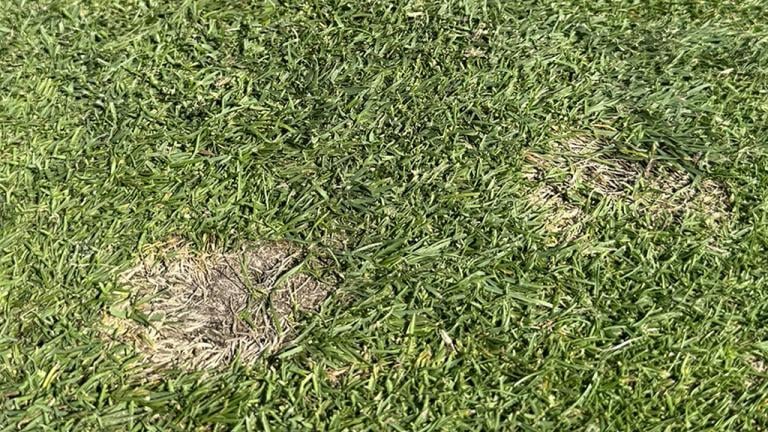
Dollar spot is now one of the major disease threats for many golf courses. Its effect can seriously affect greens smoothness and playability at a busy time of the year in the golfing calendar, when players are particularly demanding for pristine conditions, reports Syngenta Technical Manager, Sean Loakes.

The development of the Smith Kerns Model was hugely influential in recognising the climatic conditions that favoured the disease, and providing a benchmark for preventative action.
Identifying temperature and humidity – or more importantly leaf wetness – as the key drivers of disease has given a focus in managing factors that can reduce risks.
However, researchers who designed the original forecasting model now report the evolving pathogen appears to be developing with shorter periods of suitable leaf wetness and temperature.
The effect would be a double whammy of more frequent conditions for the disease occurring, and the capability for the disease to go through its lifecycle faster.
The Smith Kerns disease model, available in the Turf Advisor dashboard, is still incredibly useful but, since it’s only ever decision support for the greenkeeper or agronomists’ own skills and understanding in any specific situation, it does need to be interpreted accordingly.
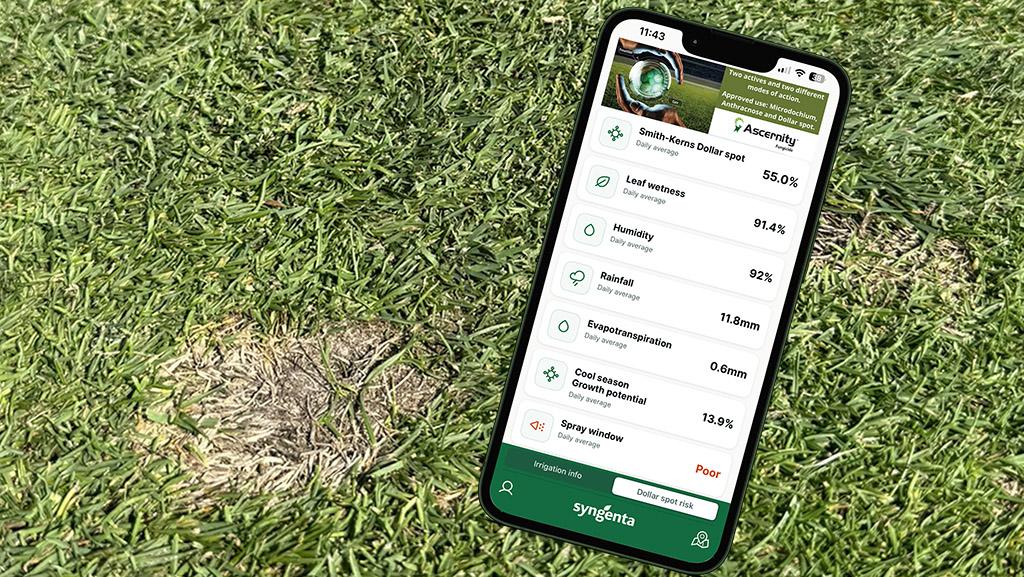
While the threshold for a preventative Ascernity fungicide application has typically been applied at 20% disease pressure, if courses in high pressure situations now find they have been consistently hit earlier, it may be necessary to target treatments at a lower pressure threshold, for example.
As conditions become more challenging, it also reinforces the importance of Integrated Turf Management (ITM) practices that can help to mitigate against the effect of disease and reduce infection risks, even when the climate pressures indicate high pressure.
In Syngenta trials last summer in Cambridgeshire it was the later season, September, attacks that resulted in the most severe damage on untreated areas. The periods of high humidity and leaf wetness were certainly extended in that timing, combined with the fact the pathogen was also prevalent from having built up on untreated areas over the summer.
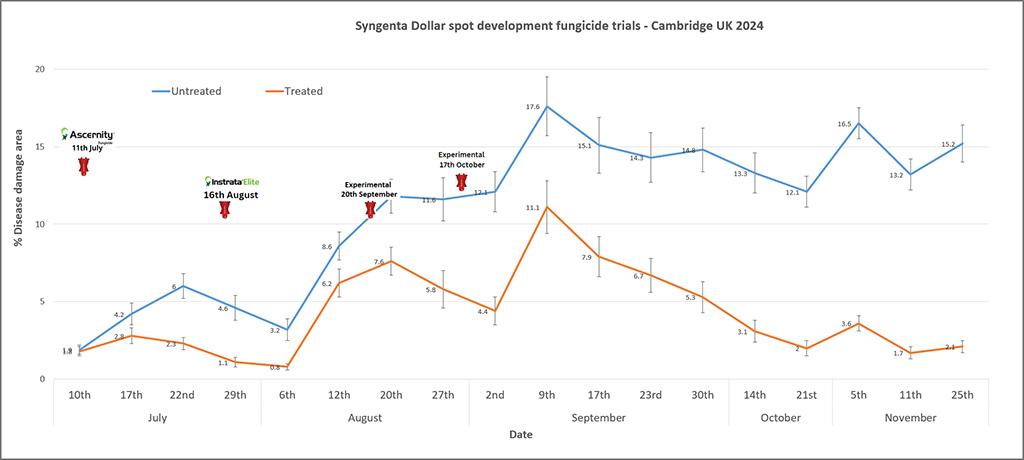
Throughout this period the fungicide programme, including Ascernity followed by Instrata Elite and a new Syngenta trial product, effectively halved any signs of disease damage on the surface, resulting in less than 4% infection in the treated area compared to over 16% in untreated at the end of the reported assessments.
The trial also highlighted the need to remain vigilant of climate conditions for dollar spot infection right through to November, when some serios outbreaks occurred.
One of the key findings of the original Syngenta Dollar Spot State of the Nation Survey was that while the Smith Kerns Model was a good indicator of pressure, a course’s management practices on the turf had a greater influence on which suffered damaging attacks, and which could better resist damage.

The number one factor was reducing the duration of leaf wetness, particularly during hotter periods that are also conducive to dollar spot development. All means of drying the surface appear to be beneficial in lowering disease pressure. That includes physical brushing or switching in the morning, whilst being aware that dew can reform after surfaces have been cleared first thing, especially going into the autumn.
Allied to that, clearing vegetation and trees around greens can hugely help airflow to naturally dry surfaces and keep them dry, especially where shaded areas that might lie wet for longer can be alleviated.
It’s not always a popular move with golfers to see trees removed and greens opened, which needs to be communicated clearly; if the understory can be replanted with wildflowers or bulbs, that can counter the criticism – as well as helping to boost biodiversity within the Operation Pollinator initiative.
During the summer the timing of irrigation will have an impact in how long leaves remain wet and implications for disease, particularly when overnight temperatures remain high and the leaf sits wet from an evening application. Delaying irrigation until early morning, when the leaves can dry faster, will minimise the risk – while allowing time for the water to soak into the surface before evaporation.
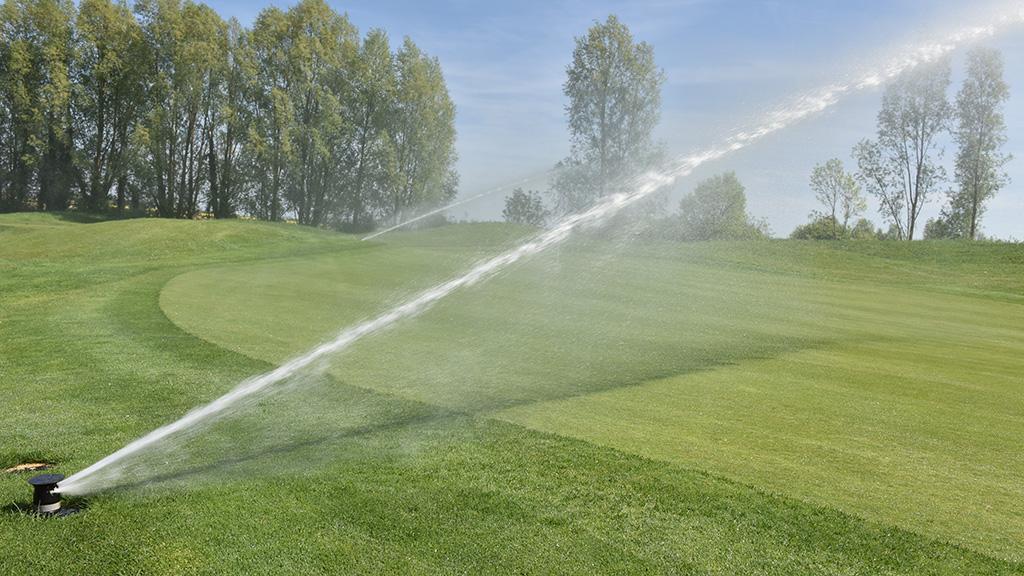
Research with irrigation scheduling has shown that the optimum conditions to reduce the risk of Dollar spot is the difficult balance of when the roots can remain in sufficient soil moisture to minimise stress effects, but the leaves remain dry. Along with biostimulant trials to reduce stress on turf, this is an area where Qualibra wetting agent technology could have great benefits.
One of the questions we repeatedly receive from the survey findings is why the practice of rolling appears to reduce the frequency and impact of Dollar spot infections? It’s most likely that the action actually fits multiple objectives of the ITM strategy.
Firstly, it is a very effective technique for dew removal and drying the leaf; secondly many turf managers find alternating rolling and mowing maintains consistent green speed and smoothness at a slightly longer height of cut – which reducers stress on the plant and does allow more air flow in the sward. Furthermore, compressing the sward surface could help conserve moisture in the soil and root zone to reduce pressure.

Finally, the action of rolling could disrupt and damage the disease pathogen mycelial web on the surface, which may compromise its ability to get into the plant.
All round, the combination of a Primo Maxx II PGR programme and increased use of rolling would appear to have a significant effect in reducing dollar spot pressure.
A further comment we hear is that with summer growth it is possible to get recovery from Dollar spot outbreaks, so does it matter? The answer really depends on the club, since for many any serious damage at this crucial time of year can be critical. Furthermore, if conditions favourable to disease continue longer into the autumn – as we are frequently seeing – then the attacks can get more severe and no time for recovery before the winter.
What is also clearly evident, and we saw visibly in trials last autumn, was other diseases coming in on the back of the dead and decaying material as a result of Dollar spot, most noticeably microdochium. Although only relatively small on the dead patches, it creates a point-source foci for future microdochium infection to flare up in the autumn.
Even now we have to be thinking of the season long strategy for disease control, which looks at all the implications of any action over the spring and summer on future risks and pressures.
Repeated trials, in the UK and Ireland, have consistently shown that ITM strategies combined with the AIM fungicide programme – with a sequence of Ascernity, Instrata Elite and Medallion - give the optimum control of the late summer outbreaks that gives the cleanest greens right through the high-pressure periods.