
363 results found

Evopac
08.01.2025Event
So much to see at BTME
Get an insight into new turf technologies and integrated strategies to enhance plant health and cope with a changing climate – on Syngenta stand B226 at BTME.

09.01.2025Operation Pollinator
Sustainable strategies for future golf growth
Greenkeepers hold the key to delivering sustainability solutions that are increasingly important for the management of golf clubs.

15.01.2025Event
BTME News - Coping with a changing climate
BTME delegates will learn that weather patterns are creating an increasing challenge for turf management. One of the biggest impacts now, and certainly into the future, is the implications for damaging disease effects.

15.01.2025Turf care
Rooting resilience for healthy turf
Turf roots are hugely important in creating more resilient plants that are better able to cope with challenges of climate and the stresses imposed by managing high quality surfaces all year around.

24.01.2025Operation Pollinator
Goring & Streatley winners of Syngenta Operation Pollinator Award
Goring & Streatley Golf Club in Berkshire has won the prestigious title of Syngenta Operation Pollinator Award winners, presented to Deputy Course Manager and Ecology Manager, Melissa Winkworth.

24.01.2025Application
Carden Park’s Peter Pattenden wins Amenity Sprayer Operator of the Year
Peter Pattenden, spray tech at the Cheshire championship golf resort, Carden Park, has won the prestigious title of Amenity Sprayer Operator of the Year.

07.02.2025Other turf disease
Humidity
Humidity is the amount of water held in the air. At cool temperatures that can manifest as fog or mist, where the water droplets coalesce. At warmer temperatures many more smaller droplets can be held suspended in the air; air at a temperature of 35⁰C can hold six times as much water compared to 5⁰C.Meteorologically, humidity is measured as RH (Relative Humidity), which is a % of the maximum water holding capacity of the air at any given temperature. Why is important for turf management?Humidity has a huge bearing on leaf wetness, which is in itself one of the major drivers of most turf diseases. High humidity in warm temperatures creates the ideal conditions for most pathogens to develop, particularly microdochium patch in autumn/spring and dollar spot through late spring to early autumn.Even when rainfall or modelled leaf wetness might appear to indicate low disease threat, high levels of humidity can be sufficiently conducive as to pose a risk. In high humidity conditions leaves may be…

14.02.2025Turf care
Ultimate Offers from Syngenta & ICL for 2025
The hugely popular Ultimate Offers from Syngenta and ICL are back for 2025 - making the essential products for effective management of high quality turf more affordable for all.

21.02.2025Operation Pollinator
Operation Pollinator Award finalists 2025 share winning experiences
Find out some of the tips and advice to create valuable ecology habitats from the finalists of this year's Syngenta Operation Pollinator Award.

21.02.2025Weed control
Spring into action on lawn weeds
Lawn care professionals should be gearing up for the spring herbicide strategy as soil temperatures start to rise in the spring. Weeds can be among the first to kick off – and especially visible until regular lawn mowing is underway.
Turf Disease
Seedling Diseases
Microdochium nivale. Fusarium spp. Pythium spp. Drechslera spp. Bipolaris sorokiniana (Sacc.) Rhizoctonia spp.
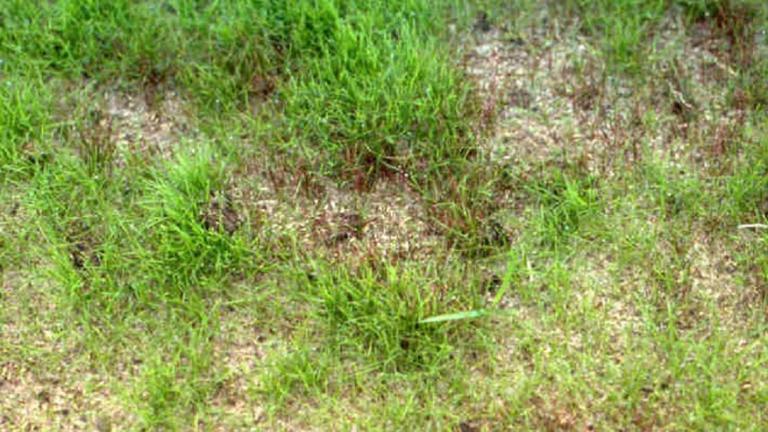
Three types of seedling disease may occur:Seed rot, where the seed fails to germinate.Pre-emergence damping off where the seed germinates but fails to emerge.Post-emergence damping off where the seedling emerges but fails to establish (Plate 1).Where are Seedling Diseases found?Any area that has been newly sown. All turfgrass species can be affected, although post-emergence damping off is most severe on Bentgrass, Fescue and Poa pratensis L.Effects of Seedling DiseasesA very thin sward may develop, allowing access for Poa annua grass seed germination and contamination of the final sward.High Risk SituationsDry conditions favour Fusarium spp.Wet conditions favour Pythium spp.Inadequate or excessive seedbed fertiliser.Sowing during poor weather conditions.Poorly prepared seedbed.Integrated Turf Management SolutionsGood seedbed preparation.An appropriate rate of seedbed fertiliser should be used.An appropriate rate of high quality grass seed should be used and sown…