Operation Pollinator Award finalists 2025 share winning experiences

The Operation Pollinator Award celebrates the endeavours of greenkeepers and course managers in creating valuable habitats for pollinating insects and wider biodiversity across the golf course. Utilising primarily out-of-play areas, hundreds of clubs that have joined the Syngenta initiative have developed amazing ecological assets that hugely benefit the environment and their golf clubs as a more enjoyable place to play.
This year, Goring & Streatley Golf Club in Berkshire (above) has won the huge accolade of Syngenta Operation Pollinator Award winners for 2025, under the guidance of Ecology and Deputy Course Manager, Melissa Winkworth.

After successive years as a finalist in the Golf Environment Awards, the judges noted that Mel, (pictured above, centre, with G&S Senior Greenkeeper, Steve Chandler, and Sarah Hughes, Syngenta Business Manager for UK & Ireland) has continued to take comments and advice on board, to further enhance and maximise the ecological potential of the natural downland course overlooking the Thames valley.

Using old aerial photographs Mel, along with Course Manager, Matt Aplin, had identified areas of lost downland meadows that, through intensive scrub clearance and cutting, has restored 19 acres (7.5 hectares) of vitally important natural habitat.
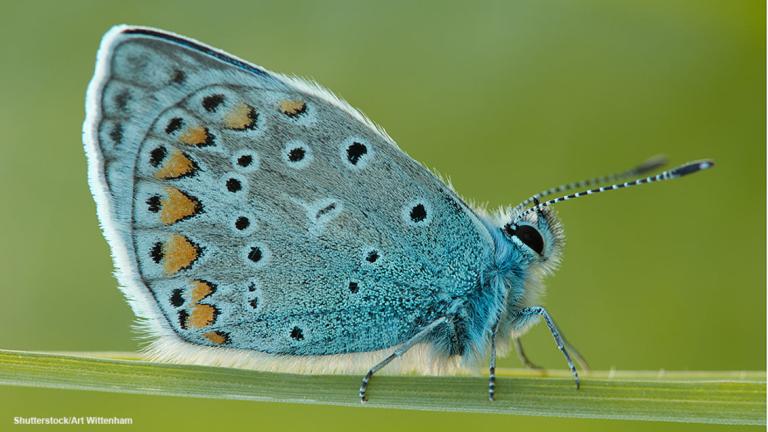
Engaging with a local butterfly conservation specialist to assist the club, the team has created conditions ideal for native pollinator species – culminating in the exciting reappearance of the rare chalk hill blue butterfly on the site.

Along with the extensive scrub clearance to open up the site, which has also improved air flow on some greens and tees to improve turf health, the team has been involved with native hedgerow planting in suitable areas. That has increased the diversity of habitat and provided shelter, without impinging on course playability or turf management that can be compromised by inappropriate tree planting.

Furthermore, the cleared scrub has provided a resource for sizable log piles that have proved a great asset for invertebrates and nesting birds. It has also been used to create a natural barrier around the maintenance yard.
Mel highlighted the strategy has been to provide near year-round sources of nectar for pollinating insects, including allowing early dandelions to exist in out of play areas for the emerging insects in spring.
Other plant species that have an important role for pollinators but may be considered invasive by some are left where appropriate and don’t interfere with play or turf management.

Good communication with the golf club and players has encouraged engagement and support for the ecology initiatives. Information boards around the course and along a public footpath let people know what is going on, along with an annual ecology walk.
This year a new course biodiversity ID guide has been created to hand out to players and in the clubhouse.
The greenkeeping team has also been involved with the local school and undertook a nature walk with the children in the summer.
Sarah Hughes, Syngenta Turf Business Manager and on the Golf Environment Awards judging panel, added: “The vison of Mel and the team at Goring & Streatley to protect and enhance the biodiversity around the course has paid off with the great results that continue to improve.
“It is great that their hard work and initiative is widely appreciated by the club and the members in creating an incredibly valuable ecological resource that is increasingly rare in the area, along with producing a consistently outstanding golf course that achieves excellent reviews.”

Goring & Streatley Club Captain, Steve Bennett (above, with Mel), has been so inspired by the team's efforts and successes in developing the ecology and pollinator habitat creation, alongside the highly acclaimed playing quality, that he's bought Mel a hive and queen bee to further enhance members' engagement with the initiatives.
Sarah emphasised that all finalists of the Syngenta Operation Pollinator Award had focused on creating areas of amazing biodiversity value across a wide range of course types and conditions.
“Together, the clubs involved with Operation Pollinator have created an enormous network of habitats for pollinating insects and wider biodiversity in well managed habitats, alongside managing turf for golf,” she said.
“Using Operation Pollinator to learn from each other’s experiences and share bast practices for both habitat management and communicating with clubs and players is a huge benefit, and a great way for the industry to demonstrate the value of golf as a positive ecological resource.”

Bamburgh Castle
Other finalist in the Syngenta Operation Pollinator Award included the beautiful Bamburgh Castle Golf Club on the windswept north-east coast. Exposed to the wild elements, part of the site supporting links and heathland habitats is a SSSI (Site of Special Scientific Importance).

The club is fully engaged with Natural England to guide its conservation work, also with many club members who are members of local butterfly and moth groups.
The greenkeeping team manage the course sensitively or diversity, with designated pollinator zones identified through aerial mapping.
They implement a five-to-ten-year cyclical rough management strategy, as well as leaving naturalized bunker faces and delineate Ground Under Repair (GUR) areas to protect orchids.

Bamburgh Castle’s course is maintained with minimal inputs, including low water and nitrogen use, with hand weeding as much as possible.
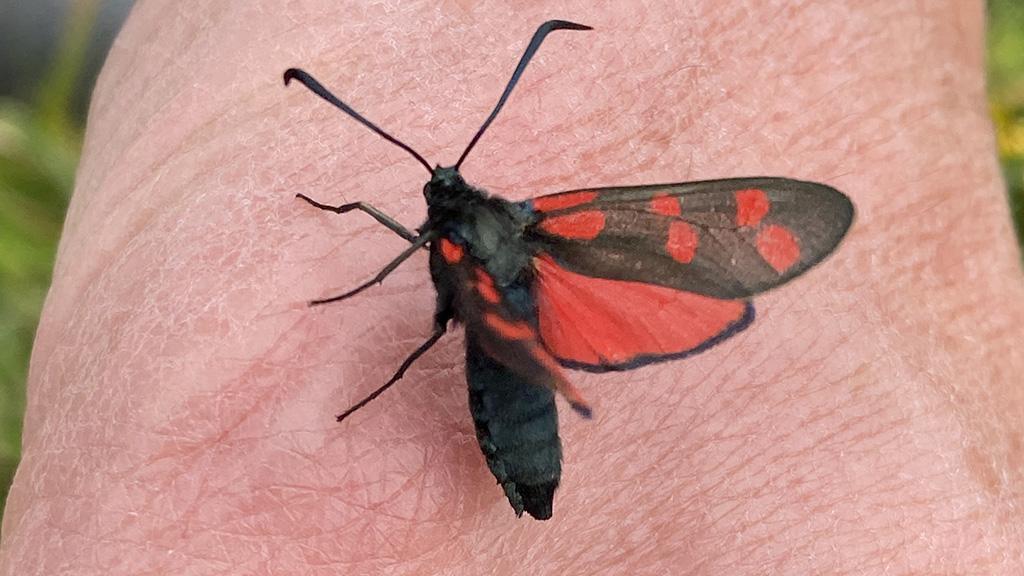
The club has documented a long list of plants and pollinating insect species on the site that it uses to inform members and the wider public of biodiversity enhancements and successes on the course.
North Hants
North Hants Golf Club is a newcomer to the Golf Environment Awards but has immediately had success as a finalist in the Syngenta Operation Pollinator category.

Deputy Course Manager, Andy Reason, has engaged with a number of local conservation bodies and specialists to understand how best to manage and increase biodiversity across the heathland and woodland site – including the Hampshire Wildlife Trust and RSPB.
One of the habitats he’s sought to expand is heather, including techniques to suppress invasive coarse grasses and propagating plants from seed in a greenhouse for planting out to supplement native stocks.
The team has also planted and proactively managed areas of mixed wildflowers, along with flowering plants and shrubs for prolonged seasonal nectar sources.

The local beekeepers association keeps a small number of hives on the site, with honey sold in the clubhouse as a means to engage members and visitors with the club’s initiatives to support pollinators – being mindful to keep hive numbers low to avoid the honeybees competing with natural pollinators.

Within the Golf Environment Awards, Andy was also successful in winning the title of Conservation Champion of the Year.
Dawlish Warren
In the beautiful Exe estuary of Devon, Warren Golf Club has pioneered an approach to ecology that has put the environment first in the priorities of the club’s owners. Sited in the Dawlish Warren National Reserve, it is a carefully protected biodiversity they are keen to retain.
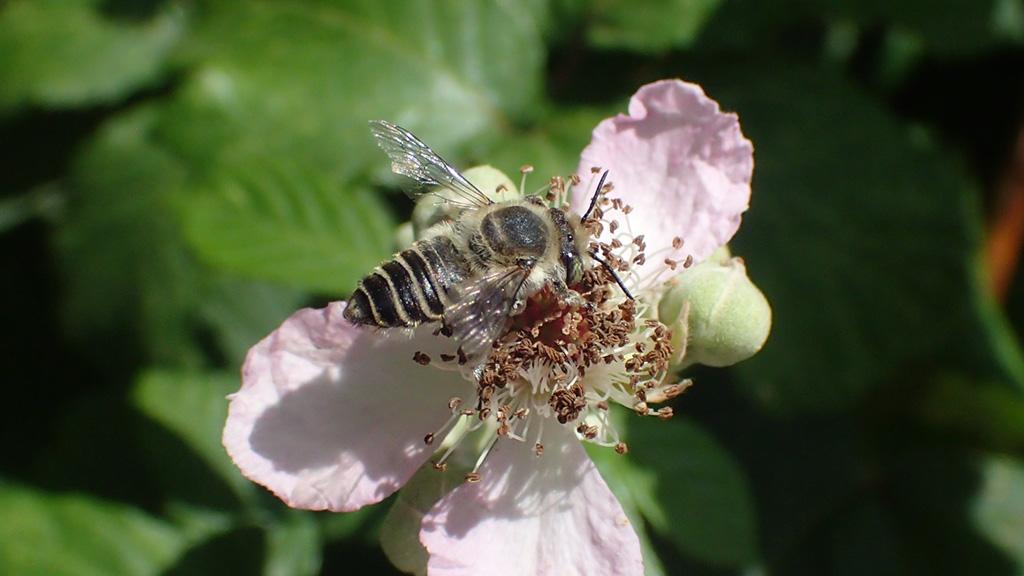
Although a relatively small and compact golf course, it has still found space to create extremely valuable habitat spaces. Managing traffic and players is of key importance, with ‘Do Not Disturb’ areas roped off to protect the very rare sand crocus.
The importance of a mosaic of habitats is recognised, with heather, gorse, bramble and ivy to provide year-round nectar for pollinators.
Managing gorse and scrub in rotation gives different age standards and maintains the vibrant pollen and nectar provision.

Working with Devon Wildlife Trust, Exeter University and the Dawlish Warren Recording Group, the club has created botanical surveys, butterfly counts and monitoring of pollinators to build a positive picture of the value of the active golf course for biodiversity.

Furthermore, they keep members and the wider community up to date with the initiatives through a course information board of daily wildlife and biodiversity sightings, as well as having named each hole after key wildlife species that have been seen there.
Judges appraisal
STRI Senior Turfgrass Agronomist and ecology specialist, Stella Rixon, highlights the Syngenta Operation Pollinator finalists exemplify the many golf courses achieving an increase in habitat varieties, improving playing experiences for golfers, and having a positive impact on the communities in which their members live and work.

“The GEAs showcase the innovation and extraordinary heights golf courses are reaching to protect and enhance the natural environment. It is inspiring to see the hard work and tangible results from their projects.”
Watch Stella's top tips for entering the Operation Pollinator Awards:

Playing this video requires a marketing consent.
Click anywhere on the video to renew your consents.
Applications for this year’s GEAs reached record highs, bringing together golf clubs from across the country, and overseas, to share experiences, celebrate and reward industry professionals who dedicate their time and energy to protecting and enhancing the environment.