Balancing soil moisture
Extremes of weather conditions are becoming ever more frequent - and with it, increasing the challenges for turf management to build resilience against a changing climate, writes Syngenta Technical Manager, Pete May.

The UK has always been renowned for its relatively benign conditions for growing grass, primarily thanks to the maritime climate providing consistent moisture and warmth through a long growing season.
Now, however, prolonged periods of hot and dry weather that push turf plants to the brink of survival, are interspersed with intense rainfall events and the risk of flooding or waterlogging.
Managing these two extremes, to maintain consistent conditions, is crucial for turf health and improved playability demanded by today’s golfers. Stress on turf when soil moisture is out of balance - be that too little or too much – affects multiple aspects of turf health and performance, as well as making plants more susceptible to other challenges, including disease and leaf damage.
Furthermore, managing moisture more consistently will ensure better use of available irrigation resources and improve overall uptake and utilisation of nutrient inputs.
Moisture management that starts in early spring, before the effects of dry down stress impact on turf quality, will utilise available resources more effectively and has a far greater chance of success, rather than waiting until later in the season to start when there is limited opportunity for recovery.
The role of a wetting agent can create soil conditions to improve root development that is the foundation of plant health. The purpose-designed Qualibra turf wetting can aid water penetration and draw moisture down through the soil profile, yet hold water capacity in the root zone.
Working to improve the soil water movement prevents and resolves dry patch issues and reduce dew formation. The season long wetting agent programme will overall improve the efficiency of water management, improve nutrient uptake and naturally promote turf vigour, colour and overall quality.
Results of new research in have shown that the combination of a dynamic penetrant component and a polymer retainer in the wetting combination works to move excess rainwater down from the surface, yet retain moisture within the soil profile in the deeper rooting zone.
In practice, this effectively means that during wet periods of the season Qualibra keeps surfaces and the soil profile drier, compared to untreated, while during dry periods it retains water to maintain a healthy balance of air space and moisture through the soil profile.
Syngenta trials at Stein in Switzerland showed that during a period of excessively wet conditions, the season-long Qualibra programme was able to maintain soil VWC (Volumetric Water Content) within the target zone for 21 days, compared to zero days in the untreated area. However, when the same trials area went into a prolonged drought period with dry conditions the Qualibra treated area stayed withing the target VMC for 45 days, compared to just 37 days in the untreated area (Fig 1).
Overall through the whole season of seasonal rainfall on unirrigated turf, Qualibra held soil moisture in the target VMC range for more than twice as many days as untreated - 76 days, compared to 35.
When assessed for turf health and vigour, using drone imagery to calculate NDVI, the Qualibra treatment was consistently better right through the drought stress period and up to 10% more efficient in its utilisation of available light for photosynthesis.
The practical implication is to start season-long Qualibra programmes early in the spring, while there is still available moisture to conserve and make better use of going into hotter and drier periods. And then to maintain treatments further into the autumn to maintain optimum soil conditions for turf to take advantage of extended growing conditions, without fear of retaining too much moisture.
Opting to use a pure penetrant wetting agent early in the spring, with the intention to dry down soils quickly, does risk losing soil moisture too quickly, when recent weather trends indicate February and early spring can see the onset of very dry periods. This would also increase the risk of early onset of hydrophobic conditions in soils.
While the UK’s summer temperatures and rainfall didn’t tend to trigger the same extent of mid-year root die back compared to southern Europe, for example, with changing weather extremes and increasing prolonged periods of hot, dry weather - as experienced last summer - the impact on turf loss was severe for many golf clubs, particularly in unirrigated fairways.
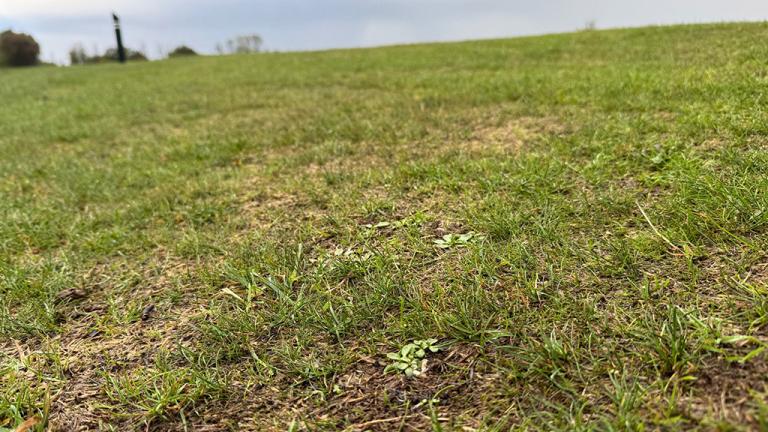
Hydrophobic soils occur when soil particles lose the capability to bond with water droplets, which then run through the soil profile and are lost. This hydrophobic organic coating often occurs in channels or fissures in the soil, leading to uneven drainage and inconsistent surface soil moisture – the worst combination for plant health and playability.
Plants in affected areas die back to leave dry patch areas that are typically slow to recover, even when growing conditions improve. It leads to greater run off and nutrient leaching, with less efficient use of irrigation where available. Then, to further compound the issues, germination and growth of any overseeding to repair the patches is inhibited.
Implementing your wetting agent programme earlier in the spring helps to mitigate the effects of hydrophobic soils and helps to maintain the more consistent soil moisture balance across the whole surface – and will give season-long better conditions for tuyrf health and play.