Autumn target for emerging weeds
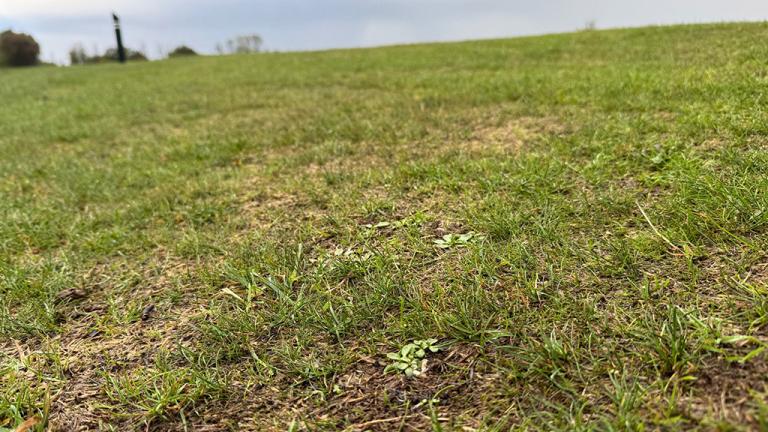
Broad-leaved weeds have been quick to take advantage of recent rains to spring up in parched turf surfaces affected by the long hot summer. Issues are particularly evident on unirrigated fairways, sports turf and lawns, highlights Syngenta Technical Manager, Sean Loakes.
“While turf is expected to recover from drought effects over time, weeds have been quick to germinate and establish without the competition from grass cover,” he warns.

Once turf has recovered from the initial heat stress, he urges turf managers to utilise autumn growing conditions to tackle newly emerged weeds while they are still small.
“Although spring herbicide application has traditionally been the primary treatment timing, changing climatic conditions, with extended autumn growing conditions, increasingly gives an opportunity to control weeds that have emerged over the season,” advises Sean.
He advocates the twin-active ingredients in Overtake - fluroxypyr and florasulam - have been shown to give control of a broad range of key weeds now emerging in sports turf and lawns - including clover, daisy, speedwell, dandelion, chickweed and creeping buttercup.
“Early Overtake treatment of weeds while they are still small and actively growing is always the most effective for control with selective herbicides.”

Sean points out that targeting weeds in the autumn, while they are still small, could prove advantageous, compared to leaving them until they are more established next spring that will make control more difficult.
A further advantage of favourable autumn growing conditions gives the chance for turf recovery to fill in the gaps from removing weeds before the weather cools, and provide better playing conditions on sports turf over the winter season.

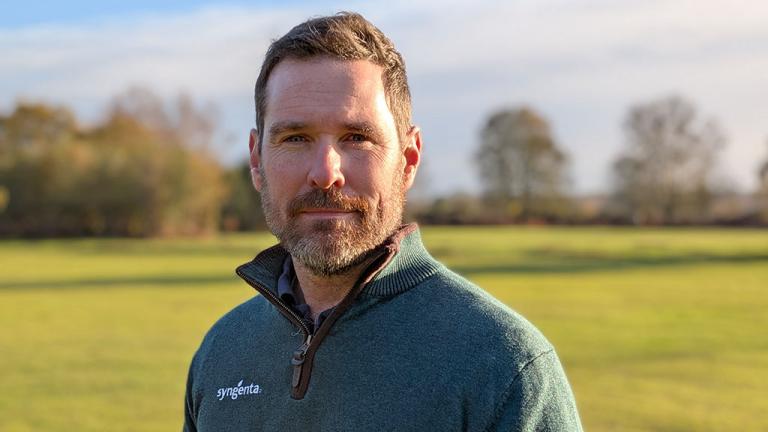
Importantly, at a busy time of year for turf maintenance, Sean (above) highlights Syngenta application trials recommend Overtake can be sprayed at a time-saving water volume of just 200 l/ha, compared to 400 l or 800 l/ha with some other herbicides. The turf-safe liquid formulation is also approved for knapsack and pedestrian sprayer application, suited to spot treatments and lawn application.
“New Syngenta broad-leaved weed herbicide technology, currently in the UK registration pipeline, should continue to expand turf managers options in the future, especially for spring treatments.
“It will also deliver new active ingredients for weed control in turf as an essential step in reducing the risks of herbicide resistance developing,” advises Sean. Both Overtake and new Syngenta herbicide developments contain a combination of active ingredients from different HRAC groups designated by the Herbicide Resistance Action Committee.
“Simplifying the resistance strategy makes it straightforward for turf managers to design a season-long herbicide programme that will work now, and into the future,” he adds.
| Optimise your autumn herbicide strategy |
|
|
|
|