Spraying Tips from ASOOTY Champion

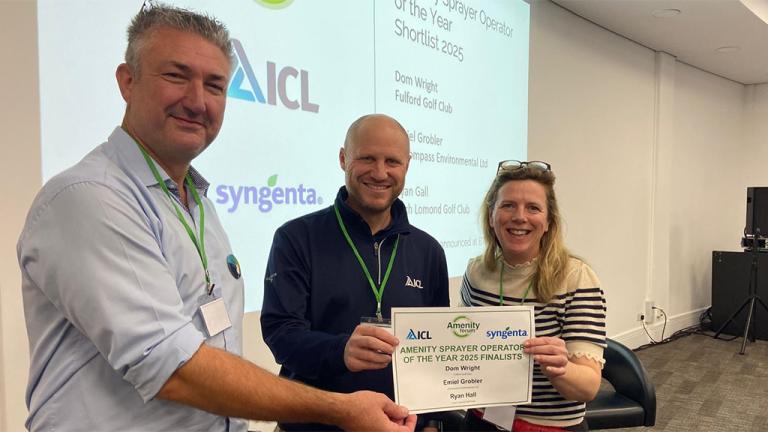
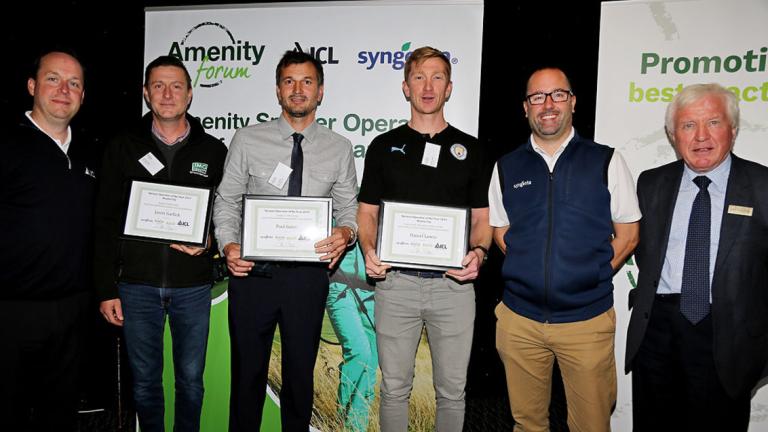
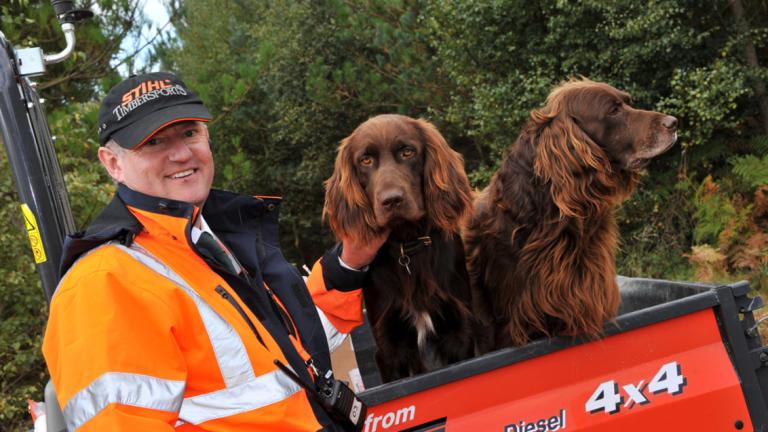
Ryan Gall, winner of the Amenity Sprayer Operator of the Year, offers his advice and experience to other sprayer operators.
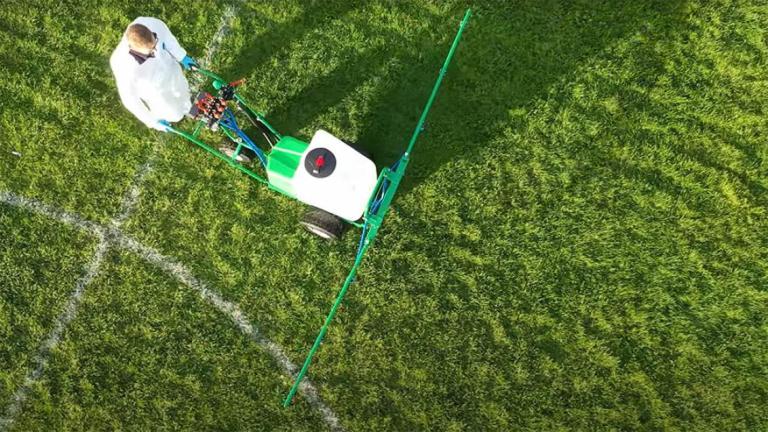
Based at the prestigious Loch Lomond Golf Club in Scotland, Ryan ensures that every application is delivered with care, attention and professionalism.

Interview first published in Turf Matters magazine, with Ryan Gall in conversation with editor, Scott MacCallum.
WHAT MAKES A GREAT SPRAY OPERATOR?
I would say that it is much more than somebody who just holds qualifications. A good operator understands what they’re doing and why they’re doing it. He or she will be trying to make the best decisions possible - being switched on and always assessing what’s happening around them.
Also, keeping up to date with industry standards, new products, regulation and keeping on top of the admin is vitally important.
You must stay conscious of what you are doing at all times, even if what you are doing is repetitive. You can’t cut corners because when goes wrong, it can go wrong pretty monumentally. There’s no hiding from it, and it can cost someone their job.
SHOULD SPRAYING ALWAYS BE THE FIRST OPTION?
Our spraying is mainly based on insecticides, pesticides and fertilisers and those applications shouldn’t be the first consideration. What it should be is part of an integrated pest management plan, and you shouldn’t just go reaching for the keys to the chem safe every time you have a problem.
You need to appreciate what is causing the problem and how the issue can be culturally or mechanically resolved.

We always question is it a case of, “Do we actually need to spray?” or “Can we carry out some cultural work and find out what, in time, we can improve”.
You also have to consider whether it is the right time to spray? If you are going to spray, is it the right window for it? Knowing when not to spray is perhaps a more important question than knowing when to spray.
In that sense it sounds corny, and I’m probably talking myself out of a job, but knowing when to put away the key to the sprayer is important.
UNDERSTANDING YOUR SPRAYER
If you don’t calibrate properly, you can be over applying or under applying fungicides, herbicides or insecticides. Indeed, if you are not calibrated properly you could potentially be breaking the law.
If you are calibrated properly, you are being more efficient with your application, reducing waste and saving money.

There are apps out there to help, including those from Syngenta, which are really good, but my boss, Loch Lomond Course Manager, Peter Haggarty, drives it home that you must know what you’re doing and not to rely purely on apps, because you might not always have access to them. Before I started as a spraying operator I first had to show Peter that I could calibrate and understand the calibrations.
At Loch Lomond we’ve built our own calculators for calibration on Excel. We always go back to these and only use the apps to back up our calibration.
For calibration itself, you should be checking forward speed, nozzle output, pressure, boom height and different water volumes etc for each application situation.
EQUIPMENT MAINTENANCE
We carry out a nozzle check every morning before we start spraying, just to make sure we don’t have any blocked nozzles and then we check the spray pattern. It is essentially just a dry run to make sure everything’s all good before we go out on to the turf. I also jug test, just to make sure everything’s okay.

We’ve got 13 hectares of fairway at Loch Lomond, so if something’s out, then we could be using a lot of product unnecessarily, which could cost the club a lot of money. It helps ensure that nozzles aren’t worn out, while you can often tell if the nozzle output is too high through jug testing.
Other elements to check regularly are the filters; making sure that hoses aren’t showing any wear; ensuring that the pump is delivering the correct pressure; that all agitation systems are working so that nothing settles in the tank, and finally, that the boom is aligned correctly. If it is a fold-out boom, you must make sure that it is level and at the correct height.
Being on top of all these checks gives you the confidence that the machine is operating as it should.
HOW DO YOU CHOOSE THE CORRECT NOZZLE?
Choosing the correct nozzle is based on what you’re trying to spray, what the target is and what your water volume is. We primarily use 04s because we spray everything at 336L/ha, and this is the nozzle that suits that particular water volume at a good operating pressure. We also go to 08s for higher water volumes, such as wetting agents and products that need to be in the soil as opposed to the leaf.

When selecting a nozzle you must consider your coverage, your target, your water volume, penetration, and product retention.
A lot of new nozzles now have anti-drift technology which are more efficient and reduces these buffer zones slightly, depending on the rating. The correct nozzle can be dictated by the product and it will tell you on the Product label, what is the ideal water volume.
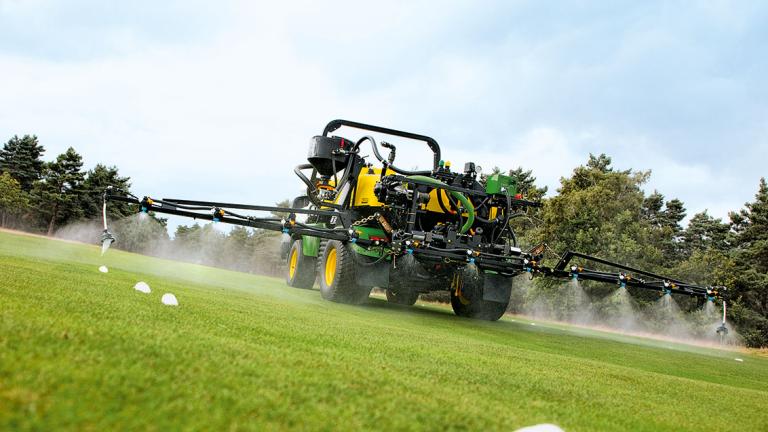
At Loch Lomond we have a John Deere Sprayer which has a chart on the side of its tank, while Syngenta provides you with a nozzle chart from which you can reference water volume, travelling speed and pressure.
Wind speed also affects drift risk, but with some of the new nozzle technology, you do have a bit more leeway. My guide always has always been that if the wind can blow a crisp packet, then you’re on shaky ground and shouldn’t really be spraying.
UNDERSTAND THE PRODUCT LABEL AND WHAT YOU’RE SPRAYING
This covers approved uses, application rates, timing, water volume, any buffer zone regulations you need to abide by, as well as any extra PPE you might need to wear.
Also, with some pesticides and insecticides you have a maximum number of applications, so you need to know that in certain cases you can only apply a specific quantity, or a certain number of times, within a year.
You also need to know active ingredients and what groups they fall under and what the different active ingredients do for the most efficient protection. Knowing this information is so important.
PAPERWORK AND RECORD KEEPING
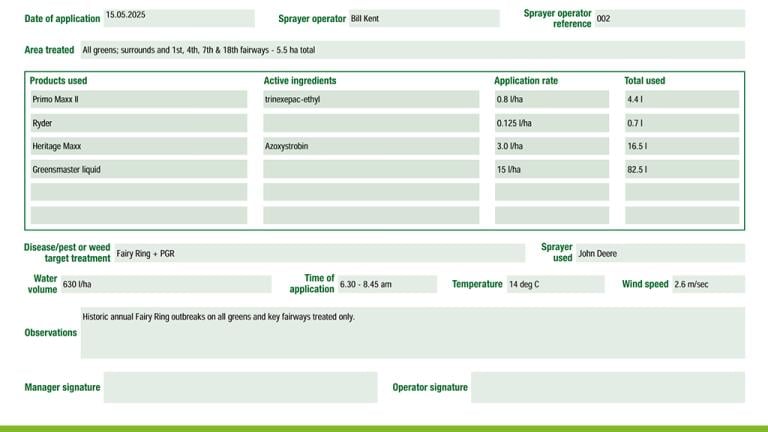
I maintain all the spraying records at Loch Lomond, and we are extremely thorough. We have records for: each product used; the plant-food ratio; active ingredients; the rate per hectare per sprayer; the amount we have used and the sprayer settings - including boom width, water volume, nozzle output and pressure.

We also include comments. For example, when spraying fairways we will note that it took “x amount” to spray, or that an extra area was included, just so that next time we go and do the same area, we know that we’re not under or over dosing.
Again, we’ve built our own Excel files and they are broken down into different workbooks. I’ve got a different workbook for every surface that gets sprayed - greens, tees, fairways, approaches, and rough.
Anything that is applied chemically goes into these records sheets, whether that is granular fertiliser, fungicide, or pesticide. Everything is colour-coded and dated.
It’s part of legislation that you have to keep a record. And again, from the records we keep, a stock check.
For example, we spray a lot of straight fertiliser and we do our own mixes, so keeping track of what we have used is massive. We can use for a few hundred kilos of ammonium sulphate for example to spray fairways, so we always like to keep sufficient in stock because running out part way through an application wouldn’t be ideal!
That highlights the potential issues of not having accurate paperwork.
NEW TECHNOLOGY
With technology these days, you have to keep up to speed with the new developments. Ideally you should be attending manufacturer training or demonstration days and conferences like BTME and the Scottish conference just to talk with like-minded people.

It’s about knowing what your technology is doing and using it to advantage. We are lucky at Loch Lomond, all our surfaces are mapped, so I can spray all their surfaces using the GPS and section control, which switches nozzles off automatically as I leave the surface - which goes back to efficiency of product use, reducing waste and avoiding off-target spraying.
You must be up to speed to know how to use that technology, and knowing when something’s not right. A lot of it can mask a problem, so knowing what to look for is important. Sometimes it is the basic stuff like a blocked filter or a blocked nozzle that can catch you out.
I appreciate that not everyone has the luxury of the very latest technology, but just because you can now spray fairways using auto steer doesn’t mean that you can switch off. There are many other things that you need to watch out for including obstacles and always making sure the sprayer is operating correctly. One thing that has not been taken away is the skill element of the job.

Knowing how to spray with new technology is just as difficult as learning to spray with a 400-litre sprayer with fold out booms. It just gives you something different to worry about and a different set of challenges.
ADVICE TO A NEW SPRAYER OPERATOR
What I would say to a new sprayer operator is:
1. Never stop asking “Why”
2. Always know what you’re spraying
3. Don’t just spray because somebody else has or because you’ve done it in the past
4. Understand the problem
5. Understand the product
6. Understand the conditions, and - the big one –
7. Understand your equipment.
I take a lot of pride in what I do because if you get a bad finish, you’ll see it for weeks. You get better every time you apply something. I’m not the same sprayer operator that I was five years ago. I’m always trying to get better, always trying to become more confident in what I do.
That just comes from preparation and time in the seat.
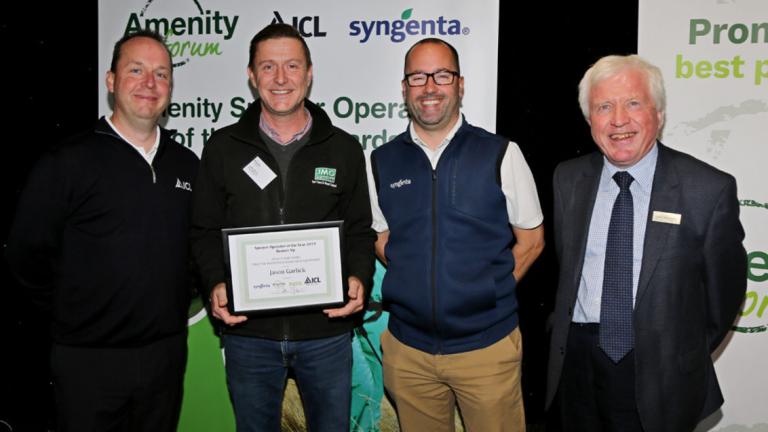
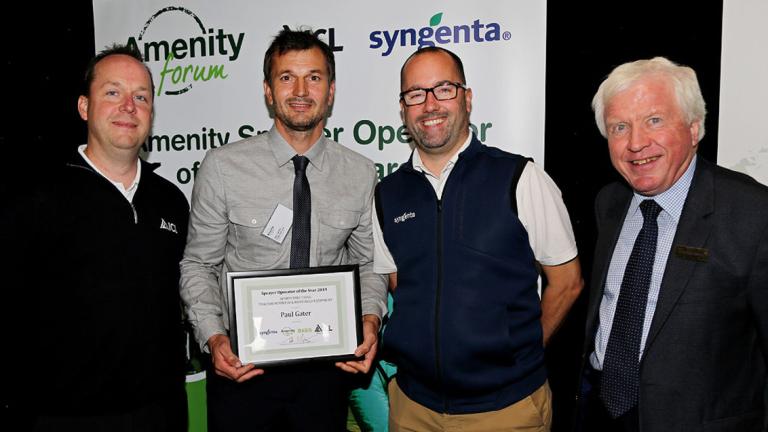
What is ASOOTY?The Amenity Sprayer Operator of the Year is run by the Amenity Forum, supported by Syngenta and ICL. It recognises the UK's professional sprayer operators in the sports turf, amenity and landscape management industries. The Award highlights best practice and experience in the challenging role of ensuring accurate application on all amenity surfaces, and to share guidance and advice that will raise the standards of spray application across the amenity industry. ASOOTY 2026/27 is currently open to entries from all sprayer operators across the amenity industry, including golf and sports turf, professional landscape management, industrial applications and lawncare professionals.
|