Application on target

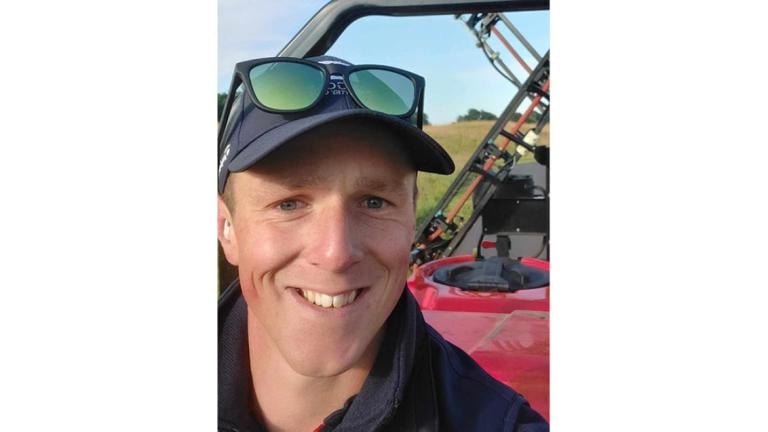
Syngenta Technical Manager, Sean Loakes, met up with Dan Waring, previous winner of the Amenity Sprayer Operator of the Year Award, at the JCB Golf and Country Club.
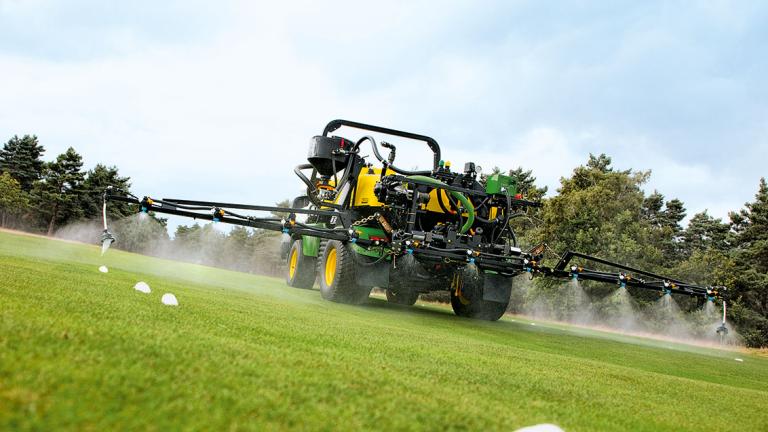
Spray operation can make a huge impact on the effectiveness of your spray applications. So it's very important that we fine tune the elements that come together to make a spray.
Things like nozzle selection, speed and water volume are all going to have a big impact.
We visited Dan Waring to understand how he approaches different spray situations and gain his practical insights, along with the science behind why all that works.

Watch all you need to know for turf application here
Greens and tees
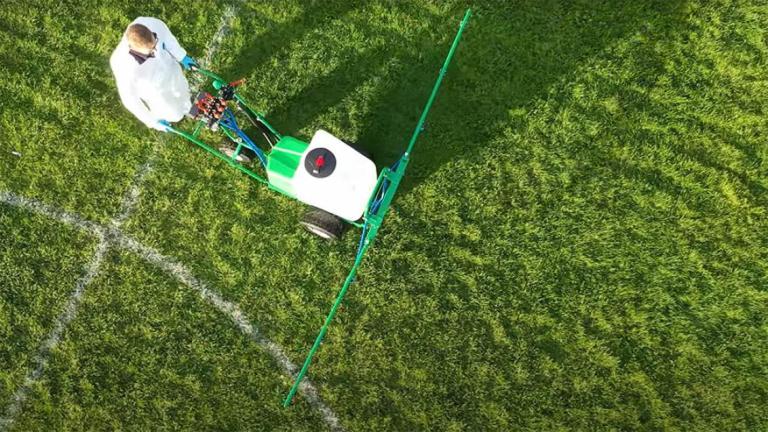
Greens and tees can be the most difficult areas of golf course to spray, but they're also the most important; highly valuable areas and areas we can't afford to go wrong.
There's lots of things to think about. We've got unusual, irregular shapes, often with lots of undulations and levels.
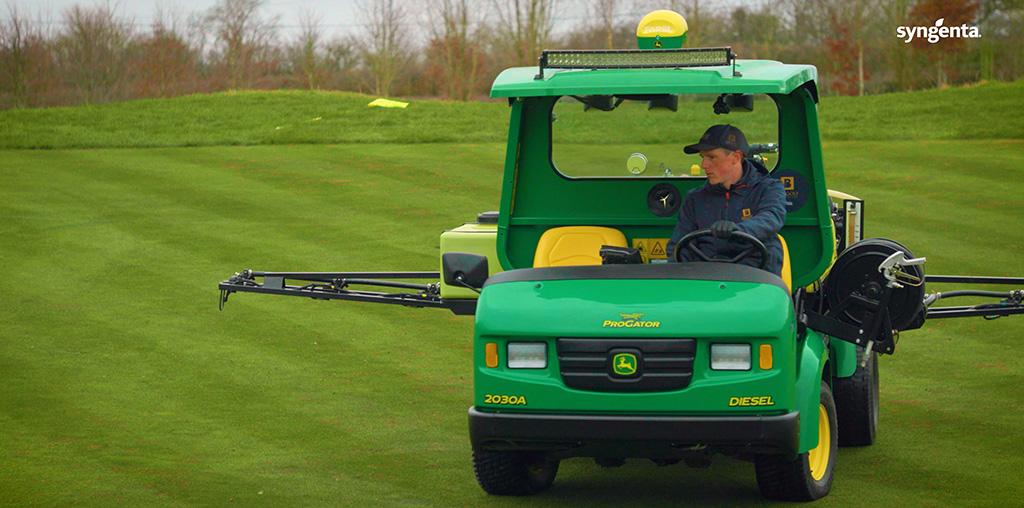
The turf surface is a really dense canopy, with really small leaves - so it's hard to land water droplets and get them to stick on the leaf, if that’s the target for a fungicide, PGR or foliar feed, for example.
Dan’s Top Tips for greens I'll always start with the basics. Check your nozzles and make sure it's the right nozzle for what you’re trying to spray. That’s very important because you want that water to get where you want it to be in that canopy. Look out for your boom height, because we’ve got a lot of rolling greens here. We want to make sure that the nozzle height is the optimum 50cm from the ground. Be particularly conscious of when you’re driving on and off sloping greens, because that’s going to affect the nozzle height of the boom at the back of the sprayer. Then your pressure. You want to be checking that constantly, to keep it in ‘the goldilocks’ of pressure range, as I call it, at 2 to 3 bar. That's really going to reduce the drift of off target spray. And then, just speed. Just make sure your speed is suitable for the area that you’re spraying. Greens and tees are smaller, so you want to be going just that little bit slower and make sure you've got that time to think about what you are doing, what you're applying and where it's actually going on the surface. Nozzles, pressure and water volume needs to be matched accordingly. |
So, when we're thinking about getting the most accurate application on our greens and tees, we can look to some of the research we've done in the science of spraying.
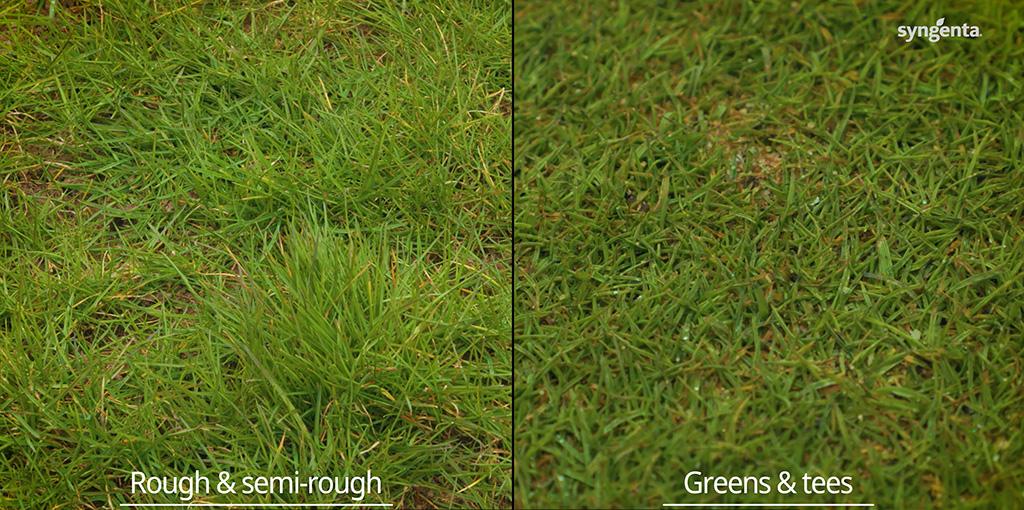
We've got a really short height of cut, so that means a very small leaf. And when we're trying to land and retain spray on that it's very difficult. Smaller droplets are going to do a better job, since big droplets are much more likely to overwet the leaf and roll or run off.
When we're talking about water volumes, for a foliar application it's really good to keep those lower. So, 250 to 300 l/ha is going to be really good at giving you coverage, but not so much that you lose it through the canopy and doesn’t stay on that leaf.

Slow speeds are really important. They're going to allow you to use a small orifice nozzle, such as an 025, which allows you to use a lower water volume and give those small droplets, but without applying too much drift because you're going slower as well.
However, if you are targeting a soil application on greens or any surfaces, for leatherjackets, wetting agents or with a nematode treatment, for example, larger spray droplets and higher water volumes are going to give you more penetration through the canopy. A larger 08 XC soil nozzle will apply 800 – 1000 l/ha water volume at comparable low speeds and pressure, with larger droplets that will better reach though to the soil surface.

Since the intention of soil applications is not to retain product on the leaf, application to wet surfaces or in light drizzly rain are particularly effective, or irrigate straight after application – ideally as you drive off the green. But avoid spraying in heavy rain that might lead to product running and pooling in low spots.
Watch all you need to know for turf application here
Fairways & Fringes
The larger leaf surface area on turf of fairways and fringes are much easier areas to target. But they're not without their challenges.
You need to stay ahead of golfers to avoid disruption. Spraying at faster speeds increases the potential for drift, and there’s potential pitfalls of undulations and ledges as well.
Dan’s Top Tips for fairways Firstly, know your areas. I think it's very important to accurately map the course and know precisely the area you are spraying. You’ll soon get to know where your tank fill should get you around the course, and that’s an instant watch out if it changes. Similar to greens, watch your speed. Since it's a bigger, more open, area, it's very easy to get carried away, especially trying to keep ahead of that golf. That’s particularly the case if you use an auto-rate controller or GPS controller. That's going to compensate for any increase in speed by increasing your pressure, to maintain consistent application rate – which will create more smaller droplets and could seriously increase the risk of drift. Watch the pressure gauge to stay in the 2 – 3 bar range. 
The big advantage we find with GPS technology is that if you get disrupted with golf, you know exactly where you’ve already sprayed on the computer. So you can stop, let golf pass and start again precisely where you left off. That’s really useful for us on a busy golf day. |
With longer leaves on a fairway height of cut, medium to coarse droplets from say an 04 XC Nozzle are going to do a much better job of keeping spray on that slightly larger leaf. And then also you get the benefit of reduced spray drift at typical speeds of 5 – 7 km/hr.

Using a water volume of 250 to 350 l/ha is going to give you really good coverage, but you don’t get so much water on the leaf that it’s leading to runoff and loss.
Using 250 – 300 l/ha, compared to previous conventional turf applications at 600 - 800 l/ha, means a reduced number of loads and so generally a reduced time to get out and complete the whole course application.
Again, if you need to go with a larger water volume for a soil application, so 600 to 900 l/ha, switching to an 08 XC Soil Nozzle is going to give you those larger droplets that don’t stay on the leaf and push down through the canopy and into the thatch layer. So much better for targeting there.
Longer rough
Longer heights of cut in semi- and rough present a different set of circumstances, which is going to come with its own set of different challenges.

It's typically a really large wide area to be applying to. You've got a lot more vegetation per meter squared, so it takes different amount of spray volumes to cover that.
Dan’s Top Tips for rough I’d always check your label first for advice on water volume and droplet recommendation, that will give you the combination of speed and your nozzle - which will then work in conjunction with your pressure – to keep within the 2 to 3 bar. You want to be checking your ground speed when you driving, because obviously it’s not always going to be smooth that can affect boom stability. Also different levels of vegetation that will influence nozzle height to the intended target. With more vegetation there is a common misconception to increase the pressure to force spray down into the leaf. However, in reality the higher pressure creates more small droplets which are actually less effective in penetrating the sward – and it means you're going to increase your drift. So again you want to be keeping that pressure range within 2 to 3 bar. And just watch your speed to be safe and be cautious of the area that you’re spraying on. |
Thinking about the mechanics and the science of spray application on rough, with the higher height of cut those longer leaves can handle a bit larger droplet size and retain more water for complete coverage.
So the coarse and the medium droplets aren't going to run off as freely as on a greens height of cut, for example. An 04 XC Nozzle, applying 350 – 400 l/ha at slightly slower speeds than a fairway, to take account of rougher terrain, will give an ideal compromise of water volume and droplet size for leaf coverage and retention.
It is important to understand the relationship between nozzle design, droplet size, water volume, speed and pressure – and how changing any one of them will influence the spray characteristics.
Knowing your target and where you want the spray to end up lets you be in control of the application process and achieve the best results possible.
Weather to spray With all applications weather conditions are really important. When you're thinking about getting a spray window you can use your Turf Advisor app to find an optimum time. Part of that is when its dry and when there’s not too much wind, but Turf Advisor also looks at temperature – avoiding too high when spray may dry too quickly and scorch leaves – along with leaf wetness, humidity and evaporation risk. It's a great tool to use in conjunction with disease risk forecasts, since if risks are very high, for example, it may be necessary to spray when any opportunity arises to prevent damage, rather than waiting until after infection has hit. Download Turf Advisor here |

Syngenta would like to thank Dan and the team at JCB for filming their application and learning their insights. You can watch the videos to find out more here. |