Changing times for turf disease

Weather patterns are creating an increasing challenge for turf management. Cultural practices are more frequently being hindered by difficult conditions during planned maintenance weeks. But the biggest impacts now, and certainly into the future, are the implications for damaging disease effects.
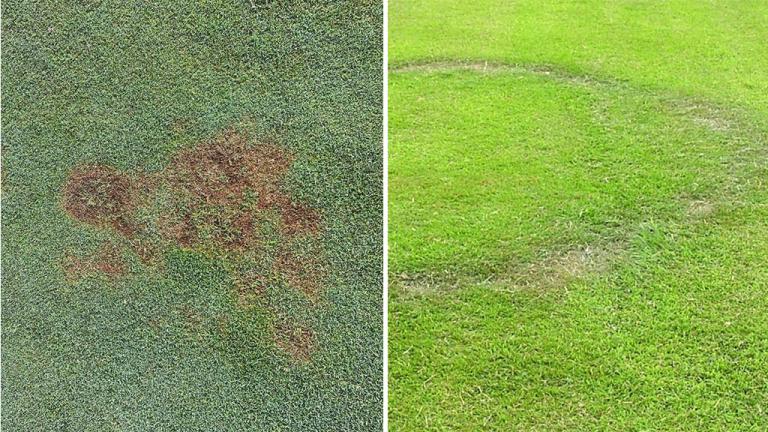
That change has been especially notable with a wholesale shift in diseases affecting turf, along with the patterns of outbreaks occurring. Where early winter microdochium was once the primary scourge of surface quality, on many golf courses dollar spot is now having the most protracted damaging effects, or anthracnose hits during periods of turf stress.

But as weather patterns continue to change, so management practices need to evolve to meet different disease threats. Greenkeepers and turf mangers must be ready to better adapt strategies and practices to effectively counter the threats.

Most turf diseases thrive in relatively mild and moist conditions – encouraged by prolonged leaf wetness and the warm micro-climate of the turf surface, especially where there’s dead or decaying organic matter.
Hard winter frosts, that were once a huge helping hand in stopping disease development, are now few and far between for many in a ‘new-normal’ season. And, if the trends continue, will be less and less frequent in the future. Even a short cold snap is now often bookended by periods of mild and wet weather.
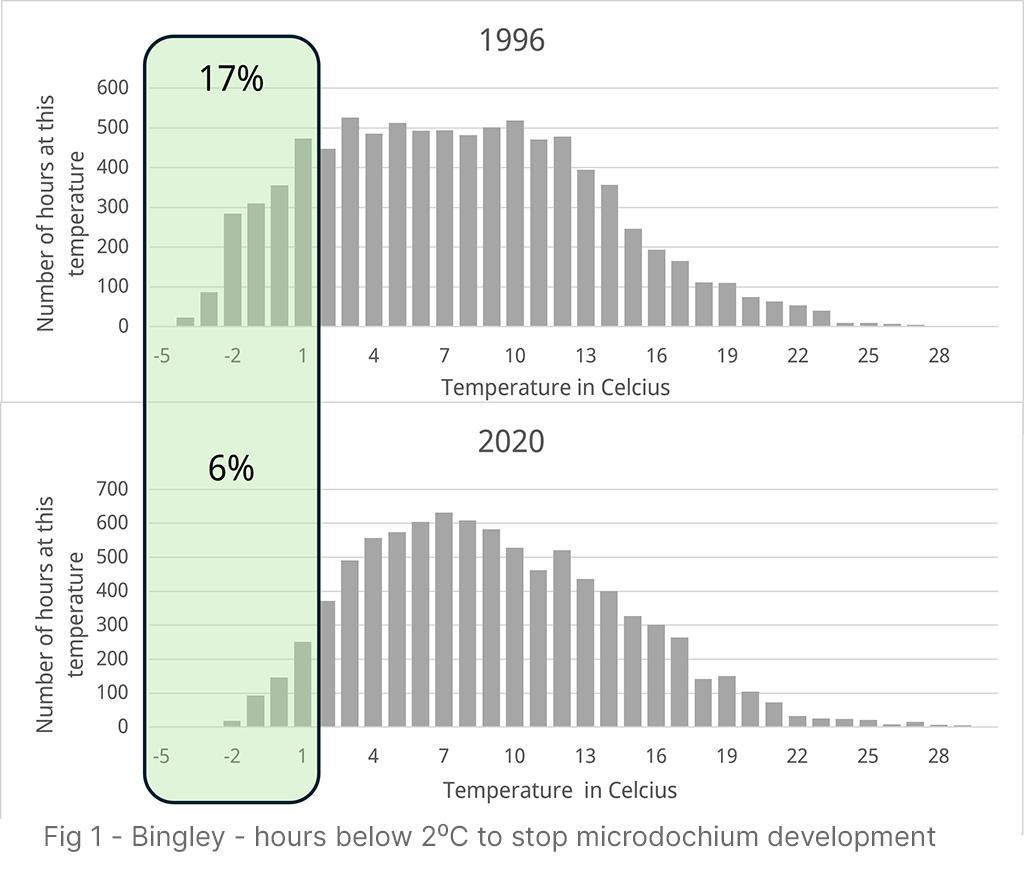
In Bingley, Yorkshire, for example, where we conduct many turf trials and fairly central to UK, in the 1990s around 17% of the year the temperatures were too cold for microdochium patch to develop. However, in 2020 that had reduced to just 6% of days (Fig 1).
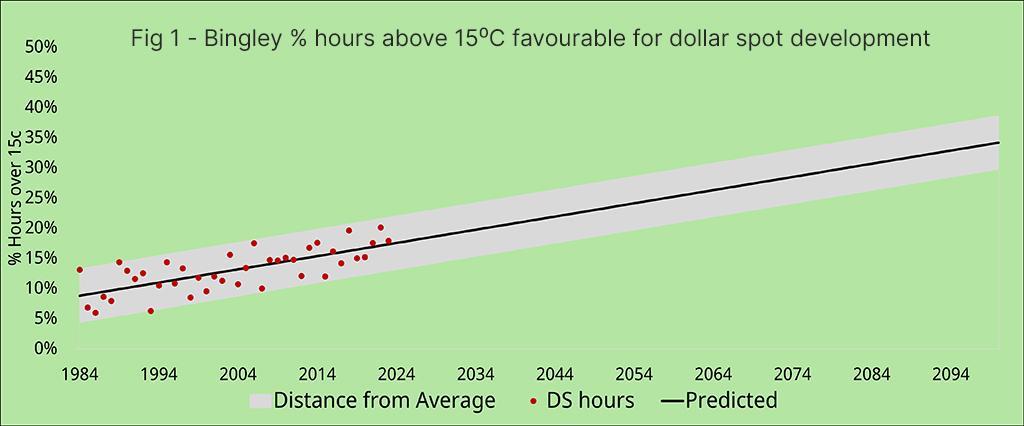
These are long term historical data, but, if the trends continue, it’s only going to get fewer cold periods and prolonged warmer temperatures. Looking at the trends for dollar spot conducive conditions (Fig 2), it is clear why the disease is becoming more prevalent, and why, without greenkeepers’ intervention, that is likely to continue.
Furthermore, similar changes in rainfall patterns and temperatures have ramifications for disease development and for turf health. That’s all compounded by turf itself struggling to adapt to rapidly changing seasonal weather conditions and management strategies.
Most greenkeepers have instigated and evolved successful Integrated Turf Management (ITM) practices to mitigate against some of the common disease threats, and why microdochium is possibly in better control in recent years. But as weather patterns and diseases change, some of those practices - such as nutrition, height of cut or moisture management - may, inadvertently, be contributing to other pathogens increasing.
With such fluid multi-factor influences and the relatively rapid change in conditions, it is more important than ever to have fungicide plans and strategies that can be adapted to the complexity of current situations.
The first, and fundamental, change is that a historical approach of fixed routine fungicide applications, relying on the same products applied on calendar dates, have little value in tackling today’s challenges.
Fungicide programmes now, and into the future, must be much more dynamic and far more adaptable to the seasonal threats and real-time disease pressures – using the most appropriate products at the optimum timing.
Core to that strategy is a better understanding of the disease pathogens; how they will be responding to both prevailing weather conditions and the current state of your turf health. Along with more detailed research and knowledge of how different fungicides work and where they can be best utilised.
ITM strategies will remain crucial, but the timing and the intensity of actions may need to be adapted to counter different disease pressures.

Better forecasting of diseases and matching to weather conditions has developed hugely in recent years – with improved accuracy of the disease models and precision weather forecasting. The Smith Kerns model, for example, has been instrumental in identifying dollar spot risks, with the model in the Syngenta Turf Advisor app proven to enhance disease control through better Ascernity and Instrata Elite application timing.
The microdochium patch model has given valuable insights for fungicide timing – with STRI trials proving improved control from fewer well-timed preventative fungicide applications, compared to curative treatment when disease is seen.

However, as the disease evolves, the Syngenta digital team is now looking to further develop a new enhanced microdochium model that better reflects real life situations – incorporating the experiences and reports from greenkeepers right through the extended season.
Another factor for closer consideration will be the frequency of fungicide applications required to protect turf through prolonged periods of increased disease pressure at higher temperatures. Disease pathogens are more active in warmer conditions, while the duration of efficacy of chemical fungicides is shortened when it is hotter.
Essentially, in most situations more fungicide applications are going to be required to maintain the consistent level of disease control, compared to current conditions. Fortunately, greenkeepers now have more fungicide products available, and more effective options – with further new chemistry from Syngenta in the UK registration system.
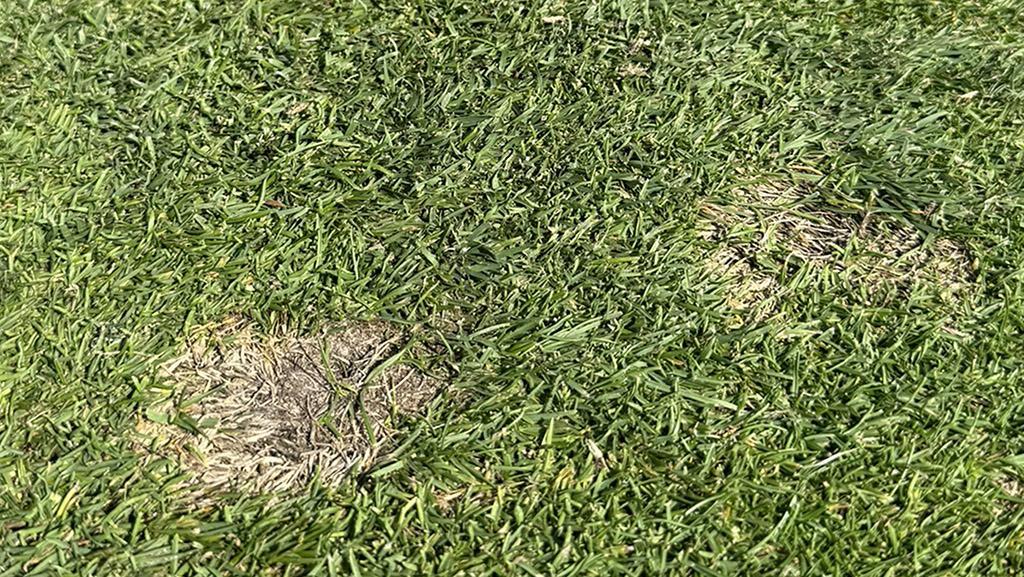
There will be increased pressure to use the fungicides more effectively, including application best practice and improved timing of treatments to prevent disease establishing that could increase infection pressure.
There’s also the need to rotate the limited modes of chemistry activity, to avoid pathogens developing resistance and maintaining the product’s efficacy. It’s been calculated where the resistance to a product with one mode of action is one in a million, for example, using a product with two modes of action, such as Ascernity or Instrata Elite, stretches out the risk to one in a trillion.
ITM will help to create healthier plants that are better able to withstand the effects of stress, which is often a precursor of disease outbreaks. Promoting stronger plants, typically with greater and deeper root mass, builds better resilience to the changing climatic stress.
Combinations of biostimulants and fungicides, along with other turf health inducing attributes of Primo Maxx II PGR and Qualibra moisture management strategies, for example, can keep greenkeepers ahead of changing disease pressures – backed by ongoing turf research and decision support tools to help get the best possible results.