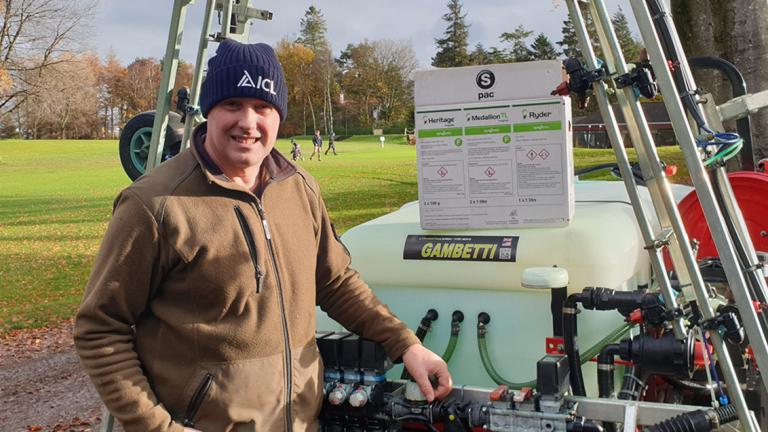
Get microdochium patch back under control
Just 3% of greenkeepers consider that they have control of microdochium patch completely nailed on their courses, according to a survey of turf disease perceptions at BTME earlier this year. While over 70% believed they had some degree of reasonable control, more than a quarter still feel they have no adequate measures to manage outbreaks.

The responses clearly highlighted the ongoing issues of microdochium patch as the primary turf disease threat to surface quality and playability in the UK and Ireland.
Risks have been further exacerbated this season on turf that has been excessively stressed by prolonged drought and high temperatures, with reduced plant reserves and lower capability to fight disease infection.
And it is getting worse, with changing climatic conditions that are more favourable to the fungi pathogen. Warmer temperatures into late autumn, and typically through the whole winter, are conducive to faster disease development. Combined with longer periods of leaf wetness and heavy dew, it’s the perfect scenario for disease development.
Most UK golf courses now experience at least 10% fewer days or hours below 2⁰C, compared to a decade ago. Crucially that’s the temperature considered to stop disease and provide a respite from development. As those sub 2⁰C hours decline, so the relentless pressure increases.
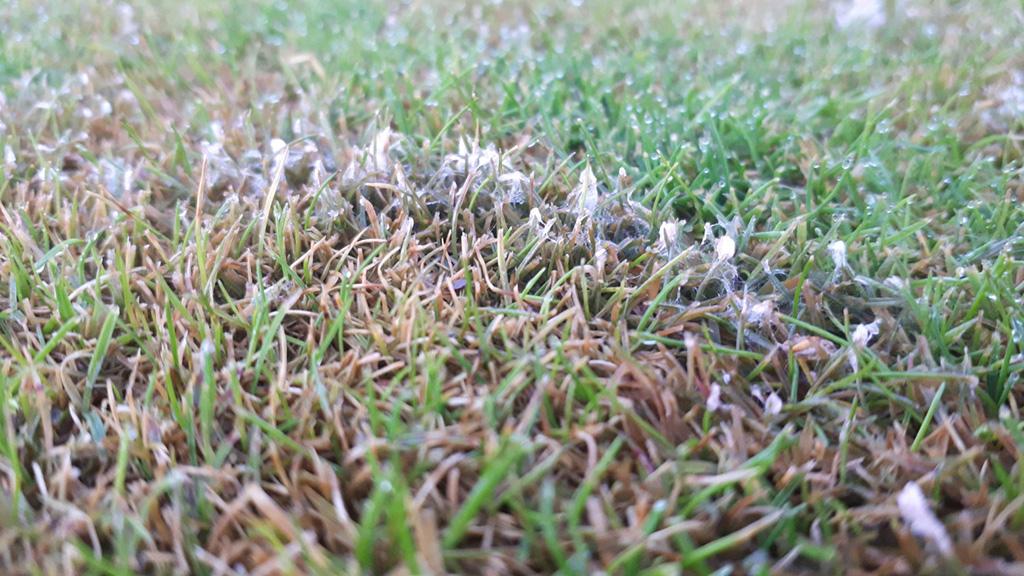
Where disease does break out in early winter, when short days and low light levels prevent recovery, the resulting scars can remain for months.
All greenkeepers surveyed who believed they had good levels of microdochium disease control reported using an integrated approach of cultural controls and fungicide intervention where required. With the focus firmly on preventing the initial outbreaks of disease.
Where disease pressure threatens to overwhelm the plant’s natural ability to withstand disease or grow away from infection, well-timed fungicide applications are essential to give protection.
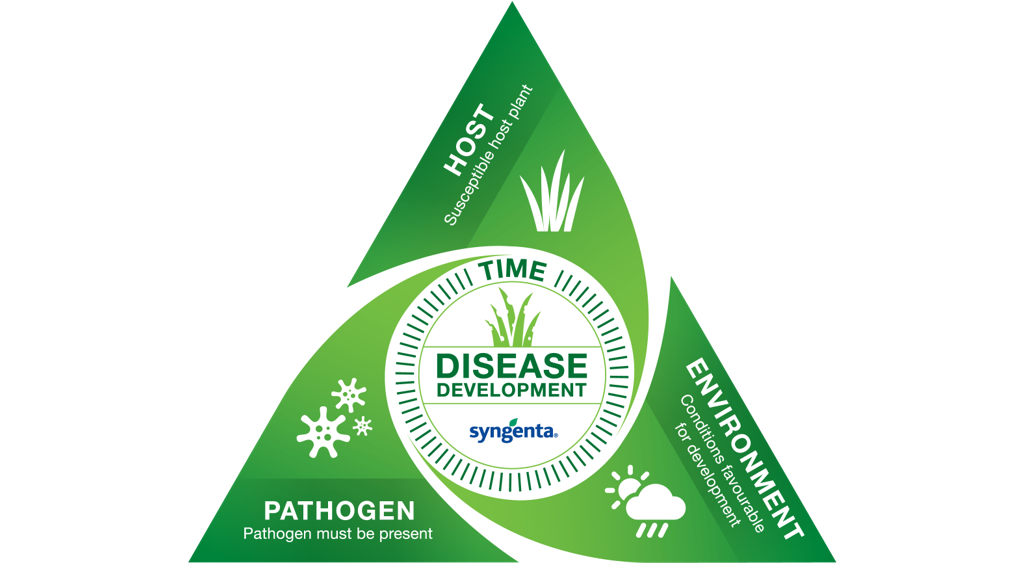
Over recent years turf research has repeatedly shown that preventative application during periods of disease activity is most successful at minimising damaging effects – targeting the pathogen before it has the chance to penetrate and affect the plant.
Furthermore, preventing disease establishing serves to reduce further risk and avoids more intensive fire-brigade actions to tackle outbreaks. Using this well-timed proactive approach in STRI trials has been proven to require fewer applications over the course of the microdochium season, compared to treatment at signs of disease or the historic approach of routine prophylactic treatments.
That has been further refined with the creation of the AIM programme, utilising three different fungicides and modes of action, selected to be the most appropriate for weather conditions going into the winter.
It starts the strategy with the highly systemic Ascernity whilst the turf is actively growing. It’s a treatment often aimed at dollar spot, but where the control of that is also conferring an excellent clean start to the microdochium season. Where pressure really builds in autumn, the acclaimed Instrata Elite is then well positioned as both systemic and contact to work on the leaf and within the plant. And that leaves the only truly contact fungicide, Medallion, for protection through the slower growing periods of the winter.
The aim throughout is to keep turf clean of disease in the high-pressure periods, so that it is best placed with cultural controls to naturally resist infection and remain disease free during lower pressure periods. Fungicides still have a role to help infected surfaces recover from outbreaks - and will protect uninfected plants in the surface from attack to stop the spread – but is just proven more effective to prevent the disease pathogen in the initial stage.
Development trials results with a new Syngenta fungicide, currently in the UK registration pipeline, also showed that, in high-risk situations designed to maximise the disease pressure, well-timed preventative applications provided 92% disease control. That compared to an 87% reduction in scarring with applications at the first signs of disease and 80% reduction in damage when applied after disease had already broken out.
Key to the application timing is understanding exactly when pressure will be at its highest. The microdochium model, built into the Syngenta Turf Adviser App, uses temperature and rainfall forecast data to predict conditions conducive to disease, and help guide decision making.

It provides an important overview of the picture for disease pressure and how it compares to previous seasons. The core information can be allied to data for leaf wetness, humidity, soil temperature and growth potential, for example, that enables making a more informed decision.
Furthermore, while the Turf App currently uses national weather data, the future could see such digital tools connect direct into a weather station on the course, or data from soil sensors and monitors, for example, to deliver a bespoke site-specific turf management model.
With the top-tier of the control strategy planned, all other integrated cultural controls will be best placed to reduce disease pressure and minimise both the frequency and severity of microdochium.
Since moisture is essential for the pathogen to develop, keeping leaves dry will immediately reduce the population build-up and pressure. Mechanical dew removal is routine for most courses, with dew brushes the most popular option mentioned in the microdochium control survey, along with switching or using a blower or dew rope. Mowing is also seen as a useful dew removal technique, although may be limited in winter, with rolling also associated with leaf drying. A dew suppressant spray treatment also ranked highly for moving water off the leaf.
Comments highlighted the importance of airflow across greens to wick away moisture, as well as cutting back trees to reduce shade when the sun is on a low arch in winter. Timing of mechanical moisture removal first thing in the morning can, however, allow dew to reform under certain conditions – to be watched for.
On the topic of mowing to remove moisture, it’s worth noting that damage to the leaf tip by cutting creates the easiest entry point for disease pathogen hyphae when spores germinate on the surface. Sharp blades that slice the leaf cleanly are far more effective, compared to the tear of a blunt knife. One of the challenges being that worm casts and sand top dressing can quickly take the edge off mower blades.
Even though turf growth is slowing over the autumn, extending a Primo Maxx II PGR programme, albeit at lower rates and longer intervals, can help to minimise mowing effects by enabling more rolling with less damage, as well as creating a more turgid leaf that is cleaner to cut.
Aeration damage and heavy top-dressing during conditions of high disease pressure will also increase the risk of infection. Since maintenance is too often governed by the club calendar and operations in a high-pressure time may be unavoidable, it may be necessary to review fungicide application timing to cover the period.
As we move into autumn, fertiliser programmes will also typically be coming to an end. This season there is potential conflict where there may be greater residual nutrients that had not been released in the very dry conditions in un-irrigated areas, along with possible demand to provide nutrition for surface recovery overseeding where surface cover has been lost in the heat.
Previous correlation of microdochium damage and nutrient use does indicate there is still the need to provide adequate nutrition for turf recovery from any damage, but avoiding over excessive use that could lead to soft growth more susceptible to attack.
Using as many cultural controls as practical will reduce the disease pressure and the susceptibility of a specific course’s surfaces to infection. Local knowledge of your course and the likelihood of outbreaks is essential to interpret risk warnings and make informed decisions for optimum fungicide timing and consistently manage microdochium to stay ahead of outbreaks this season.
Microdochium patch turf management Q&A |
| Which is the best Syngenta fungicide for microdochium patch at different times of the season? |
Syngenta has a range of turf fungicides proven in trials to provide good control of microdochium patch. Which one to use is largely governed by prevailing weather conditions, along with targeting other diseases that may be present at the time of application. Ascernity is a highly systemic fungicide that is designed primarily for when turf is actively growing - to take up the active ingredient and move it around the plant, as well as to protect new growth after application. It is ideally suited from late spring through to late autumn, although with changing weather conditions its use can be extended while turf is still growing. It is also highly effective on other summer diseases, such as Dollar spot. Instrata Elite contains both systemic and contact properties, which make it the product of choice during changeable weather conditions when growth is slowing down. It is an incredibly powerful and widely considered the industry standard for microdochium patch control when weather conditions are highly favourable for the disease. Medallion TL is the only true contact fungicide for turf, making it ideal for protection of the leaf when growing conditions are slower. The active ingredient in Medallion, fludioxonil, also works by targeting disease spores in the leaf and thatch, helping to reduce background populations and future disease pressure. |
| How do I know which fungicide to apply and when? |
Research has consistently shown that fungicides are best applied preventatively, before disease has chance to impact on the turf plant. Typically this is before there are any visible signs of infection having occurred. Syngenta's Turf Advisor App includes a model that will predict when local weather conditions will be favourable for microdochium patch, along with models for other turf diseases. It also provides forecasts of weather conditions such as leaf wetness, humidity and temperature that will all influence disease development. Additional models for factors such as growth potential will indicate when turf may be under stress and more susceptible to infection. Growth potential will also help decide which mode of action - systemic or contact - is the most suitable option. Furthermore, the App provides information of when conditions are likely to be suitable for spray application. Bringing all these factors together in one App on mobile phone or tablet helps turf managers to make more positive and proactive decisions for disease management. |
| What weather conditions are most likely to result in outbreaks of microdochium patch? |
Microdochium pathogen is favoured by leaf wetness and relatively mild conditions. The disease could develop faster at higher temperatures, but if those conditions dry out the leaf it would stop. Furthermore, in warmer summer temperatures the turf plant can outgrow mild disease infections. So the greatest threat is typically in autumn or early winter, when heavy dew and rainfall is more likely to result in prolonged leaf wetness, but while temperatures are still mild enough for disease to develop. Also growing conditions are slowing with plants less able to recover from attacks. There is also significant risk of microdochium patch developing under a blanket of snow cover - with the same pathogen sometimes referred to as snow mould. While air temperatures may be cold, the snow insulates the turf surface from extremes and where the snow is melting on contact with warmer ground, the turf leaf is left constantly wet. Although disease development may be slow, over a period of time the extent of disease can be devastating when the snow melts. In susceptible areas turf managers will endeavour to get an application of Medallion TL in place before any prolonged snow cover is predicted, to protect the turf surface. |
| Is changing climate having an effect on microdochium patch? |
| Weather conditions in the UK are undoubtedly becoming more favourable to microdochium patch. Spring conditions and particularly autumn and winter are becoming milder and wetter. The trend for the number of frosts, which can help to slow down or stop disease development, has declined quickly over the past decade - and predicted to continue to fall. Weather changes have also seen intense periods of rain and heavy dew - leading to longer duration of leaf wetness favourable to disease. |
| What integrated turf management (ITM) practices can I use to minimise microdochium attacks? |
| Keeping the turf leaf as dry as possible will help to significantly reduce microdochium patch pressure. Switching, dew ropes, rolling and mowing, along with dew suppressants, are all tools to help dry the leaf. Clearing vegetation around greens and improving air flow and sunlight all help to further dry surfaces. Managing autumn nutrition should aim to avoid encouraging lush growth that may be more susceptible to infection, but still provide sufficient nutrients to promote strong plants and recovery. Biostimulants could help to encourage stronger growth. Ensuring mower blades are sharp and set for a clean cut reduces leaf damage and the opportunity for disease pathogens to ingress. All grass species can be susceptible to microdochium patch, but some species and varieties are more resilient to its effects. |
| What is the AIM pack? |
| AIM is a cost-effective way to purchase an application of each of Ascernity, Instrata Elite and Medallion, to be applied in sequence at the most appropriate time, when disease pressure is high, to provide a complete control strategy for most golf courses and sports pitches through the autumn and winter season. |