
Filter your result
Filtreer
Back to filters
Target Category
Back to filters
Back to filters
Back to filters
Back to filters

Turf Pest
Mole Crickets
Gryllotalpidae
Mole Crickets can infest turfgrass and create problems for turf development and turf quality. Most of the damage normally occurs below the soil surface in the root zone, but can occur also above the soil surface, where the insects feed on the leaves. Left unttreated, mole crickets can become very destructive to turf.Identifying Mole CricketsThese insects can be recognized by their gray-brown, velvety bodies and wide spade-like front legs, which are well adapted for digging. Adult mole crickets are about an inch to inch and a quarter in length with wings. The nymphs, or immature mole crickets, are similar looking but are smaller and have no wings. SymptomsMole crickets can be pests in certain crops and turf grass (home lawns, golf courses etc). Damage is caused by direct root feeding and the burrowing activity that destroys the plant root system.Mole crickets feed on small soil insects as well as plant roots and shoots. Some species are extremely damaging to turf especially in warm climates.Their…
Turf Disease
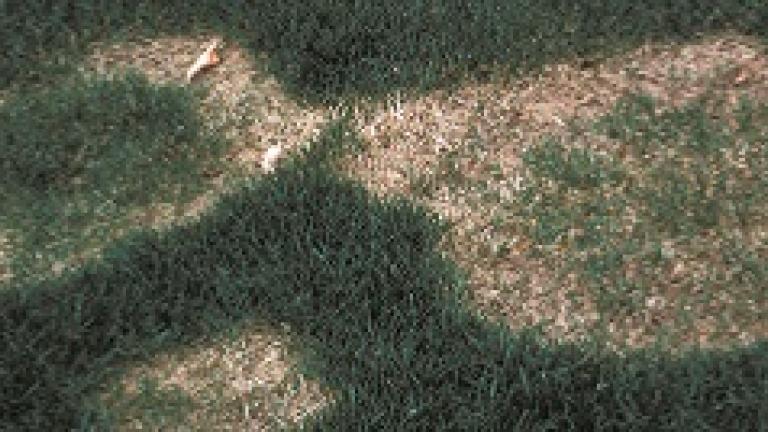
Necrotic Ring Spot
Ophiosphaerella korrae formerly known as Leptosphaeria korrae.
Susceptible turfgrass: Kentucky bluegrass, annual bluegrass, rough bluegrass and fine-leaf fescue. SymptomsNecrotic ring spot first appears as small light green spots and progresses to thinned, circular patches that are yellow to light-green in colour and approximately 8 to 40 cm in diameter.The patches, which can expand up to 1 m in diameter, eventually turn brown or straw-coloured and die.The roots and rhizomes of the affected turfgrass turn brown to black. Grass plants can survive and recolonise the centre of the patches, which leads to a ring-like appearance.Conditions favouring diseaseNecrotic ring spot initiates in moist soil, thrives in temperatures of up to 27°C and becomes more severe in higher temperatures and drought conditions.Seeded sites, as well as sodded sites in newly cleared woodlands, are susceptible to this disease.It is also found in areas with compacted soil and that are high in nitrogen during the Spring and Summer.Integrated turf managementRaise mower height.Reduce…
Turf Disease
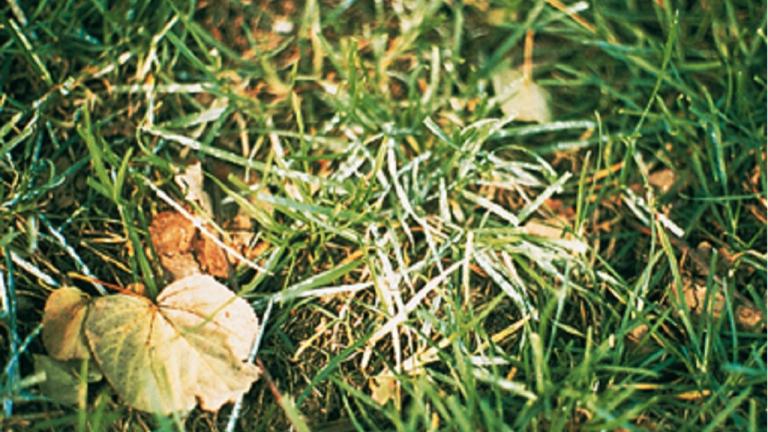
Powdery Mildew
Erysiphe graminis
Susceptible turfgrass: Kentucky bluegrass, fine-leaf fescue, bentgrass, ryegrass, and Bermuda grass. SymptomsThe disease first appears on the leaves as individual tufts of fine, white mycelium.The tufts enlarge and coalesce, causing the leaves to have a greyish-white or powdery appearance.Severely infected turf initially turns yellow, then tan and brown in colour.Infected, shaded turf can become thinned, severe infection can result in turf necrosis. Conditions favouring diseasePowdery mildew is favoured by humid, cloudy weather with temperatures between 15°C and 22°C.It occurs in areas under stress, with low light, and with high humidity.Powdery mildew is also common in areas with poor air circulation, but does not require a film of water to infect turf.Integrated turf management• Water to alleviate drought stress.• Avoid high levels of nitrogen and irrigation that produce lush leaf growth.• Raise the mower height.• Prune tree limbs to improve air circulation and the amount of sunlight.•…

Turf Disease
Pythium Blight
Pythium spp
Susceptible turfgrass: All turfgrass species, especially annual bluegrass, perennial ryegrass, bentgrasses, and tall fescue and Bermuda grass. um spp.SymptomsPythium blight appears suddenly during hot, humid weather.This disease causes greasy, brown circular spots that are initially about 2 cm to 5 cm in diameter and then rapidly enlarge in size.The spots are water-soaked and dark-coloured early in the morning.They also form fluffy white masses of fungal mycelium (cottony blight) and can coalesce to form large, irregular areas of dead turf.Infected patches may appear brownish-orange in colour.Conditions favouring diseasePythium blight favours night temperatures of over 20°C. It occurs in areas that experience more than 10 hours a day of foliar wetness for several consecutive days. It is found in the wettest areas of turf and in areas with poor drainage and air circulation. Lush-growing turf growing under nitrogen fertilisation is particularly susceptible to the disease.Integrated turf…
Turf Disease
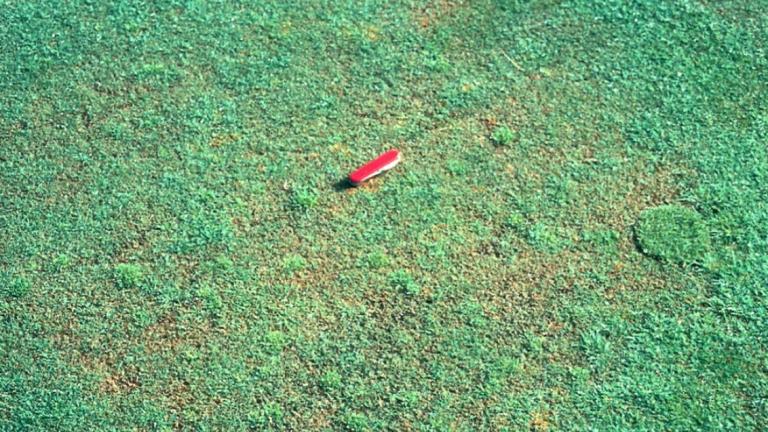
Pythium Root Rot
Pythium aphanidermatum, Pythium aristosporum, Pythium graminicola, Pythium vanterpooli, other Pythium species.
Susceptible turfgrass: Species grown on putting greens, such as Annual Bluegrass, Bentgrass, and Bermudagrass. SymptomsPythium Root Rot is common on highly maintained turf, such as golf course greens. Although symptoms of Pythium Root Rot are typically non-distinctive, this disease can appear as yellow, irregularly shaped patches.The affected turfgrass is thin, off-colour, and slow growing, while the root system is stunted with reduced volume and vigour. Foliar mycelium does not occur.Conditions favouring diseaseSome Pythium species favour temperatures between 0°C and 10°C whilst others thrive in temperatures between 21°C and 32°C. Pythium Root Rot occurs inareas with high soil moisture, poor drainage and low light. It also infects locations with low mowing height and excessive wear.Integrated turf managementIncrease the height of cut.Apply optimum amounts of nitrogen, phosphorous, and potash.Reduce mowing frequency and use lightweight mowers.Avoid overwatering.Apply low amounts of…

Turf Disease
Red Thread
Laetisaria fuciformis.
Susceptible turfgrass: All turfgrasses, but particularly severe on fine-leaf fescue, and perennial ryegrass. SymptomsRed thread causes patches that are reddish-brown in colour and 2.5 to 10 cm in diameter up to 0.5 m.Conditions favouring diseaseRed thread thrives in temperatures between 4°C to 29°C and in locations that are low in nitrogen. It also occurs in areas that experience more than 10 hours a day of foliar wetness for several consecutive days.Integrated Turf ManagementMow turf frequently and collect clippings to remove diseased portions of the leaves.Maintain adequate nitrogen and a balanced fertility.Apply moderate to high amounts of phosphorous and potash.Maintain the soil pH between 6.5 to 7.0.Reduce shade.Increase air circulation to reduce turf moisture retention. Irrigate turf deeply and as infrequently as possible.Use fungicides to control disease when it is a chronic problem.Fungicidal ControlHeritage has label recommendation for red thread in South Africa.

Turf Pest
Rove Beetles
Neosorius brevipennis (Coleoptera: Staphylinidae)
Adult Rove Beetles are small black beetles. Adults have functional wings, however no flight activity has been observed. Mature adults are black with front legs adapted for digging.The biologies of this family of beetles vary tremendously and include parasitism and associations with ants and termites. Most are predators scavengers and fungus feeders, also feeding on micro organisms in the soil. LIFE CYCLEThe beetles occur at a depth of 100mm below the surface where they live together in a tunnel system. There are 3 larval stages (instars). Eggs are laid in clusters of 3 - 10 in the blind ends of tunnels. Eggs, larvae and pupae are white. Freshly moulted adults are lighter brown. Generations overlap with all stages being present at one time. DAMAGE TO TURFGRASSThe main damage that Rove Beelte cause is castsings on the surface. This can wrongly be attributed to earthworm castings. Although the castings can bring unwated non turfgrass seed (weeds) to the surface, these beetles…

Turf Disease
Rust
Crown - Puccinia coronata; Leaf - Uromyces dactylidis; Stem (Black) - Puccinia graminis; Stripe (Yellow) - Puccinnia striiformis.
Rusts: Causal Agent: Crown - Puccinia coronata; Leaf - Uromyces dactylidis; Stem (Black) - Puccinia graminis; Stripe (Yellow) - Puccinnia striiformis. Susceptible turfgrassKentucky bluegrass, annual bluegrass, ryegrass, old bentgrass cultivars, Bermuda grass, and tall and fine fescue.SymptomsRust diseases cause light yellow flecks initially on the leaf blades and sheaths. The flecks enlarge, elongate and turn yellow in colour.The infected areas rise above the epidermis and then rupture, releasing spores that are yellowish-orange to reddish-brown in colour.The leaf blade turns yellow starting at the tip and progressing to the base sheath.A severe disease infection can cause the shoot to turn yellowish to reddish-brown in colour and slow in growth.The turf may appear thin as individual shoots die.Conditions favouring diseaseRust diseases typically occur in early spring through autumn, depending on the location of the turf.Rusts favour moist, low-light areas.Depending on the species, rusts…
Turf Disease
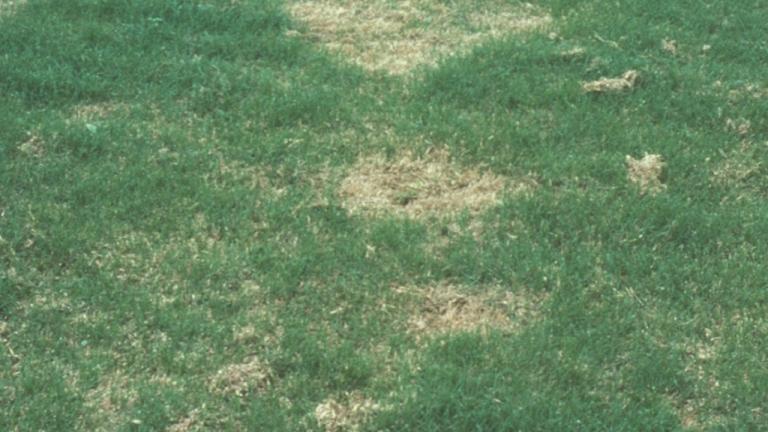
Spring Dead Spot
Ophiosphaerella korrae, Ophiosphaerella spp. formerly known as Leptosphaeria spp.
Susceptible turfgrass: Bermudagrass, buffalo grass and kikuyu grass Symptoms:Infected Bermudagrass and kikuyu grass shows disease symptoms as it emerges from winter dormancy. Spring dead spot appears as bleached, straw-coloured, circular patches that measure up to several feet in diameter. The roots of affected plants turn dark brown to black. Conditions favouring disease:Spring dead spot favours cool, wet weather in the spring and autumn and daily temperatures of less than 16°C in May. This disease is typically found where thatch is more than 1.2 cm thick and in locations with poor drainage and low potash levels. Heavy applications of nitrogen in late Summer often increase disease severity the following spring. Spring dead spot is more severe on Bermuda grass that is over three years old and in locations with long dormancy and cold temperatures. Integrated turf management:• Avoid late summer or autumn applications of nitrogen fertilisers which may enhance disease severity.• Use ammonium…
Turf Disease
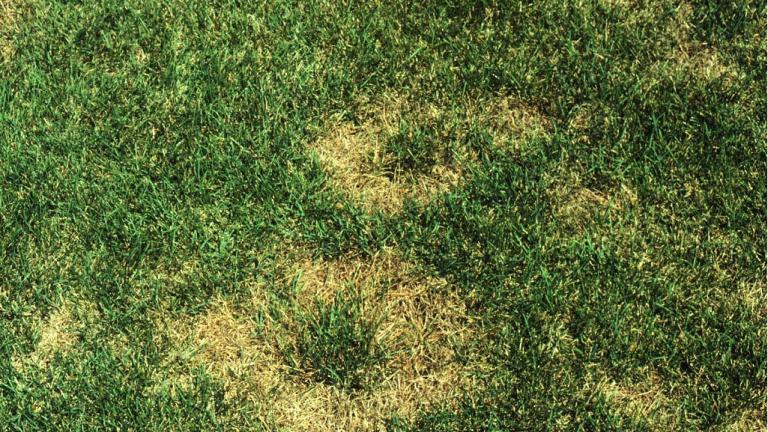
Summer Patch
Susceptible turfgrass: Annual Bluegrass, Kentucky Bluegrass, and fine-leaf Fescue. Summer patch as seen from 3mSymptomsSummer patch appears as circular or irregularly shaped patches that measure from several inches to several feet in width. Initially, patches appear as slowgrowingthinned or wilted turfgrass. Mature patches are brownish-yellow to straw-coloured and can coalesce as they increase in size. The leaves of the plant turn yellow to brown from the tip to the base. The roots turn moderate to dark brown. Summer patch can exhibit a ring-like appearance where a less susceptible grass species survives inside the diseased patch. Summer patch as seen from 6cm.Conditions favouring diseaseRoot infection is initiated when soil temperatures exceed 18°C; however, foliar symptoms of summer patch are favoured by temperatures over 29°C during the day and over 21°C at night.It is also commonly found in areas that are sunny, exposed, with high soil moisture, high soil pH, compaction, poor…

Turf Disease
Take-All Patch
Susceptible turfgrass: Bentgrass. SymptomsTake-all patch symptoms initially appear as small, circular reddish-brown spot patches. Symptoms will progress to wilted, circular patches that are brown or bronze-coloured and can measure up to several feet in diameter. Symptoms are most evident during periods of stress induced by hot, dry weather. Infected plants have dark-brown roots. Conditions favouring diseaseTake-all patch is most common on newly established turf and severity decreases as the turf stand matures. It will occur on sites that have light textured soils, low organic matter content, manganese deficiency, and pH above 6.5. Take-all patch typically occurs in cool and wet conditions. This disease is more severe on less fertile and sandy soils. Integrated turf managementUse acidifying fertilisers.Apply moderate to high levels of phosphorus, potash or other minor elements where these nutrients are depleted from the soil.Improve the drainage of the turf…
Turf Pest
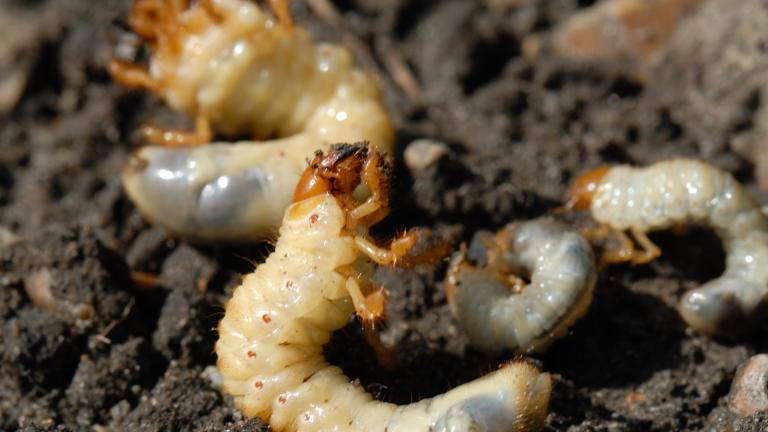
White Grub
Description: Grubs live in the root systems of plants and cause severe damage over a short period. Unfortunately they are not easy to spot because they live beneath the grass blades, they often destroy large patches of lawn before one notices them. By digging up patches of lawn one will find them. SymptomsGeneral browning of grass is one of the signs to look for. Grub feeding destroys the roots of your lawn, leaving the tops to wither and die. Where infestation is severe, even the roots are eaten away. Integrated turf management Meridian is mainly positioned in the "below surface" insect problems, providing both contact and ingestion activity.If treated preventatively, the insects stop feeding within hours leading to minimal turf damage. Death occurs quickly, usually within 24 - 48 hours.The product is most active in early development stages of the grubs and mole crickets. Alternative chemistry should be used for the adult stages.