Weeding out clean turf
Weed free surfaces rate as one of the highest priorities for players, second only to ball lie and turf consistency in a player rating survey. Given its importance for playability and appearance, many greenkeepers are adopting a season long approach to herbicide strategies, reports Syngenta Turf Technical Manager, Pete May.

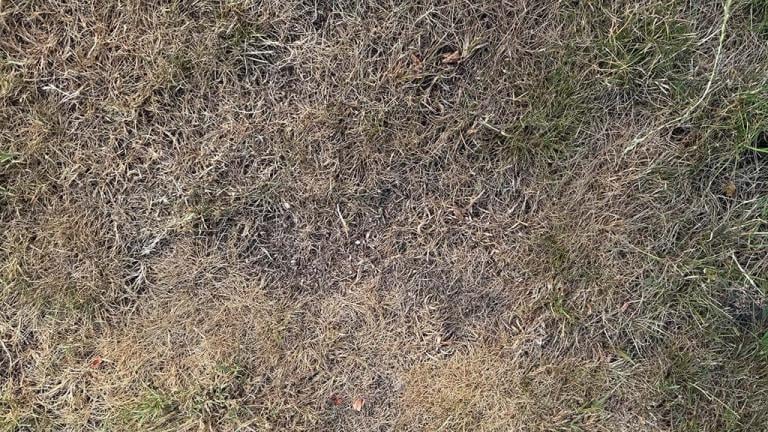
Challenges have been further compounded over the past year, where many fairways in particular suffered turf cover loss in the extreme hot, dry conditions – leaving bare soil and space for serious weed incursion, with rapid establishment over the wet and warm autumn. The increasing burden of worm casts also creates ideal conditions for weed seeds to germinate.
While a spring herbicide treatment has traditionally been the norm, at least two applications are now often needed to tackle more problematic weeds. For some turf surfaces where weed pressure is high and control is a priority, multiple applications may be required during the growing season, requiring a robust herbicide strategy.
Common threats that are quick to pop up – including daisy, dandelion and clover – can be effectively controlled by many different broad-leaved weed herbicides at the right timing.
It’s the more challenging species, such as plantain, yarrow and speedwell, that can be harder to achieve a consistently high level of control, and where attention to application timing, techniques and herbicide selection will pay real dividends.

Like all plant protection controls, targeting weeds follows the mantra of Right product; Right time; Right place.
First step is selecting the herbicide that most effectively controls the spectrum of the weed population present. That makes identification crucially important, but can be tricky when weeds are at little more than the one or two true leaf stage that is optimum for treatment.
Weed ID guides and phone apps can all help assess weed species at emerging growth stages. It’s also a good idea to keep a note of any weeds seen in the area during the growing season that are likely to invade, and to map and record weed populations over time.
| Why are weeds an increasing issue? |
|
|
|
|
Weed spectrum
The spectrum of target weeds for control will influence product choice. While common weeds will be found listed on most herbicide labels, how they will perform on other weeds, and at different growth stages, will be a factor of experience and guidance from agronomists and advisors.
Most broad-leaf herbicides work by interfering with the hormone pathways within the plant; essentially it triggers the weed to grow, but then starves it of the energy to support the growth – hence why treated plants often appear to put on vigorous growth, and then die. How that reaction occurs depends on the specific weed species and, in some instances or with larger weeds, they may have the resilience to overcome effects and regrow.
Some of these more difficult to control weeds may require different herbicide choice, a mix of herbicides to give a broader spectrum of activity, or a sequence of treatments that deliver multiple hits to weaken and kill the weeds, particularly if treatment has been delayed and the target plants have grown larger.
Products with more than one complimentary active ingredients can offer a greater weed spectrum of control and reliability, as well as reducing the risk of herbicide resistance developing. Many products only have one application per season permitted, requiring new strategies and approaches to enable a season-long approach.
The new twin-active broad-leaved weed herbicide, Crenzar from Syngenta, also has root uptake into weeds, as well as foliar. That is particularly effective to get the systemic action to the key growing points in the weed to for a better kill, but also means any spray that runs off the foliar application will still be effective.
| Key factors for effective weed control |
|
|
|
|
|
Early target
Targeting broad-leaved weeds at early growth stages will always achieve better results, compared to later timing on larger weeds. The more difficult weed species are to control, the more important it is to treat them early.
Alongside the priority for treating weeds at early growth stages, is the requirement to target actively growing weeds. This is essential for the effective translocation of the herbicide throughout the plant and into the roots. The levels of control could be seriously impaired if weeds are sprayed when it is too cold or too dry for active growth.

Turf growth rates tend to be a good indicator of suitable conditions. Although some weeds can germinate and grow at sub-optimal conditions for turf, herbicide uptake and results would be less that treatment during strong growth.
Turf managers and agronomists can utilise the Syngenta Turf Advisor App to review Growth Potential conditions, or utilise soil temperatures in combination with rainfall to gauge germination and growth. Furthermore, operators can also review spray window opportunities to pick the optimum timing for application when conditions are right.
Application advice
With application, although systemic foliar herbicides are taken up and moved within the plant, optimum results will still be achieved with better spray coverage of the leaf surface. Selecting herbicides with movement up and down within the weeds phloem system can be an advantage.
The most important aspect for foliar retention is to avoid over wetting the surface of the leaf, leading to run-off of the spray. That can be a particular problem with waxy or shinny leaved weed species, and on small leaved weeds at their most susceptible treatment timing. Large spray droplets, produced by coarse nozzles, are especially likely to bounce or roll off a weed leaf surface.
Operators need to achieve the balance in nozzle selection to achieve sufficient small droplets to give coverage, without the risk of drift and off-target losses. Taking care to avoid off-target drift with nozzle selection and application technique is especially important for herbicide treatment of fairways and surfaces alongside wildlife habitat rough, where flowering plants are being actively managed to benefit pollinator species.
Where conditions and the herbicide product label allow, treatment at a water volume of 100 to 200 litres per hectare, applied using a Syngenta 04 XC Nozzle, for example, will give a good combination of leaf coverage and retention on the surface.
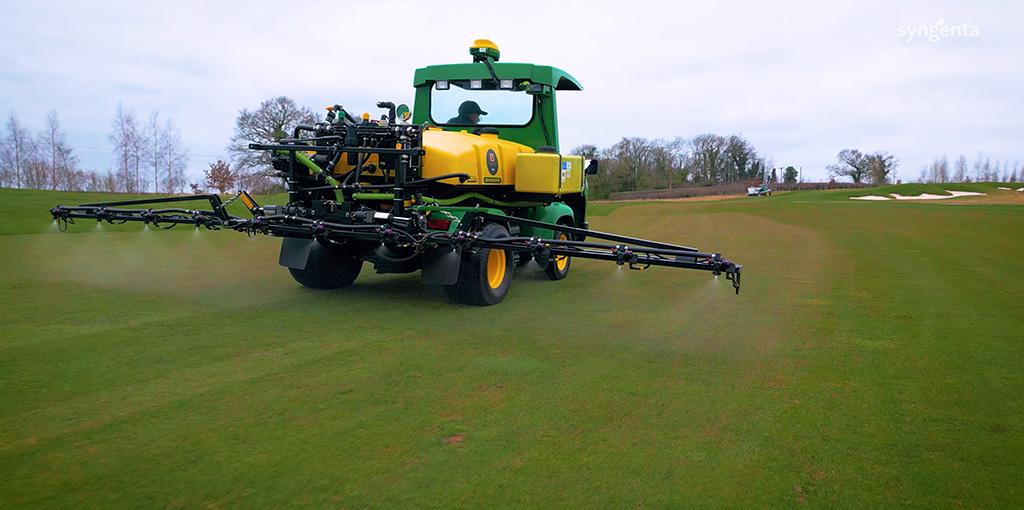
Application at these lower than conventional water volumes can also be a significant time saving for getting areas of the golf course sprayed with minimal interruption to players.
For many turf mangers it is also important to have the flexibility of knapsack application approval on the herbicide label, to target patches or spots of weeds, as well as overall boom sprayer treatment. Options are now very limited for knapsack herbicide treatments in turf, although both Overtake and Crenzar can be used for all applications.
With extended seasons of conditions favourable for weed seed germination - earlier in the spring and later into autumn - new herbicide strategies and more integrated actions will be required to prevent weeds spreading further in quality turf surfaces.