New Crenzar herbicide active to target turf weeds
|
|
|
|
A new Syngenta broad-leaf herbicide for turf will add greater flexibility for spring and summer weed control strategies in golf, sports, amenity turf and professional lawn care. Crenzar brings a new active ingredient herbicide for turf, and the benefit of being approved for knapsack application.

Ahead of the launch of Crenzar at the BTME Harrogate golf event in January, Syngenta Technical Manager, Pete May, outlined the effective strength of the new herbicide on a wide spectrum of weeds.
“Research and field trials have shown it can target key weeds in fine turf surfaces - including dandelion, daisy, chickweed, creeping buttercup, yarrow and clovers, along with ribwort plantain.
“The combination of the new Syngenta a.i. for turf, prosulfuron, along with the well renowned dicamba, acts on both roots and shoots to provide high levels of rapid and sustained control on susceptible weeds.
“Prosulfuron is taken up by leaf and roots, which makes it particularly valuable for a complete kill,” he adds.
Furthermore, the two active ingredients in formulated Crenzar are from different herbicide groups, which makes it a good option for resistance management or when used in strategies with other herbicides. It can also be tank-mixed with many other herbicide options where required to target specific weed spectrums.


Research at the STRI also demonstrated high levels of safety on fine turf species for sports and lawn surfaces.
Treatment of small weeds at early growth stages is most efficacious, however trials have shown Crenzar can be more effective than other herbicide options on larger weeds, should treatments have been delayed.
Pete outlined research has shown Crenzar works most effectively if applied when weeds are actively growing, with soil temperatures consistently above 10⁰C.
“The Syngenta Turf Advisor App growth potential model and soil temperature data, along with spray window opportunity forecasts, can help to effectively guide herbicide application timing,” he advocates.
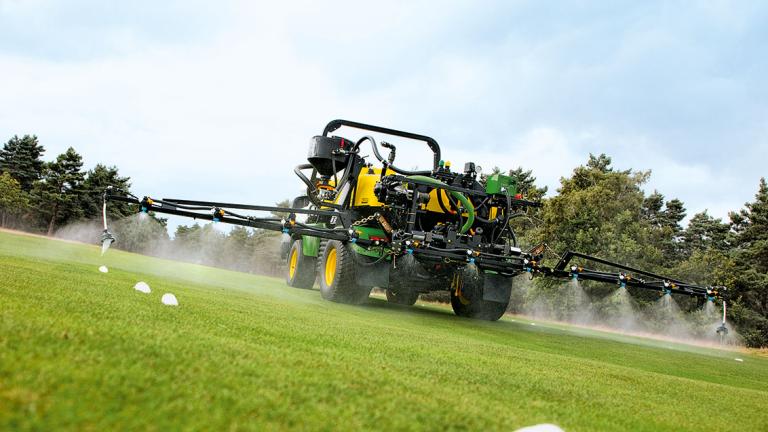
“Importantly, as well as application with conventional sprayers, Crenzar is approved for knapsack treatment, essential for many sports turf patch applications and lawn care treatments,” adds Pete. There are no label restrictions on composting clippings, although users should ideally avoid mowing for three days after application to optimise herbicide uptake.
Crenzar can be applied as soon as spring growing conditions are suitable from April onwards, and be completed by the beginning of September. For later applications in the autumn, should weeds continue to emerge, the Syngenta herbicide Overtake can be recommended up until the end of October.