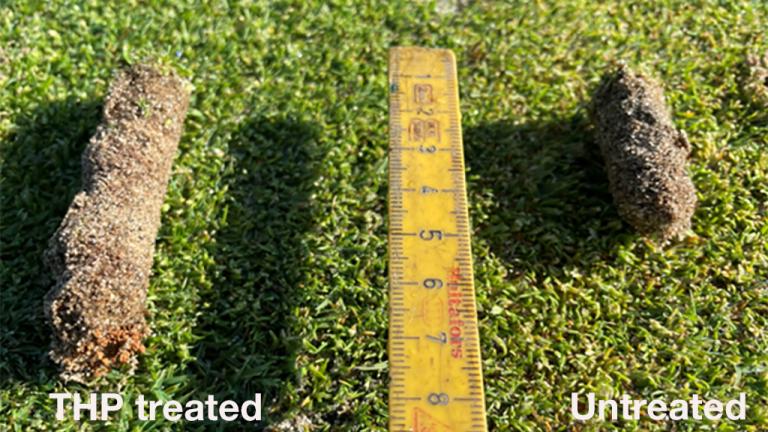
Two new biostimulants from Syngenta to tackle stress and promote turf health

Two new biostimulants from Syngenta are set to help turf managers target turf stress points right through the season. New Comprevo and Vyplenza have been specifically selected to protect against damaging stresses and to improve turf plant efficiency, proven to deliver consistent turf quality.

Speaking at BTME, Syngenta Technical Manager, Pete May, highlighted trials that have shown that Comprevo helps turf plants to alleviate the effects of abiotic stress - including drought, as well as aid faster recovery.
Furthermore, new Vyplenza is especially strong at enhancing photosynthetic activity crucial to improve turf plant responses in both low and high light conditions that can adversely affect turf health.
“Once you understand precisely how the biostimulants work, you can build a more effective programme to prevent damaging effects and consistently improve turf quality,” he says.
“Alleviating some of the key stress points that occur every season enables turf plants to better cope with other stress factors, including drought, heat or fertility; and allows turf managers time and flexibility to focus on creating healthier and more resilient surfaces.”
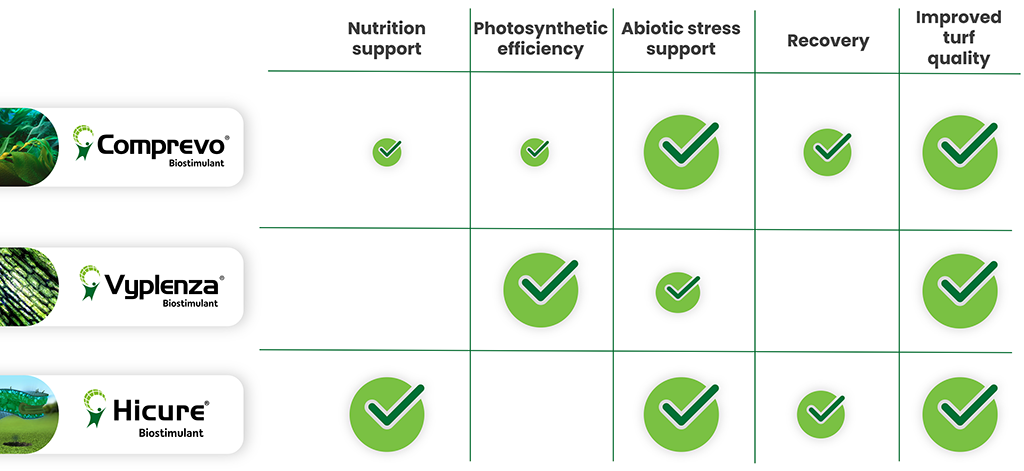
Coupled with the well-established Syngenta biostimulant, Hicure, Pete advocates there is now a reliable Syngenta biostimulant package to create an effective Integrated Turf Management strategy, that works alongside turf health products including Primo Maxx growth regulator, Qualibra wetting agent and the Syngenta fungicide range.
|
|
|
|
|
|
Syngenta science to understand biostimulant action Syngenta biostimulant technical specialist, Dr Eric Chen, explained new Syngenta research has identified how some biostimulants are more effective at targeting specific stress factors, helping plants to better adapt their natural genetic responses to counter damaging effects; a process of gene regulation. 
Presenting during the Turf Managers’ Conference in Harrogate, as part of the BIGGA BTME event, Eric reported: “Genetic activity studies have identified which genes are being used during periods of stress, and which metabolic pathways are enhanced. “Our biostimulants have been designed based on how plants naturally respond to stress at the genetic level. We've identified compounds that activate the plant's natural protection systems against drought, heat or cold, for example. “Rather than randomly selecting what might work, we used genomic science to identify exactly which compounds trigger the right responses,” he added. 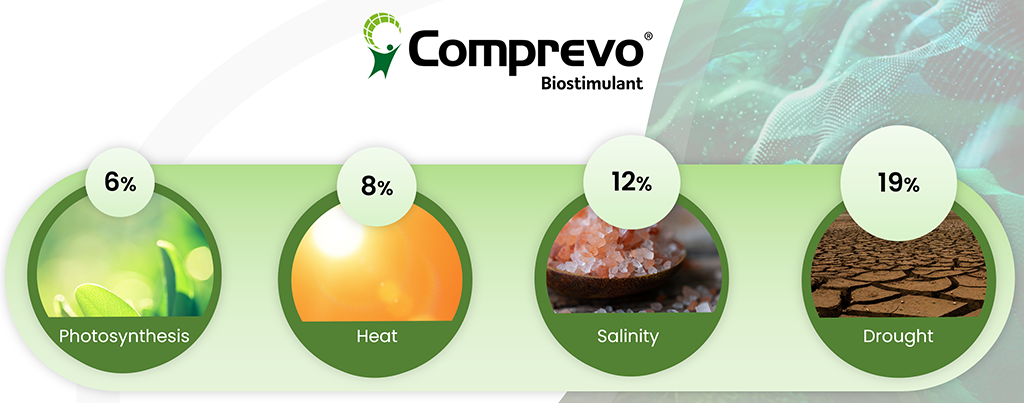
With Comprevo, for example, the research has shown a 19% uplift in activity of genes responsible for resistance to drought stress, along with an 8% uplift in response to heat stress and 6% more for photosynthetic activity. It also provided a 12% increase in gene regulation to salinity stress, valuable for links coastal courses. Genetic activity studies with Vyplenza showed a 53% increase in gene activity for light harvesting in low light conditions, as well as a 23% enhancement in the response to bright light intensity. 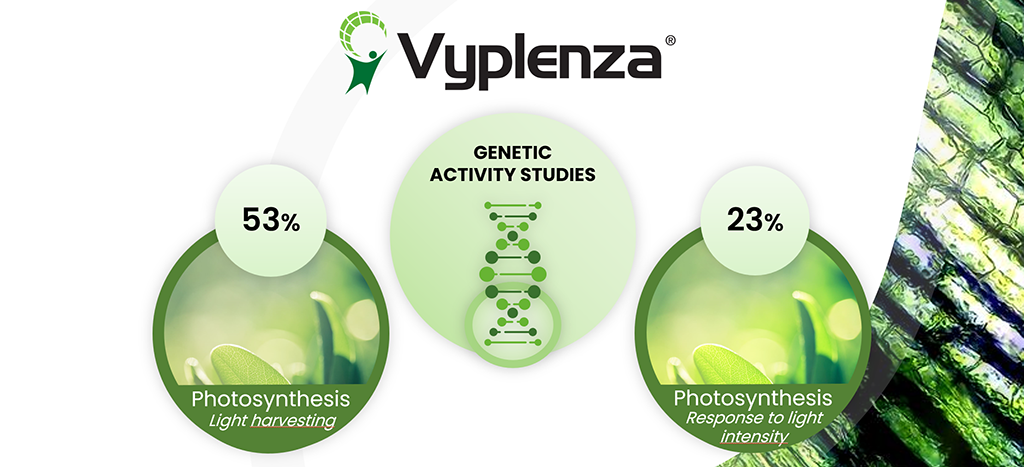
“It has demonstrated that we have a biostimulant product that improves the plants’ ability to photosynthesise during stressful periods of both low light or excess light conditions,” advises Eric. STRI UK trials under controlled low light conditions have confirmed that Vyplenza treatments maintained 100% consistent turf quality for up to a month after quality started to fall in untreated turf. After eight weeks of low light stress, turf quality was still at 90% with a full-rate Vyplenza programme, compared to a 44% decline in untreated turf. |
Biostimulant strategies
Pete May highlights further trials with programmes of both Vyplenza and Comprevo have shown under water stress conditions, for example, the biostimulants help to maintain turf quality for longer when turf goes into stress and a slow any decline, which gives the chance for better recovery when stress is alleviated.
“With changing UK weather conditions this is becoming more important than ever for managing consistent turf quality and meeting player expectations,” he suggests.
“All the evidence from the scientific research and repeated on-course trials, in the UK and Nordics, show a planned programme and targeting biostimulant applications ahead of stress periods delivers a more reliable response.”
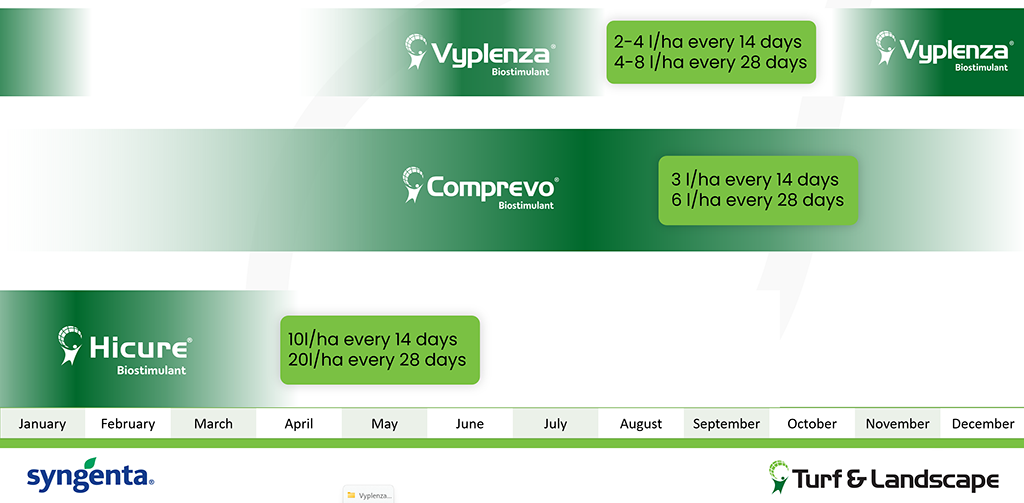
Under UK conditions, Pete advocates a season-long biostimulant programme that starts with Hicure to initiate plant function at low temperatures and low growth potential that will prime recovery, typically from January to March, depending on course location.

“The specific high amino acid composition in Hicure, with the low but readily available N source, delivers recovery when the plant is on the edge of functioning,” he cites. “When conditions improve, the plant is ready to respond efficiently and rapidly.”
Once growth potential kicks off, in March or April, he advises introducing Comprevo which gives turf vital relief against a range of maintenance stress factors, including mower damage, high foot traffic from golfers and play, drought cycles and heat stress, . The recommended application rate is 3 l/ha every 14 days, or 6 l/ha every 28 days depending on what best fits with the courses’ spraying schedule.

“In most seasons the Comprevo programme would continue all season, since it tackles a multitude of abiotic stresses and mechanical or wear damage that is ever present.
“Furthermore, as the summer progresses and light levels increase, the addition of Vyplenza into the biostimulant strategy will help turf plants continue to photosynthesise effectively and maintain health in an otherwise stressful situation.

“With summer 2025 being the sunniest year on record, for example, its role is especially relevant - with trials results showing even greater responses to higher rates of application.” The research indicates rates of 2 to 4 l/ha every 14 days, or 4 to 8 l/h every 28 days, is recommended, depending on stress levels.
Pete adds that Vyplenza also has a valuable place in the ITM strategy during the winter. It is especially the case during mild conditions, when turf plants have soil temperatures to stimulate growth, but low light levels could restrict photosynthetic activity that will compound stress effects.
Quality products
Comprevo and Vyplenza are both derivatives of the seaweed Ascophyllum nodosum, harvested in Norway, including the only facility that lies within the Arctic Circle. The extreme growing conditions and repeated wetting and drying process under intense 24-hour a day sunlight in summer makes for strong bioactive properties in the raw ingredient. The precision extraction and processing technology creates high quality bioactive compounds and effective products.
“With all biostimulants, the most consistent effects are seen when relevant products are applied prior to the stress events occurring. The better understanding of how and where Syngenta products can fit in the ITM programme will make a step change in the reliability of results that can be achieved,” he says.