
Scandi extremes highlight how to cope with turf stress
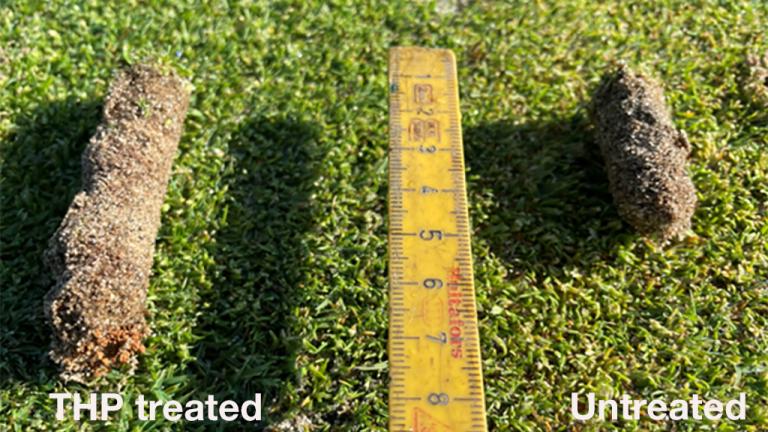
Reports from Syngenta biostimulant trials in the Nordics reveal similar key turf stresses to the UK, but typically more extreme conditions and longer duration in both winter cold and summer heat. That gives a useful indication in future management required as UK greenkeepers adapt to climate shift, suggests Syngenta Nordics Turf Technical Manager, Alex Cawley.

Nordic greenkeepers also rated drought, prolonged heat and extreme high temperature as the most prevalent and severe challenges for turf, impacting all six sites participating in the season-long full Turf Health Programme trials. Heavy play, low temperature and diseases also ranked highly as significant concerns.
“Qualibra wetting agent emerged as the standout performer, consistently receiving top ratings (averaging 4.7 out of 5) for reducing stress and enhancing turf quality," reports Alex. “Greenkeepers commented on its ability to deliver ‘outstanding moisture management’ and ‘significant reduction in drought stress’.
“Primo Maxx II growth regulator also received high praise (averaging 4.5 out of 5), which not only improved turf density and quality but also reported to be an important contribution towards enableing a reduction in fertiliser inputs resulting in a tighter level of control over growth” he adds.
Ryder, Hicure, Comprevo, and Vyplenza further contributed to the programme's success, by enhancing turf colour, overall health, and stress tolerance.
“As prolonged dry periods become more frequent and more severe in a changing climate, supporting traditional technologies with a biostimulant programme can improve the plant's own ability to adapt to stress at a genetic level,” says Alex, “helping turf withstand pressure for longer and recover faster when conditions improve.”

Syngenta's new biostimulant Comprevo, for example, has demonstrated a 19% increase in the genetic activity of genes associated with drought tolerance.
“But biostimulants perform best when layered over a solid foundation and that's where Qualibra and Primo Maxx II play an important role,” he advocates.
“Qualibra keeps the rootzone wettable, protecting the critical connection between roots, root hairs and growing medium — an interface that dry or hydrophobic conditions can quickly compromise.
“Primo Maxx II works alongside this by redirecting plant energy away from excessive shoot growth and into stronger root mass, greater shoot density and improved carbohydrate reserves.
“The result is a plant that declines less under stress and therefore recovers faster when conditions ease. With this platform provided, biostimulant programmes can be layered in, to further increase resilience and maintain high performance through stress periods.”
Holistic benefits
Alex believes the holistic benefits of the Syngenta Turf Health Programme extended beyond individual product performance. Participants reported a significant increase in drought resistance and improved moisture uniformity across their green areas.”

This translated into meaningfully reduced irrigation requirements and the elimination of any localised hydrophobic dry spot incidents. The experiences of Surahammar Golf Club in Sweden illustrates this well.
Despite rainfall remaining consistently low throughout the 2024 season, irrigation inputs dropped by 20-25% in the hotter, drier July, August and September compared to the already warm and dry April, May and June — a period when demand on the rootzone was at its highest.
That the programme delivered greater water efficiency precisely when conditions were at their most challenging is a strong indicator of its real-world value.
Furthermore, the programme fostered better overall turf health and resilience, with courses observing enhanced recovery after stress events, improved root development, and increased disease resistance.

“Comments from the greenkeepers involved highlighted turf showed greater resilience to multiple stress factors," highlights Alex. “The programme also provided greater control over turf conditions, resulting in fewer ‘peaks and troughs’ in performance and the ability to maintain consistent firmness and speed, even under tournament conditions.”
Looking ahead, there is a strong and growing interest in the increased use of biostimulants and wetting agents. “There’s universal commitment to the Syngenta Turf Health Programme 's future, with all greenkeepers involved planning to integrate biostimulants with other course inputs, recognising their crucial role in turf management,” he added.