Get set for summer challenges

Climate shift is now a major factor contributing to the increase in summer disease effects on turf quality.

The impact is two-fold; firstly, the disease pathogens dollar spot and anthracnose can develop more actively in warmer temperatures and, secondly, turf health impacted by stress of hot, dry conditions is infinitely more susceptible to disease and less able to recover, write Syngenta Technical Manager, Pete May in Greenkeeper International.
Syngenta Climate Shift modelling has pinpointed the duration of hotter temperatures on an hour-by-hour record for every postcode across the country over the past 30 years, and made projections of the trends for the future.
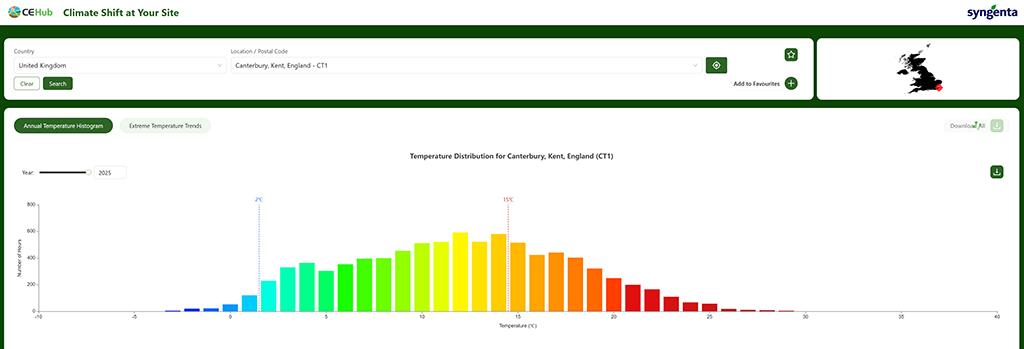
The picture is clear to see, with fewer hours below 2⁰C that are crucial to slow down or stop pathogen development in winter, combined with more hours over 15⁰C where summer diseases are more comfortable and turf is under greater stress. Impacts of drought and light stress closely mirror the temperature weather patterns.

Leading turf researchers have highlighted that even summer diseases, especially dollar spot, tend to occur earlier in the season and be more severe in situations where winter cold periods have been limited.

It is also clear that while no regions, or even courses, are exactly the same or changing at the same timescale, the trend is moving in one direction. The statistics do show, for some areas, weather patterns are more consistent than others. At Loch Lomond on the west of Scotland, for example (above), the spread of hours over 15⁰C year-on-year is more than twice as extreme as Canterbury, in the south of England (below).
The greater the spread in the pattern, the more difficult it becomes to plan positive actions. In fact, there’s the real risk that over-compensating based on one year’s experiences could make then situation even worse the following year, if growing conditions proved to be very different.
However, in situations where the weather trends are more consistent, greenkeepers can confidently predict the chance of issues frequently occurring and take mitigating action.
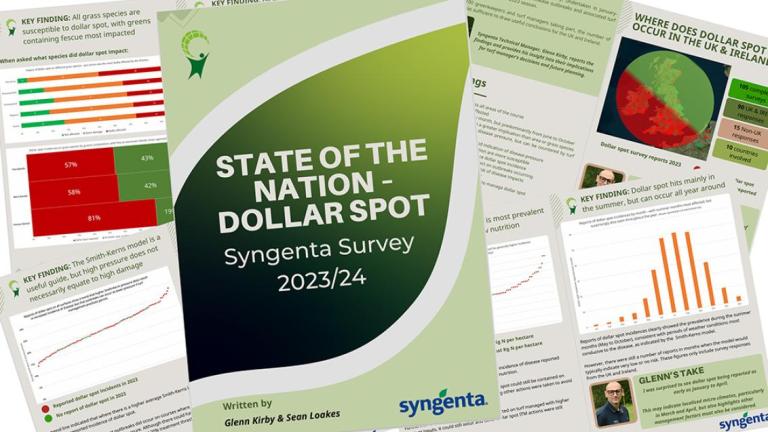
Historic disease risk data on the Syngenta website shows how the frequency of Smith-Kerns periods – which are the key identification of weather conditions conducive to dollar spot – in the past five years have occurred up to twice as often as the long-term average (below).
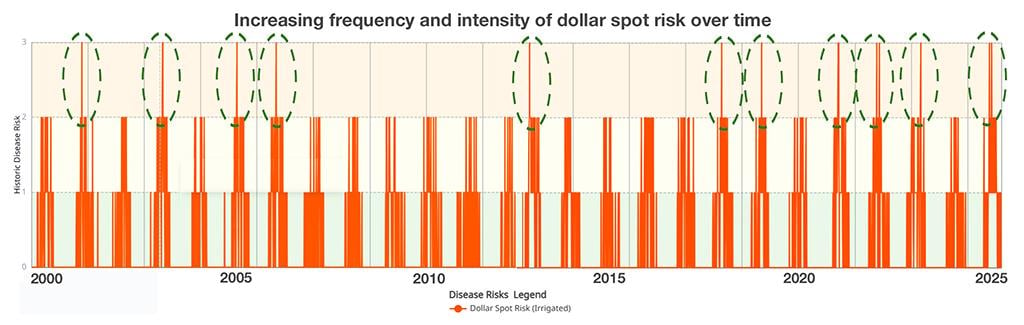
Pressure is especially rising in the west and north of the UK, where dollar spot has historically been less of an issue. Furthermore, high risk conditions are typically occurring with greater extremes and, more worryingly for disease development, for more consecutive days
The positive news is that the Syngenta State of the Nation Dollar Spot Survey heighted just how effective a proactive ITM programme can be in minimising disease impacts. With over 100 courses talking part in the survey, even those where risk conditions were persistently high suffered little or no effects on turf quality by using a combination of fungicide treatments and cultural controls.
Top of the list of actions to physically prevent disease incidence are measures to keep surfaces drier, and deprive the pathogen of moisture it needs to survive; switching or brushing greens in the morning is equally important in summer as autumn for microdochium control, along with improving airflow.

The flip side challenge is that overnight irrigation, to make best use of water resources by reducing evaporation losses, can leave surfaces wet for hours longer. And cutting down tress to improve airflow can mean turf exposed to greater damaging light levels.
With all ITM controls it’s the balancing act to reduce one risk, that could exacerbate another.
Over the summer, anthracnose will always have a far greater incidence on low fertility surfaces. Nutrition is one of the key cultural controls. However, research has also shown a correlation of increased dollar spot affecting surfaces where higher N levels are applied.
Anthracnose is also closely related to multiple stress factors, not just nutrition. Turf plants compromised by drought, excess light, mechanical damage from mowing or aeration and even wear and tear of heavy play is far more likely to be affected and slower to recover.
Using this knowledge to adapt timing and intensity of turf management actions, to avoid peak periods of disease risk can help to minimise the impact of any infection break out. Increasingly sophisticated and reliable disease forecasting models will further support decision making on actions and fungicide application timings.
Biostimulants that can enhance the plant’s natural ability to withstand stress have an important role in boosting its own protection from disease effects. While there is no physical effect on the disease pathogen, turf can undoubtedly better withstand the presence of some level of disease pathogen.
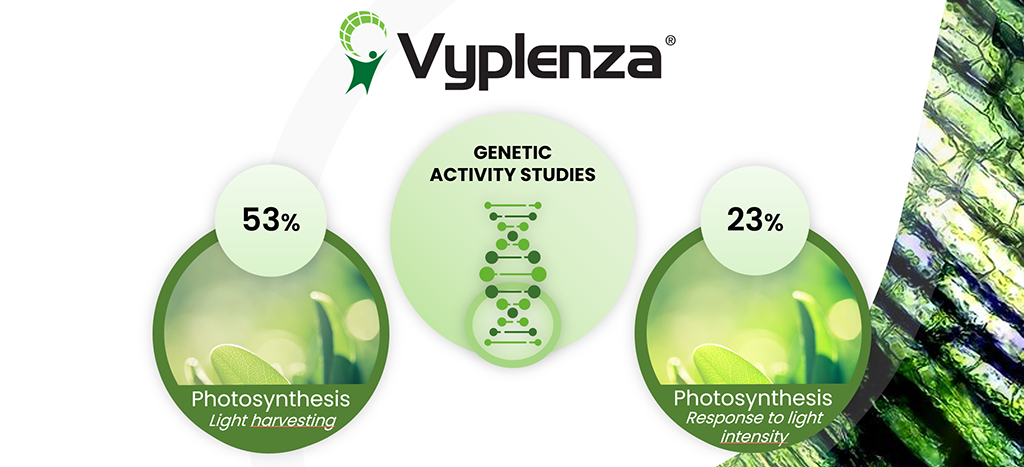
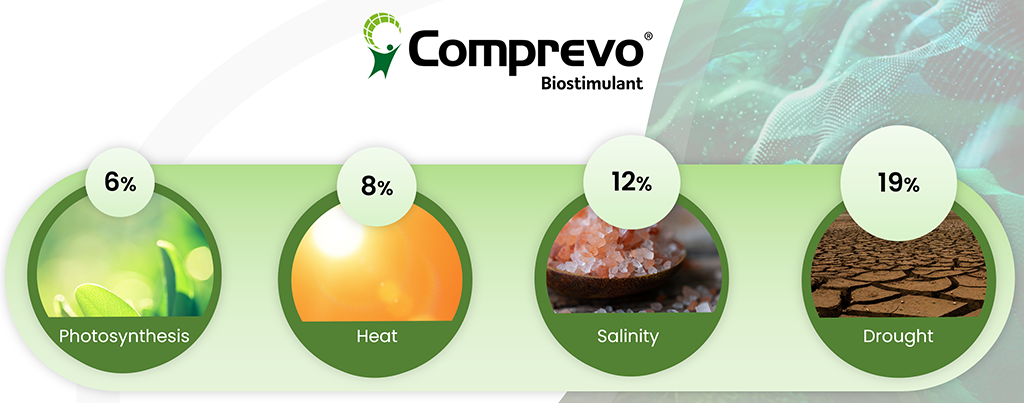
The ability of new Vyplenza biostimulant to upregulate gene activity in the plant to withstand effects of excess sunlight by up to 23%, for example, can hugely help plants through the summer months. Syngenta genetic studies of biostimulant action in the plant have also shown Comprevo positively upregulates the plants’ natural gene activity in response to heat and drought, by 8% and 19% respectively.
Other integrated actions to reduce turf susceptibility to stress through the summer, including improving root depth and root mass with a Primo Maxx II programme, along with Qualibra moisture management – to both retain moisture in dry periods and quickly dissipating the increasingly frequent extreme heavy rainfall events.
The intensity and prolonged periods of summer disease risk now make dollar spot, in particular, a key pathogen for control. For some courses it is now deemed more damaging than autumn microdochium, especially in the south and east.
New Syngenta fungicide technology R&D is responding to the changing climate pressures faced by greenkeepers. That includes potential for new active ingredients for turf that are highly active on key summer diseases, as well as formulation innovation that adapts to climatic conditions in the way it behaves on the turf leaf.
Such new developments are essential to offer more flexible options to manage turf under increasing pressure of climate shift and to work alongside cultural controls and biostimulant programmes within an ITM strategy .