
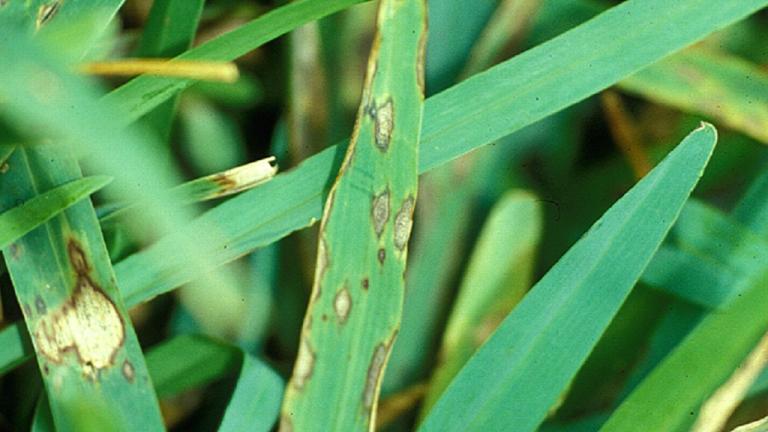


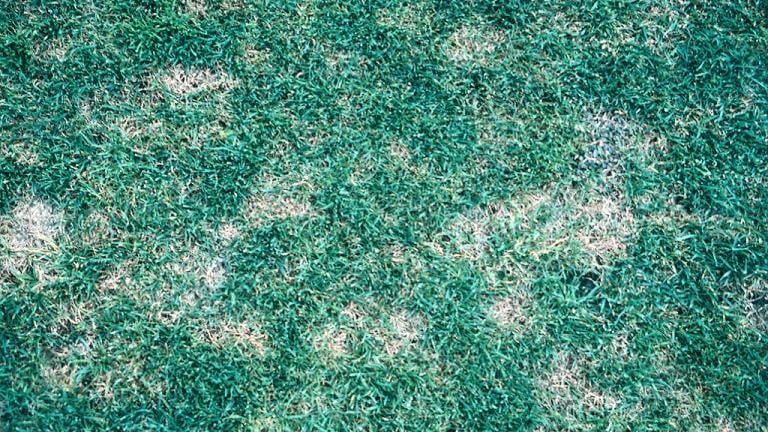


Grey leaf spot
Where is grey leaf spot most likely to occur?
Grey leaf spot has been widely identified in sports stadium and enclosed turf areas, where temperatures can be elevated and air flow limited, leading to high humidity conducive to the disease.
As temperatures increase with prolonged periods of hot weather, grey leaf spot can be expected to occur on wider turf areas, including susceptible golf greens and tees.
In what conditions does grey leaf spot break out?
Grey leaf spot is most likely to occur during periods when leaves are wet for a long period of time, combined with an average temperature in excess of 20⁰C - which would typically occur with a daytime temperature in excess of 25⁰C and not falling below 15⁰C during the night.
Periods of leaf wetness of more than nine hours at high temperatures, or over 20 hours at lower temperatures, create high risk situations.
What other factors increase the risk of grey leaf spot?
In addition temperature and leaf wetness, the damaging effects of grey leaf spot can be more severe during periods of drought or soil dryness.
Young swards tend to be more susceptible to outbreaks and significant plant losses.
High nutrition strategies, particularly nitrogen, have been associated with greater grey leaf spot incidence.
All grass species have been seen to be susceptible. Research work is looking at potential for particular cultivars to reduce impact of gray leaf spot.
Why is grey leaf spot of increasing concern?
Grey leaf spot is a particularly aggressive and damaging leaf spot pathogen. When conditions are conducive to its development it can spread extremely quickly and lead to large scale losses of turf plants.
Changing weather conditions and stadium management practices that can encourage wet leaf surfaces are leading to more widespread infections.
How can risks of grey leaf spot be reduced?
Reduce periods of leaf wetness as much as practical - irrigation scheduling; remove surface moisture with rolling, mowing or switching.
Understand risk factors for grey leaf spot development and treat accordingly with preventative fungicide programmes. Monitor soil moisture VMC to identify periods of risk.
Use of wetting agents to reduce turf sitting wet for extended periods.
Manage nutrient inputs to avoid excess nitrogen or encouraging soft growth.
Mow when leaves are dry and cut areas of known infection last.
Clean machinery and equipment after working on areas of known infection. Insist on hygiene measures for visiting players and turf contract work.
What other turf diseases may be seen at the same time as grey leaf spot?
Other leaf spots frequently occur in stadium conditions and associated with wet leaves, often at lower temperatures of 16-18⁰C.
Pythium and brown patch can also occur in similar leaf wetness and high humidity condition.
Why do we sometimes see grey leaf spot referred to by different Latin names?
The accepted name among the turf science community is Pyricularia oryzae. However, it is commonly referred to P. grisea - which is a different species in its own right and still valid. Just be aware that some research papers might not be talking about the same fungal pathogen. Furthermore, in some areas of plant science it is called Magnaporthe oryzae, which further complicates the understanding.