
363 results found

08.10.2019Application
Art of Application videos show the way to better spraying
A new series of Syngenta Art of Application videos have been created specifically for turf industry operators to get then best from every spray application.
02.10.2019Turf
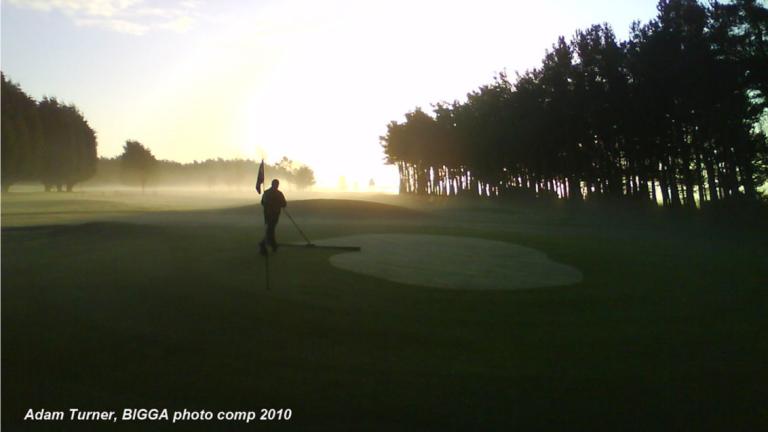
Picture and post a perfect autumn morning
Autumn morning give the chance to show just what greenkeeping is all about at its best. We're looking to highlight just what an amazing job greenkeepers do in producing perfect playing surfaces, so send in your pictures of the things you are most proud of.

20.08.2017Other turf disease
Early intervention protects Blackmoor heathland quality
Read how James Norris countered early disease infection last autumn, following intensive renovation.

12.12.2016Operation Pollinator
WILDFLOWERS BRING GAUDET LUCE TO LIFE
Gaudet Luce Golf Club is alive and thriving – not only with the many golfers and other visitors to its facilities, but also with the wildlife it has been actively managing to attract to the course.Operating near Droitwich in the West Midlands there is plenty of competition for prospective players, but the welcoming ethos for both its visitors and its ecology is making a real difference, reports Course Manager, Andy Laing (above).“We are always looking for something else that gives Gaudet Luce an edge, and a reason for golfers to keep coming back,” said Andy. The course has a very healthy membership of around 1000 players - utilising the various flexible options on offer - and has diversified buildings and facilities to develop an attractive business community, but is still keen to build-up society days and visiting golfers to maintain the economic viability.“Greens quality and course condition remains our number one priority, followed by tees and approaches that keep the focus on getting things right for…

Turf Disease
Yellow Tuft
Sclerophthora macrospora
Small spots 1-3 cm in diameter of yellowed densely tillered plants with shortened roots, that are easily pulled from the turf (Plate 1).Where is Yellow Tuft found?Close mown turf, especially golf greens and bowling greens. In the UK yellow tuft has been observed mostly on Agrostis spp.When is Yellow Tuft likely to attack turf?During cooler, wetter months in spring and autumn.Effects of Yellow TuftThe tufts reduce the wear tolerance of the sward as they can be easily pulled out. Tufts can also affect playability by affecting ball roll and the aethestic appearance of the grass.High Risk SituationsSoil saturation, flooding, poor drainage.Low lying areas.Cool weather conditions.Moisture retentive turf surface.ITM SolutionsImprove soil drainage.If flooding occurs, pump off water if possible.Promote active but not lush growth. Fungicidal controlAt present there are no fungicides with label recommendation for control of yellow tuft in managed amenity turf.

Turf Disease
Leaf Spots
Bipolaris and Curvularia spp. Drechslera spp.
Symptoms depend on the grass species and the pathogen involved. Generally a yellowing or paling of the leaf blades may occur, accompanied with spots or lesions developing (Plate 1. Lesions may girdle the leaf and the portion above the girdle withers. The sward may thin or look drought stressed.Where is Leaf Spot found?Any area of turf, especially golf greens, tees, fairways, bowling greens, lawns, parks and sports pitches. All grass species can be affected by Leaf Spots.When is Leaf Spot likely to attack turf?During the summer months, when the temperatures are high. Humid conditions encourage outbreaks.Effects of Leaf SpotMinor infection may result in lesions on leaves but no other effects. Severe infection may thin the sward, cause dieback and leave patches with weak turf, affecting the aesthetic value and the playability of the turf.High Risk SituationsLeaf spots occur in mild and warm temperatures (around 20ºC). As the temperature increases (25 - 35ºC) blighting and melting out occurs.High fertilityMoist…

Operation Pollinator - English, British
Thank you for signing up for Operation Pollinator.It is an excellent initiative that can help you increase biodiversity on your course. Find more case studies, stories, advice and tips on our operation pollinator pages www.greencast.co.uk/operation-pollinator To download a copy of the Operation Pollinator agreement, please click below

Active
Fungicide
AIM
The AIM pack contains three leading Syngenta fungicides in a cost effective one-box solution. Including Ascernity, Instrata Elite and Medallion TL the specifically selected products provide an effective sequential strategy for disease control from summer through to winter.
Media

Turf Disease
Take All Patch
Gaeumannomyces graminis
Take-all patch symptoms begin as a slight reddening or bronzing of bentgrass usually in a ring during summer months (Plate 1). As the bentgrass dies resistant grass species or broad-leaved weeds invade the centre of the patch (Plate 4). Patches can measure from a few centimetres in diameter to over a metre. Symptoms may fade in late autumn and winter.Where is Take-All Patch found?Swards dominant in bentgrassIn most cases, take-all patch affects newly established areas (especially on sand or USGA specification constructions or areas that have been sterilised prior to establishment).Some golf courses have problems with take-all patch year after year. This is usually associated with alkaline irrigation water or rootzones with high alkaline buffering capacity.When is Take-All Patch likely to attack turf?Symptoms are most common during summer months and tend to fade out during winter months.Effects of Take-All PatchOn greens, take-all patch can affect the playing quality as the patches become depressed affecting…
Turf Disease
Fairy Rings
A group of fungi classified as basidiomycetes
The term 'fairy ring' is used to describe a number of turf grass diseases where soil-borne fungi cause certain symptoms to develop on the surface of the sward. Fairy rings are caused by the activity of many fungi classified as basidiomycetes.Not all basidiomycete fungi cause fairy rings but all fairy rings are caused by basidiomycete fungi! Dry patch symptoms on fine turf areas are also thought to be associated with basidiomycete fungi.Where is Fairy Ring found?Each of the individual fungi grow through the rootzone, feeding off the organic material as it increases in size. The effects seen on the turf surface are roughly correlated with the amount of fungal mycelium within the rootzone. Since the fungal mycelium is made up of compounds that naturally repel water (in the same way that our fingernails do), the more mycelium that is present, the more water that can be repelled by it. Therefore, the larger the amount of fungal mycelium, the more severe or noticeable the effect on the turf…

Turf Disease
Brown Patch
Rhizoctonia solani
Brown patch occurs on close mown turf where patches of water soaked grass develop. The patches become tan to dark brown (Plate 1 above). In humid conditions a brown/grey 'smoke ring' may develop around the edge of the patch. On higher cut grass a light brown patch forms. Individual leaves may have lesions that are tan in the centre and bordered with a brown edge (Plate 4 above).Where is Brown Patch found?Brown Patch is not very common but it is most frequently seen on close mown areas such as golf greens and bowling greens. On longer grass lesions may be found by close inspection but it is rare to encounter patches of diseaseWhen is Brown Patch likely to attack turf?During the summer months, when the temperatures and humidity levels are high.Effects of Brown PatchBrown Patch reduces the aesthetic appearance of the turf. In severe cases grass cover may be lost in the patches.High Risk SituationsTemperatures over 20ºCLeaf wetness or high humidityPoor surface drainageExcessive fertilityITM SolutionsIntegrated…