
Shift in summer diseases

Rapidly rising issues of dollar spot have grabbed the headlines for hitting turf quality over recent years. It has become the primary target for many summer control strategies, but greenkeepers should remain vigilant for other disease that could present seasonal challenges now, or in the future.

Climate shift and the trend to hotter summer conditions with periods of intense rainfall, coupled with the stress imposed by today’s high-performance turf management, create a high-risk double whammy for anthracnose attack, advises Syngenta Technical Manager, Pete May..
Summer stress on turf can also expose the worst effects of fairy ring or take-all patch infections, while heat and humidity create conditions ideal for grey leaf spot that is already serious issue in stadiums, or exacerbate pythium blight - particularly on new turf grow-ins.
Currently many of these diseases are being masked by fungicide programmes targeted at dollar spot control, which are also suppressing other pathogens. However, as conditions become ever more extreme disease pressures will increase and, if we have a season with low dollar spot pressure and reduced control treatments, serious outbreaks of anthracnose could occur.
For many areas of the country that have not yet started to see high dollar spot pressure, anthracnose still remains a primary concern.
This climate shift influence on disease pressures is one of the key drivers for ongoing Syngenta fungicide R&D. While existing options do provide good cover, innovative new fungicides and ITM techniques will be essential to address the evolving spectrum of diseases and climate induced pressure, along with improving existing microdochium and dollar spot control.
Anthracnose presence
Disease chamber research has shown that the anthracnose pathogen is often present on and in turf. It is only when climatic conditions turn conducive that outbreaks occur, especially when plants are under stress and dip in health.
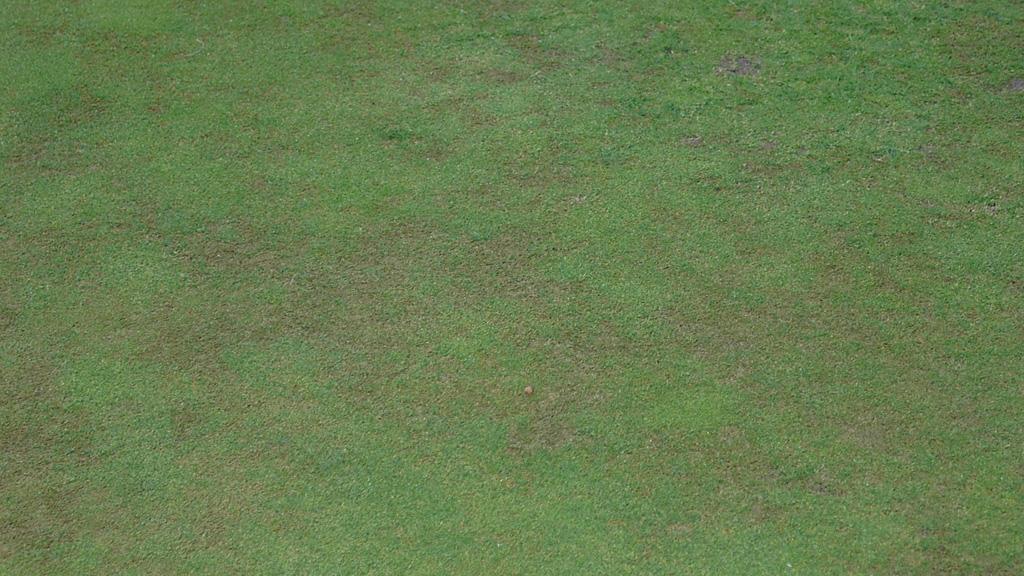
Research shows that at warmer temperatures, typically above 22°C, short periods of leaf wetness could allow anthracnose lesions to quickly develop. Hot, humid weather and thunderstorms are a worst-case scenario for outbreaks, particularly where previous drought stress has weakened turf.
However, research studies to calculate the curve of an Anthracnose Severity Index clearly indicated that even at cooler summer temperatures, with an average daytime 20°C, longer periods of wet leaves could still initiate disease symptoms. Clearly irrigation scheduling, switching greens and wetting agent programmes to maintain drier surfaces would help to minimise risks.
Furthermore, conditions for environmental stresses, including heat, sunlight and moisture, appear to be getting ever more severe and for prolonged periods. And with increased stress, comes the increased risk of anthracnose.
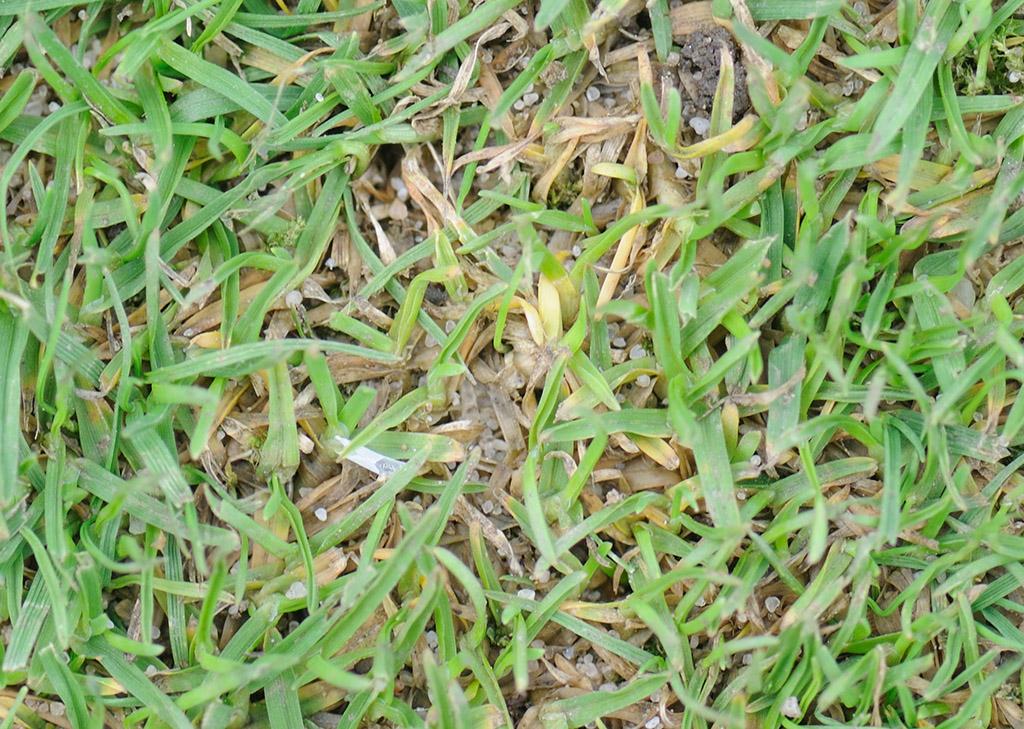
Healthy turf, effectively managed under an Integrated Turf Management programme, can withstand a high level of anthracnose pressure without visible signs or apparent issues. But, if any of the stress factors impinge on turf health, it can rapidly succumb to disease outbreaks and damaging loss of turf quality.
The pressure imposed to meet players’ demands for ever faster and higher quality turf, throughout the season, inevitably requires some management practices that put immense stress on plants’ health.
Trials have also shown a clear correlation between height of cut and the severity of anthracnose outbreaks.
ITM strategies
A clean cut with sharp blades on a well set-up mower minimises the leaf wound for disease ingress, as well as reducing stress on the plant. Reducing the frequency of cutting with a PGR programme further eases the pressure, with trials showing the chance to alternate rolling and mowing that can significantly reduce the risk of infection.
Furthermore, experience has shown a Primo Maxx II programme through the summer can allow mowing height to be marginally raised without negative impact on green speed. Even easing from 2.5 mm to 2.8 mm gives 12% more leaf, with a real potential benefit for plant health and especially root mass through the summer.
In research trials, improved aeration and drainage has shown to be effective at lowering the incidence of anthracnose infection, from reducing hours of leaf wetness. Enhanced air flow to dry surfaces can also help. Try to avoid heavy aeration during risk periods, which could increase plant stress and damage that opens opportunity for infection. Poa annua dominant swards are typically especially susceptible.
Biostimulants have an important role to play in enhancing turf health and enabling plants to withstand a greater level of anthracnose pressure. Select the most appropriate biostimulants to seasonal pressures, such as Comprevo to primarily target heat and drought stress and/or Vyplenza when light stress is likely.
The key with all biostimulants is to apply them in a programme in advance of stress events, to prime the plants positive genetic response before it hits. This approach is also important to enable faster recovery of turf when the stress recedes.
It is always crucial to ensure plants still have sufficient fertiliser to maintain healthy growth and reduce anthracnose risk. But, as with all integrated disease management strategies, it is a balance between too little, and too much making the situation worse for some other pathogens.
Trials with STRI have shown the best results for summer anthracnose control involves the combination of adequate nutrition, along with well-timed fungicide applications when conditions for infection are forecast, or other stressful periods are anticipated.
The Syngenta Turf Advisor App includes a GreenCast Anthracnose Model to indicate local periods of weather conditions conducive to infection risk. However, with the complex interaction of different stress factors on turf and climatic conditions, it is important to also track temperature, rainfall and leaf wetness data in the App to support decisions.
Reviewing historic weather conditions and pinpointing when outbreaks have occurred on your course, can help anticipate problems and, where possible, adapt management or adjust timing of potentially stressful actions to avoid these periods.
New fungicides
Turf managers increasingly have the tools to effectively prevent anthracnose, while maintaining healthy turf and better playing surfaces. Developments in Syngenta fungicide technology will further strengthen summer disease control programmes, as well as better prepare turf for traditional autumn disease peaks with effective new options.
How do you spot anthracnose? |
With foliar blight infection the grass turns a tan-yellow colour in irregular patches. Typically occurring in summer, it is often mistaken for drought, particularly since the stress induced by drought can be a significant trigger for anthracnose to break out. The presence of acervuli with hair-like setae (below) is used to diagnose foliar blight under a hand-lens or microscope. 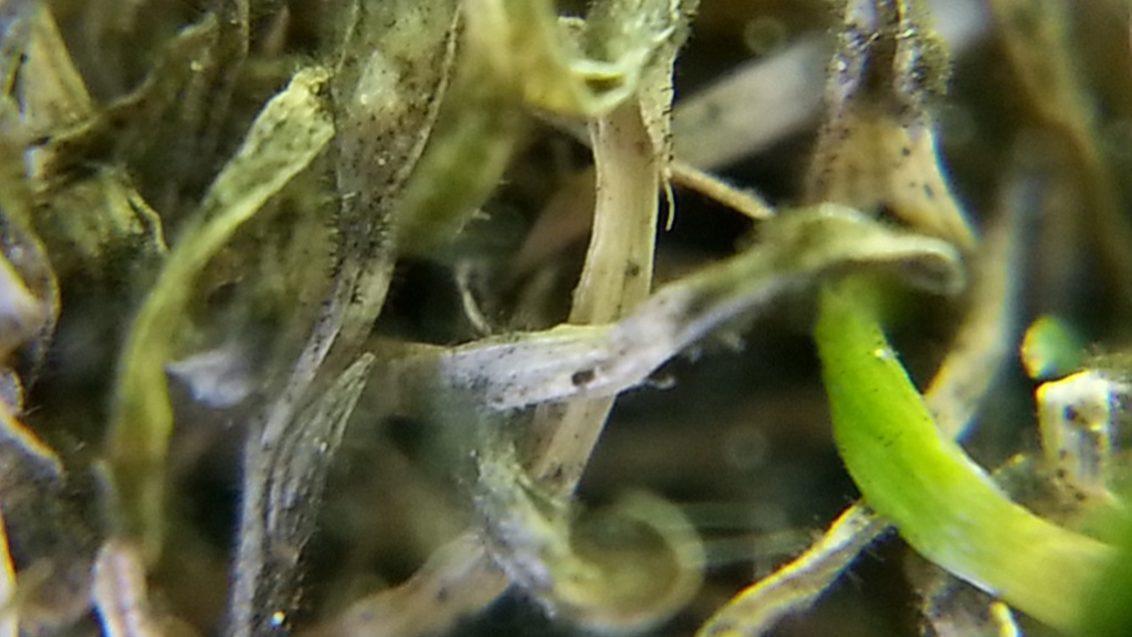
Basal rot, prevalent in cooler wet conditions, begins as yellowing of older leaves on individual plants. The youngest leaf may become brick red in the later stages of development. The plant easily pulls from the turf and a black rot is visible at the base of the stem. |
https://turf.syngentaturflandscape.com/en-gb/turf-disease/anthracnose |