Bio future for turf

A new focus and investment in the research and development of biological products has revealed exciting opportunities within integrated strategies to get more consistent and reliable results from all applications.
That includes how bio products can help to make better use of conventional products within an ITM strategy and to improve resilience against climatic change challenges, which may enable reduced reliance on chemical inputs in the future, reports Syngenta Technical Manager, Sean Loakes.
Bio products for turf management can be broadly defined as those based on naturally occurring materials that are used for biotic stress management to enhance plant health – biostimulants – or those that have a direct effect on fungal and bacterial diseases, insect pests, nematodes, and weeds - biocontrols.
Within biostimulants, there are products that can improve sustainable use of resources, such as improving nutrient use efficiency or to capture nitrogen from atmospheric sources that will reduce reliance on manufactured products.
Biostimulants can also seek to use natural processes more efficiently and effectively in the plant. They may not have a direct impact on the fungal pathogen, but the physiological effect on the plant that can enable or elicit a natural response that allows the plant to be more resilient to the disease attack and mitigate effects been seen.
Results of Syngenta anthracnose trials, undertaken by STRI in Yorkshire under very high disease pressure, demonstrated that the biostimulant Hicure, which provides amino acids, peptides and organic N to promote turf health, did help turf resist the damaging effects of turf to a limited extent (Fig 1).
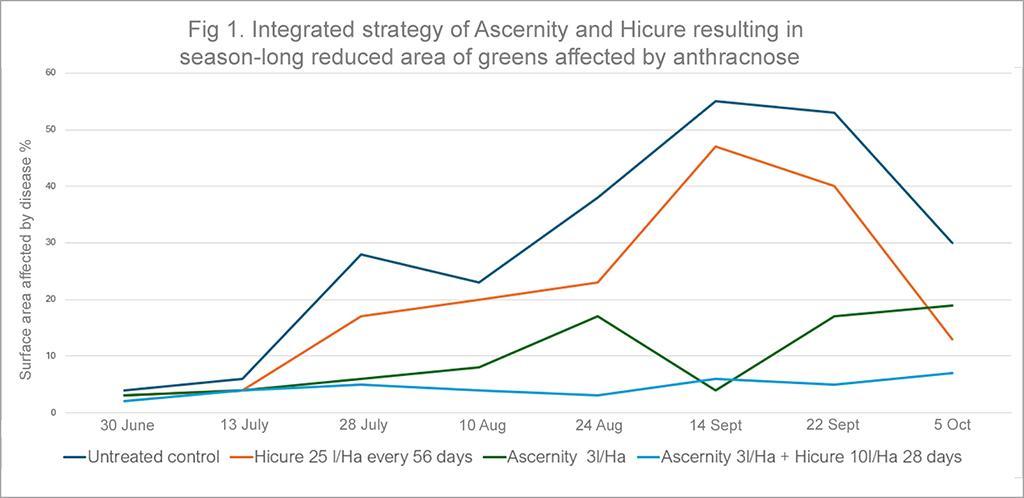
But it did not perform anywhere near as well overall as treatment with Ascernity fungicide in the trial plots. Particularly where pressure was the greatest and untreated infection reached over 55% of the turf surface, compared to 47% with Hicure alone, but just 5% with the fungicide treatment.
However, the most consistent performance and maintenance of disease damage at consistently lowest levels throughout the trial period, from June to October, came from combining Ascernity in a strategy with Hicure at monthly intervals, even when using the biostimulant at reduced rate, compared to the product alone.
Biologicals may offer really good support, so that when you need to use conventional controls they will have the best possible effect and give the highest levels of performance. With changing climates that might be even more important to help with resilience and enhance an ITM strategy.
Also some of the new chemical controls coming through increasingly have limitations on the number of times they can be used or the areas of application, so we need biologicals more to fill the gaps.
They are also an especially useful tool in resistance management strategies for the chemistry that is available.
Research has shown biocontrols offer real value to enhance plant health, especially in the areas of improving utilisation of resources, including water and nutrient inputs, as well as strengthening disease and pest control programmes.
The challenges identified by R&D programmes and practical use in golf course situations, is the lower levels of efficacy generally achieved, compared to what would normally be expected with conventional chemistry. Results may be sufficient in some instances, but typically biologicals have been seen to give less consistent performance in practice.
For example, while precious greens and approaches would require the full protection of a fungicide and biocontrol strategy, a biostimulant product may suffice on fairways that are under less intense pressure and player scrutiny for quality.
Biologicals can often be very effective in the lab when applied direct to the target pest – providing 100% control. But since biologicals tend to be adversely impacted by a wide range of environmental factors during application and utilisation by plant, the results in practice can be far less consistent.
Consistency and reliability of products in the manufacturing, delivery and application process is a key focus for their future success.
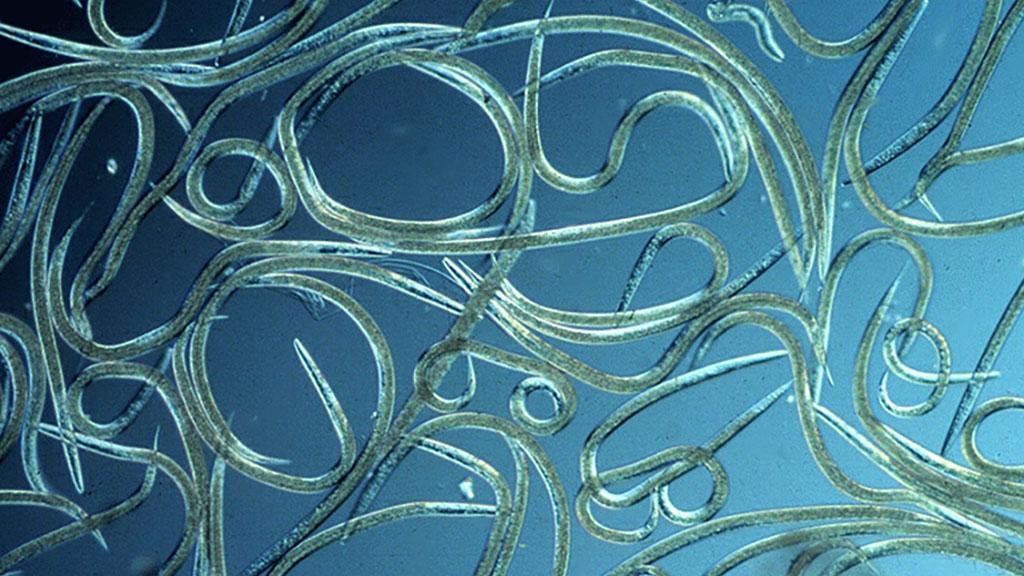
Extensive Syngenta research with NemaTrident beneficial nematodes, for example, demonstrated across a series of trials that the biocontrol nematodes achieved an average 45% reduction in leatherjacket larvae, from an average 35 larvae per m2 in untreated areas. Within the spread, the control ranged from 75% in one trial, to 13% reduction in another.
By comparison, treatment in the same trials using Acelepryn insecticide alone gave consistently higher levels of control.
But when the two products were used together in an integrated approach, a further step change in efficacy resulted in an average of 90% control of leatherjacket larvae.
The trials have helped to identify techniques to optimise the performance of biologicals in an integrated approach. Documented research with Acelepryn in the US has indicated that when the insecticide paralyses soil pest grubs, they are more susceptible to infestation and kill by nematodes - which is especially important to help target larger larvae.
Furthermore, the work reported the optimum timing for Acelepryn treatment at the end of October to coincide with insect activity, with NemaTrident applied at a rate of 2.5 billon nematodes per hectare within seven days of the insecticide - while soil temperatures were still sufficiently warm and moist for nematode activity.
Practical research is showing managing the environment in which biologicals work is highly important to achieve desired results, and far more so than the more flexible conventional products.
Moisture is often critical to get products to work, but if that is on the leaf it may create conditions where disease can thrive and needs to be managed accordingly in the overall ITM strategy.
The Turf Advisor app has specific data to support the timing of applications when soil moisture and temperature conditions are appropriate. Along with new remote soil and leaf wetness monitoring techniques being developed to enable practical and more time efficient management.
Syngenta’s experience with an R&D approach to effective integrated control strategies, utilising biocontrols and conventional chemistry together, has highlighted the potential for emerging innovations that will influence turf health and resilience in the future.