Managing Turfgrass Mites for Best Results
Mites that feed on plants, “Phytophagous Mites”, are becoming increasing prevalent in turfgrass across a range of host species.
Damage has most often been observed on Cynodon dactylon cultivars and hybrids, but observations and reports have identified damage to Kikuyu and Zoysia. This is not surprising as our knowledge of the pests continues to grow and with it, a better understanding of symptoms and species. Phytophagous mites are a highly diverse group that have evolved with great diversity in the environment, with more than 6000 species of plant-feeding mites known worldwide. As our understanding of how they affect turfgrass grows, it is inevitable that we will identify new symptoms of mite damage and new mite species that may have even been misdiagnosed as other biotitic and abiotic stress factors.
Mites have some core traits that make them such successful pests. These traits have evolved and are a part of their biology, including:
- high breeding potential with short generation times
- ability to respond to favorable conditions
- small size and positioning tight in sheath creating difficulty in contact control.
It is important to note that mites are not insects and are more closely related to arachnids such as spiders, scorpions and ticks. With this comes a range of morphological differences, such as fusion of body parts and number of legs. Because of this difference, it is important to note that management strategies will require approaches different to other commonly treated turf pests like beetles and caterpillars. However, with the correct timing and strategies, such as placement of product targeted at mite zones, we can ensure effective control of mites, and reduce and manage their damage affects.
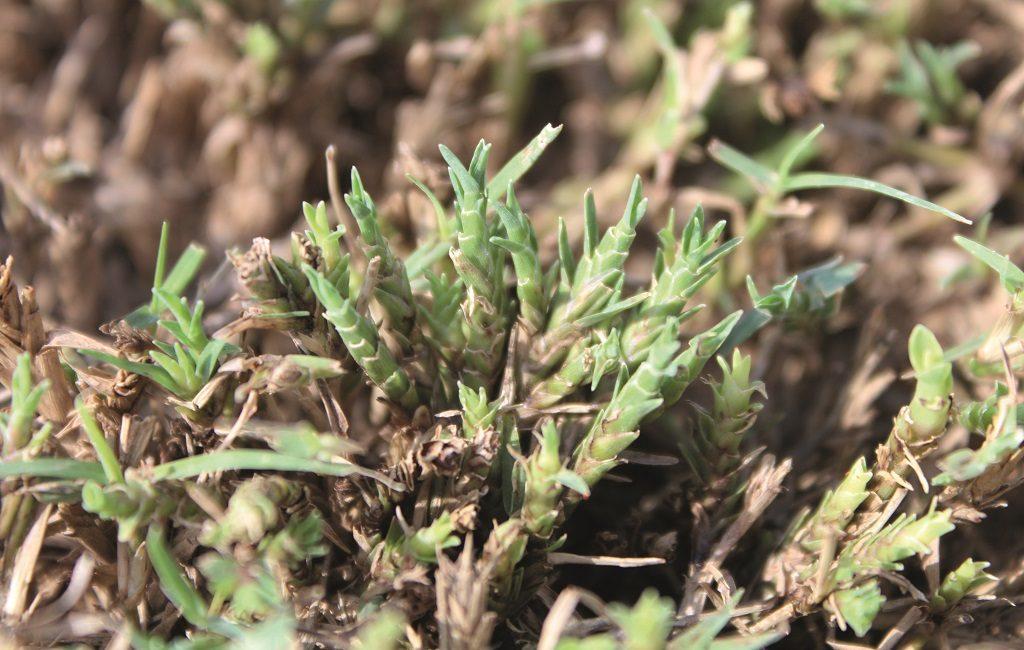
Figure 1: Porpoising - compressed leaf sheathes with short fattened leaves under heavy mite infestation. Syngenta 2016.
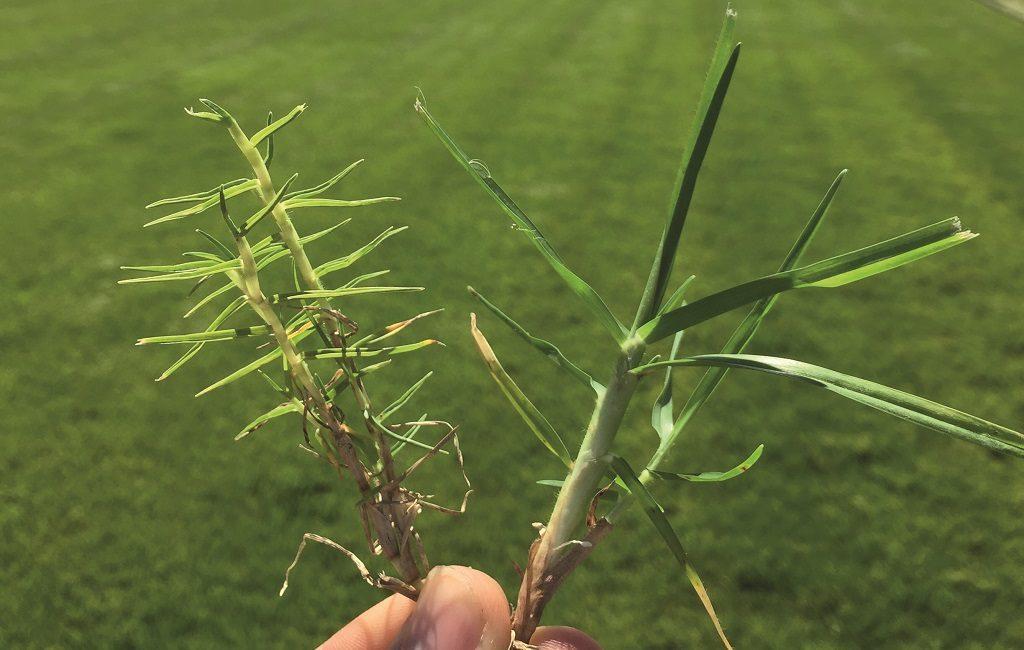
Figure 2: Mite affected Kikuyu on left with stunting and discoloring and healthy Kikuyu on right. Syngenta 2017.
Mite life cycle influences treatment approach
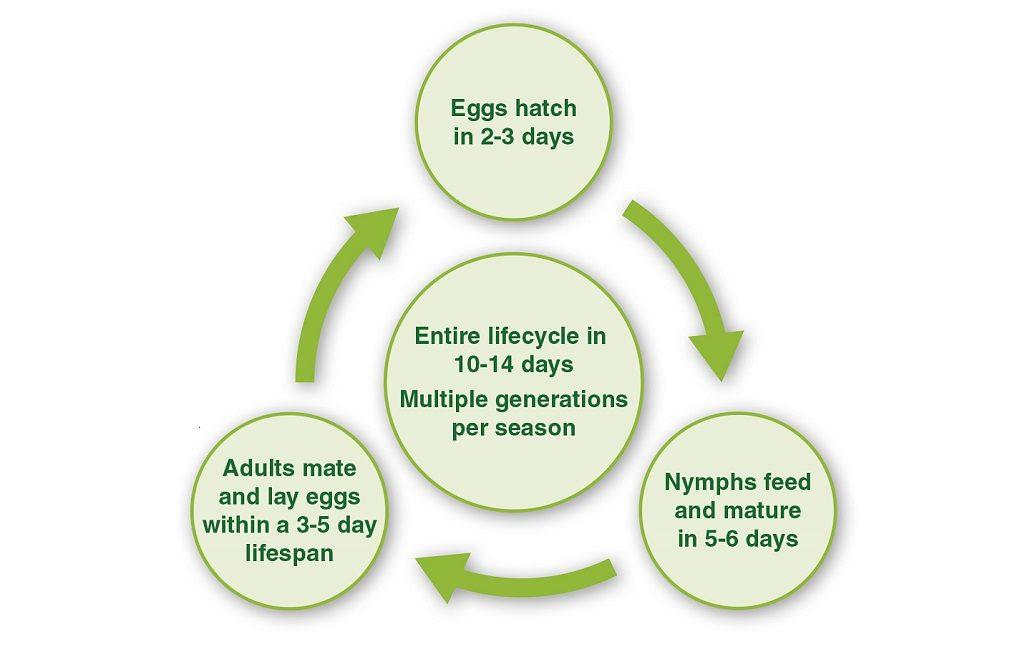
Most common curative treatments are undertaken once damage has occurred and mite populations are established. Some turfgrass mites such as Aceria cynodoniensis can lay as many as 50 eggs every 2-5 days and complete a full life cycle within 10-14 days. This rapid life cycle leads to explosive populations.
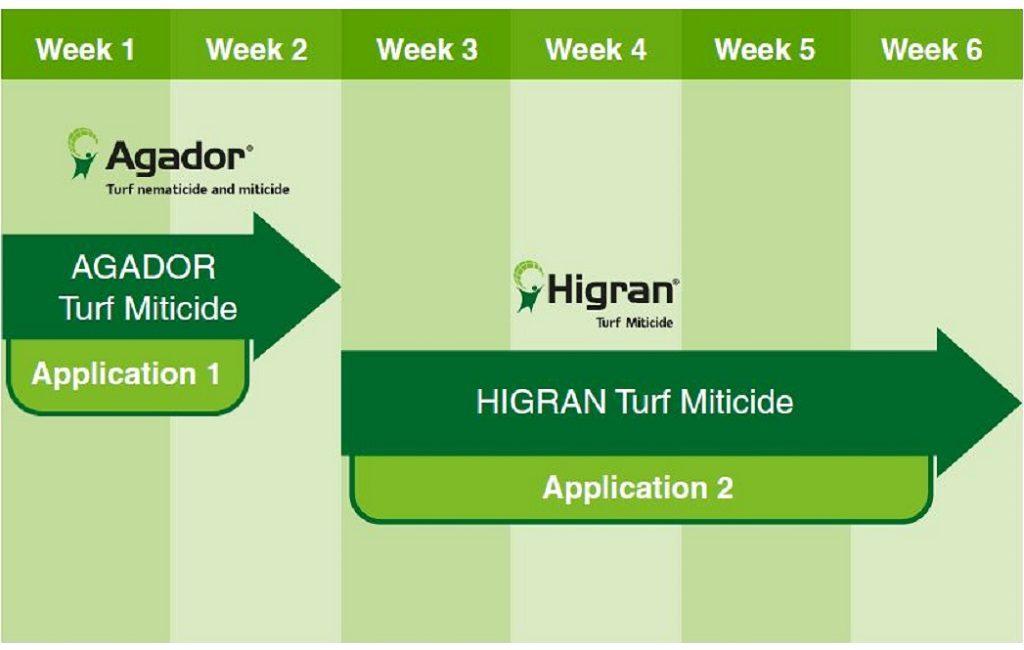
Once established, there can be a lag phase in controlling the population and in the recovery of the affected turfgrass. The rapid generational times mean incomplete control of any given generation leaves the door open for exponential growth of new populations. Hence we often see mite problems become very big, very quickly, with treatments not delivering the desired effect. This occurs when treatment timing and placement does not get to the location of the tiny mites, due to protection from areas like the leaf sheath which create a physical barrier to control. Timing and early treatment – before damage – is critical in good management of turfgrass mites, and it starts with identifying a mite problem as guided by previous years.