Understanding Damaging Grubs: African Black Beetle
Well managed turf grass is an attractive target for African Black Beetle. Post hatch, the larvae stage (often referred to as white grubs) look to turf grass roots and feed to support their growth with the consequence being a rapid decline in turf quality during the times that feeding occurs. This can lead to rapid decline in turf strength and quality. By attacking the roots, the turf plant is under greater stress from limited water and nutrient uptake and is only compounded when there is high usage pressure on the turf surface or when you harvest. This is why preventative proactive management of white grubs is a must.
Identifying the pest

Figure 1: African Black Beetle adult (left) and larvae (right).
The first step is to correctly identify the pest. African Black Beetle adults grow into 12 to 15 mm shiny dark brown to black beetles. The have a broad, shovel-like head, clubbed antennae, and flares/spurs on their legs. The males have a thickened tarsus on front leg (to help them dig).
The larvae, or white grubs, have distinctive orange spiracles along abdomen and thorax. They have short, functional legs, a pale brown head capsule, and their mouthparts are orientated downwards. Their raster is a transverse narrow slit (smiling grub).
African Black Beetle adults are relatively inactive during winter. Mating and egg laying occur in Spring depending on temperatures, with between 6–12 eggs deposited by each female. Eggs incubate for generally 2 to 5 weeks before hatching. The larvae progress through the instar stages as they develop and grow and initially feed on decaying organic matter before progressing to feeding on turf grass roots. The larvae can reach up to 25 mm at maturity before moulting to the pupae stage. The pupae develop into adults and emerge after about 2 months in late summer and autumn. Peak damage from larvae feeding normally occurs from December to January.
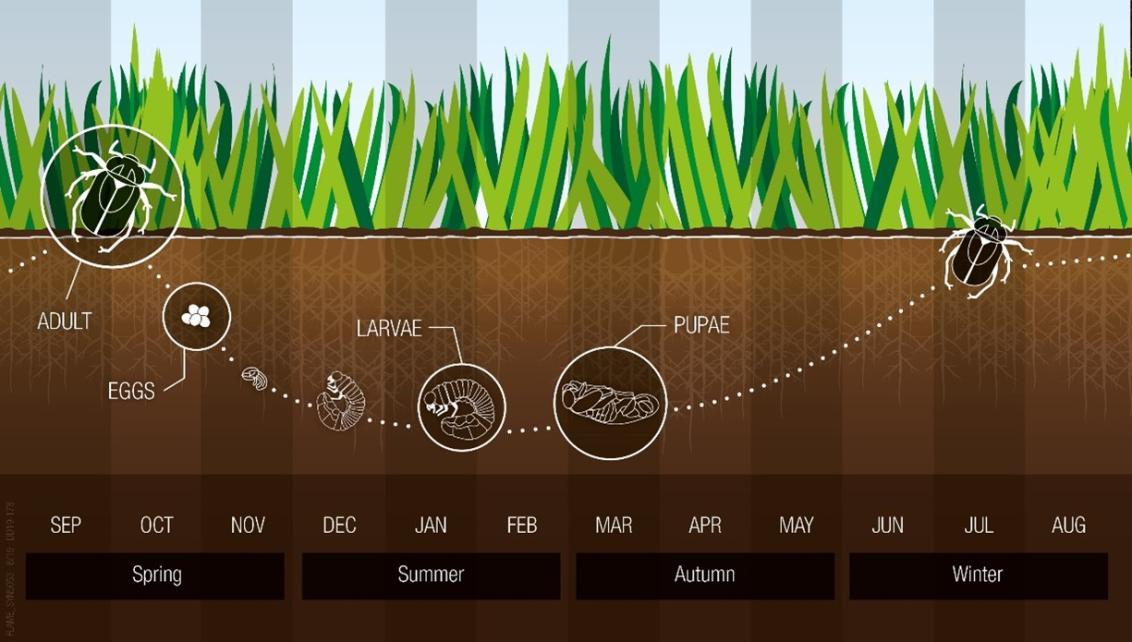
Figure 2: Complete metamorphosis of the African Black Beetle.
Identifying the damage
African Black Beetle are detrimental to warm season grasses over the summer months. Damage is done during the larvae stage by destroying turf grass root systems as they feed. This damage causes the plant to lose the ability to access moisture in the soil effectively. Adults do not cause direct damage to turf grass plants, but secondary damage can occur due to birds and other animals tearing surfaces to feed on the adults. By the time we see symptoms the damage is done, and significant recovery is required. At the very least they will have reduced the health of the root zone, and at worst the whole surface could be lost.

Figure 3: Turf damage from African Black Beetle larvae, or white grubs.
Early signs of white grub damage include grass wilting or yellowing. Grub-damaged turf grass becomes loosely attached to the soil as the roots are consumed. Heavily damaged turf grass can feel spongy and easily pull away from the soil surface. Turf is prone to falling apart when harvesting or tears out when usage is applied to it due to lack of root anchorage all compounded by lack of recovery. The underlying cause of all these signs being the destruction of roots, moisture stress and poor irrigation efficacy due to limited water uptake compounds turf injury.
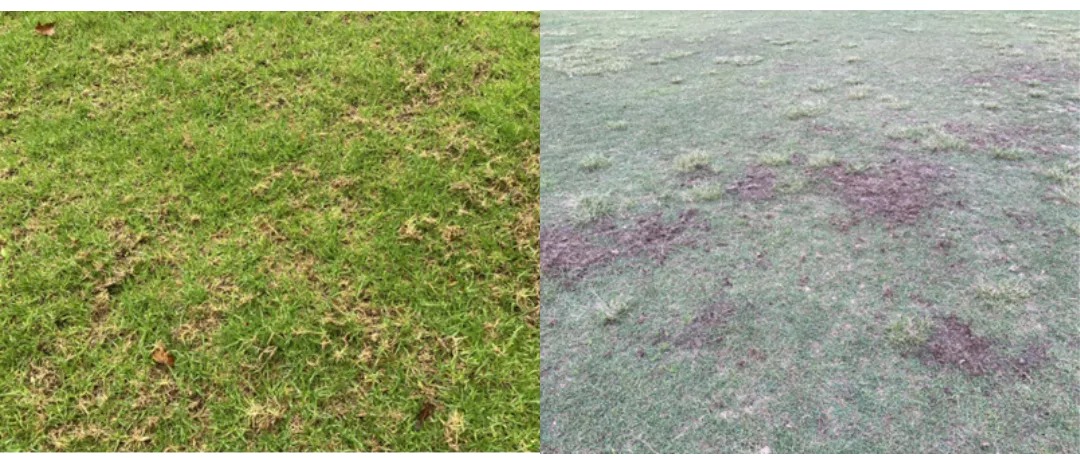
Figure 4: Adult Black Beetle damage in Kikuyu (left) and in Couch (right) from foraging birds.
A targeted solution
Known for its excellent residual performance, ACELEPRYN® Turf Insecticide delivers up to 6 months’ protection against a wide range of insect pests, including scarab larvae such as African Black Beetle and Argentinian Scarab plus control of Billbug larvae, Cutworm, Sod Webworm and Armyworm. Being unscheduled, it delivers a range of benefits to applicators and users of treated turf spaces including low environmental impact, flexibility on application, no re-entry or PPE required.
ACELEPRYN® can stop the destructive stage of grubs before they get going and damage your turf. It is highly effective at early stage instar, the first and second stages of Black Beetle larvae. Alterative products for larvae control do not have the same longevity and are often scheduled as a 5 or 6 poison. Due to their shorter residual, an early preventative application is more difficult to apply, and often multiple treatments are required, creating more labour and cost in the long term. Where there are already difficulties in getting the spray out due to staff resources or restrictions on spraying in open spaces, multiple treatments can create additional conflict with resources or users of turf areas.
Although adults can be targeted with Synthetic pyrethroids, effective application is short lived and does not stop African Black Beetle migrating to other areas that have not been treated and laying eggs. These products are not as low impact as ACELEPRYN®, have an increased level of restrictions on the label to the users and for re-entry.
ACELEPRYN® can be applied early – at the first appearance of overwintering adult pests due to its long residual capabilities – rather than waiting for infestations to hit peak levels when damage is observed, and then relying on curative pest control solutions requiring multiple applications to last the season.
To create further flexibility, ACELEPRYN® is now available in a granule formulation which delivers the same long-lasting performance, but with the convenience of a no-spray option. ACELEPRYN® GR is ideal for areas that are dominated by obstacles, hard to access, or where spray equipment creates perception issues with the general public. It is also exempt from poison scheduling, which reduces the need for PPE for operators and re-entry periods for the public.
Gain extra efficiencies during treatment
Most turf managers know that once pests infest your turf, it takes a large amount of outputs to fix the problems they cause. Black Beetle can be a problem as outlined above, but so are tough weeds like Crowsfoot, Poa annua, Parramatta grass – they are all difficult to eradicate once they start infesting your turf and competing against it.
Understanding African Black Beetle and the risk of damage is key to ensuring a preventative treatment can be undertaken before your turf is affected. Early management of the pest ensures effective control. With the longest residual, ACELEPRYN® provides flexible early treatment timing in a low impact unscheduled solution.
For more information contact your local Territory Sales Manager
Always read the label before use. Syngenta Australia Pty Ltd, Level 1, 2 Lyonpark Road, Macquarie Park NSW 2113. ABN 33 002 933 717. ®Registered trademark of Syngenta Group Company. All products written in uppercase are registered trademarks of a Syngenta Group Company. © 2024 Syngenta. ED 24-435.